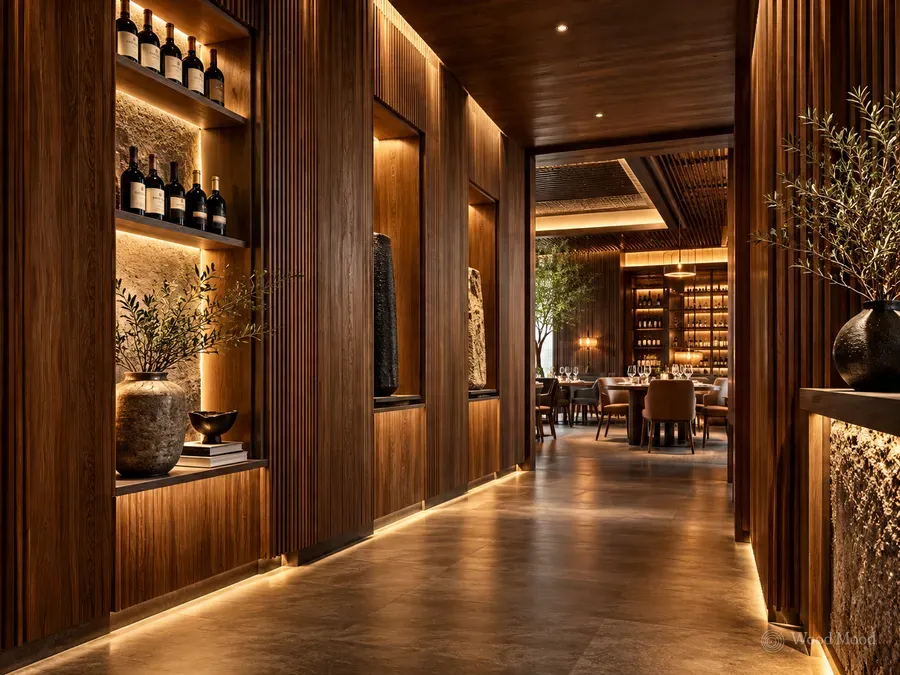
Charred wood, known in Japan as shou sugi ban or yakisugi, is a surface treatment based on burning the timber surface in a controlled way. It is traditionally made with cedar-type species. The surface is charred with flame, then the ash and loose carbon are brushed away and the surface is protected with oil. Depending on how hard it is brushed, looks range from matt black to grey and grained tones.
Burning forms a carbon layer on the timber surface, which can give some resistance to moisture, insects and decay. The deep black colour and pronounced grain create a very strong visual effect. How far the surface is burned and brushed determines whether it will transfer carbon to the hand; for interior use, thorough brushing and sealing with a protective finish is important.
It is used on wall panels, cabinet doors, bar and reception fronts, tabletops and exterior cladding. When specifying it, ask about the timber species, depth of charring, brushing and the final protective coat. If the surface is protected with oil, re-oiling may be needed at intervals. A dry or slightly damp cloth is enough for care, and wet scrubbing and abrasive cleaning can damage the surface. The texture of real charred wood differs from piece to piece, which gives each item its own character.