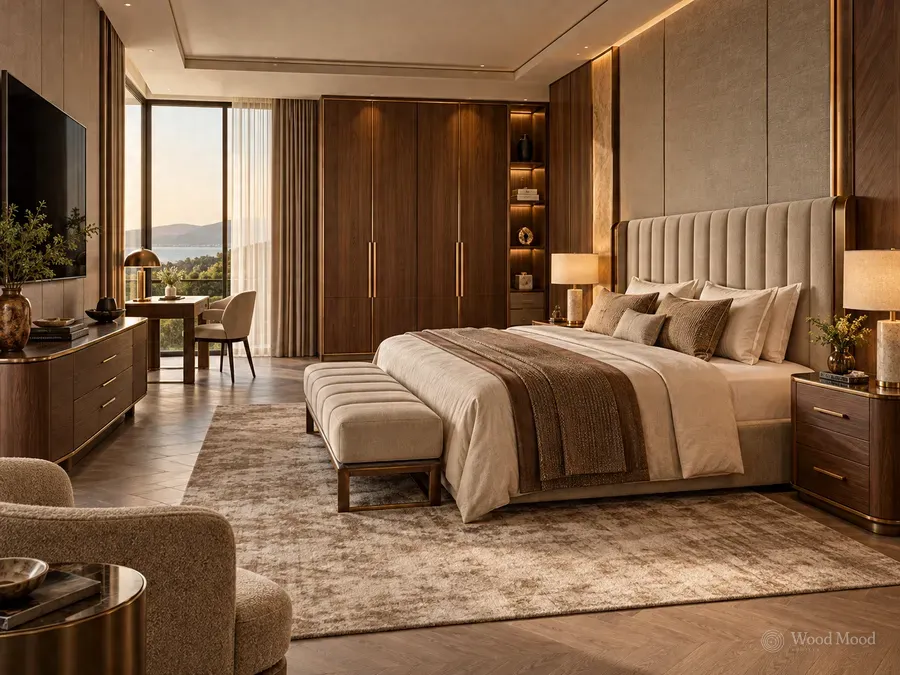
Contract furniture is furniture made for the contracted, bulk fit-out of large buildings such as hotels, offices, restaurants, schools, hospitals and dormitories. It differs from home furniture in being designed for heavy and continuous use, frequent cleaning and large numbers of identical units. It is usually based on a design prepared by an architect or interior designer, and the items are made specifically to that design.
Materials and hardware in contract furniture are chosen for durability: surfaces resistant to impact, scratches and moisture, strong hinges and runners, reinforced fixings and easy-to-clean finishes are preferred. Fire performance and the emission and safety requirements of materials may be set by regulation or the project specification. Because one model may be repeated hundreds of times, prototype approval, dimensional consistency and quality control are especially important.
The process generally consists of specification review, survey, drawings and sample approval, prototype, series production, packing, delivery and installation floor by floor or area by area. The programme must fit the building schedule. The contract states delivery dates, acceptance terms, warranty and after-sales support. Asking about maintenance and spare parts in advance reduces running costs over the long term.