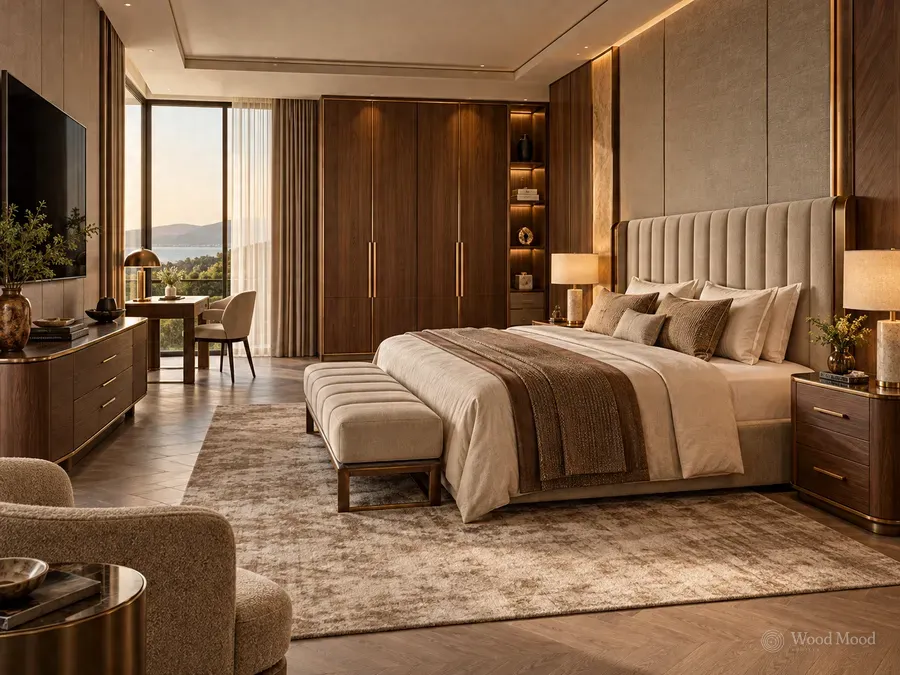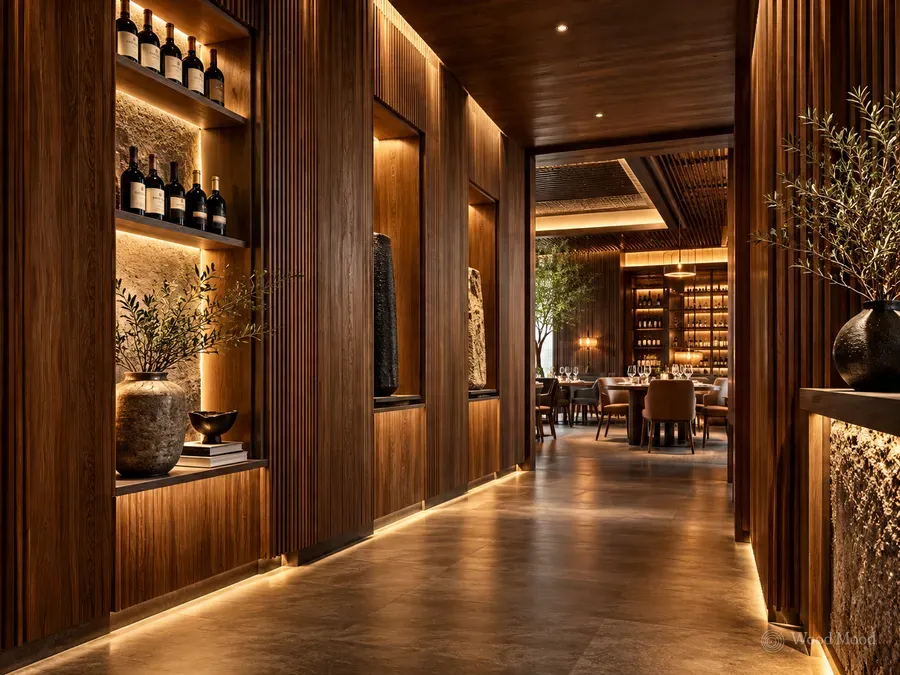
Fire-retardant board is MDF, chipboard or plywood that has been treated with fire-retarding chemicals or has them added to its composition. In everyday speech it is called non-combustible, but technically the board is not fully fireproof; it has a fire classification that limits flame spread and heat release. Performance is certified by a tested class.
The class is given under the European standard EN 13501-1 with codes such as B-s1,d0, which describe reaction to fire, smoke production and flaming droplets. The core is often red or otherwise tinted. The board can be painted, veneered and machined, but the surface finish also affects fire performance.
It is specified in public areas such as hotel corridors, meeting rooms, restaurants, shops, offices and stages, for wall and ceiling panels, doors, partitions and furniture. In buildings with a fire specification it may be mandatory.
When choosing, always ask for the certificate and class code, and make sure the adhesive, edge banding and veneer used with the board are suitable for that class, since the system is assessed as a whole. Protective treatment at cuts and holes should be renewed. Regulations differ, so the local specification should be checked.