
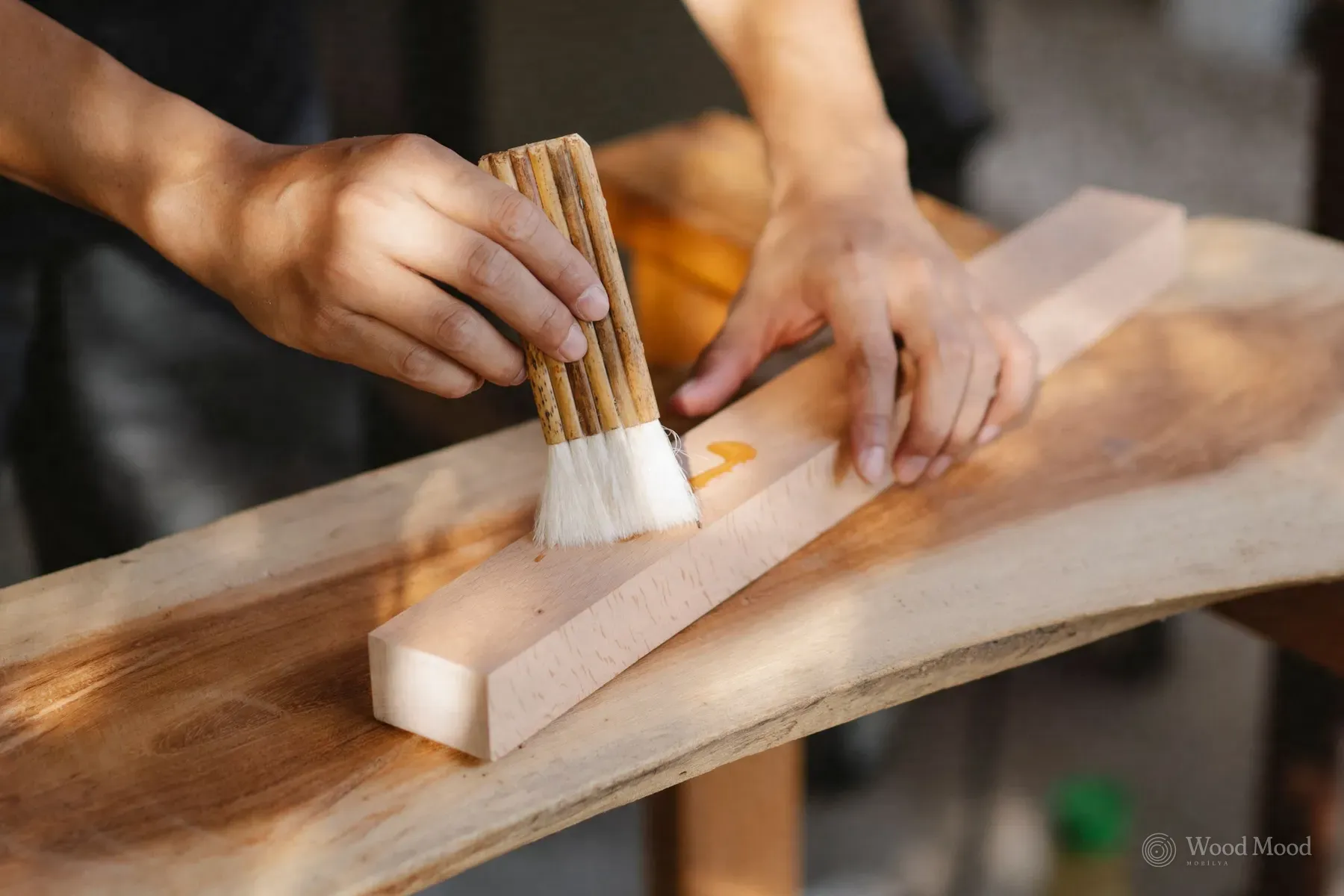
Varnish is a coating made of resin, solvent or water, and additives, that dries on timber into a clear, hard film. It does not hide the grain; it deepens it. It is made with different resin types such as alkyd, polyurethane, acrylic and nitrocellulose, in solvent-based and water-based versions. Gloss, semi-gloss, satin and matt finishes are available.
Varnish protects wood against moisture, stains, wear and scratching. Because it leaves a film on the surface, unlike oil, it gives stronger protection, but when it is damaged, local repair is difficult and the area often needs sanding and re-varnishing. Polyurethane varnishes are generally tough, while water-based ones have low odour and are less prone to yellowing. It is usually applied with a primer coat and several coats of varnish, with light sanding between coats.
It is favoured on heavily used timber such as tables, chairs, cabinet doors, parquet, stairs and doors. When choosing, consider the use, the gloss, the tint (clear or wood-coloured) and the odour level. The surface must be clean, dry and free of dust before application. A damp cloth is enough for care, and abrasive cleaners and direct heat should be avoided.