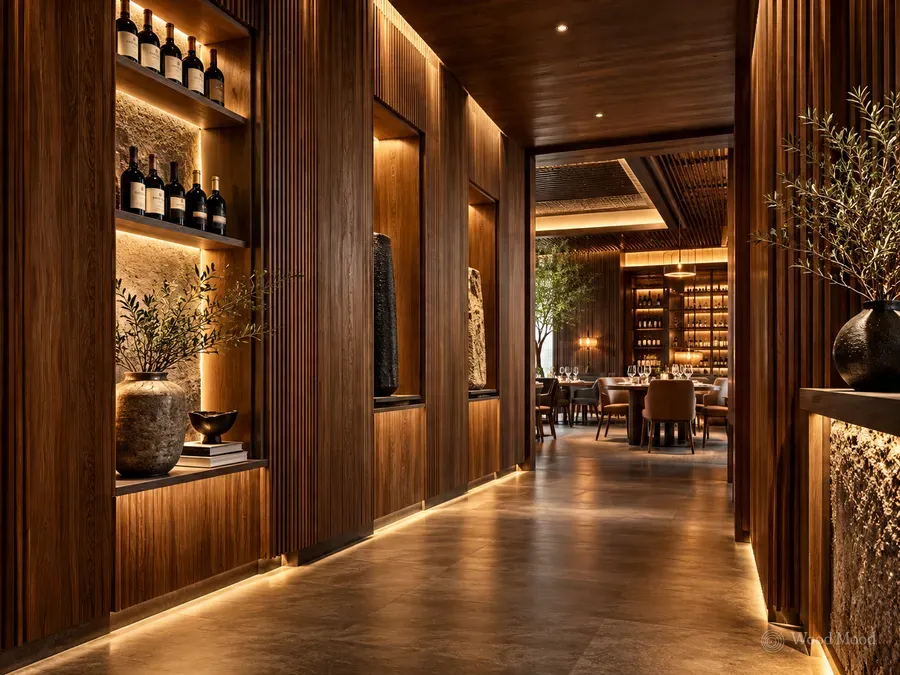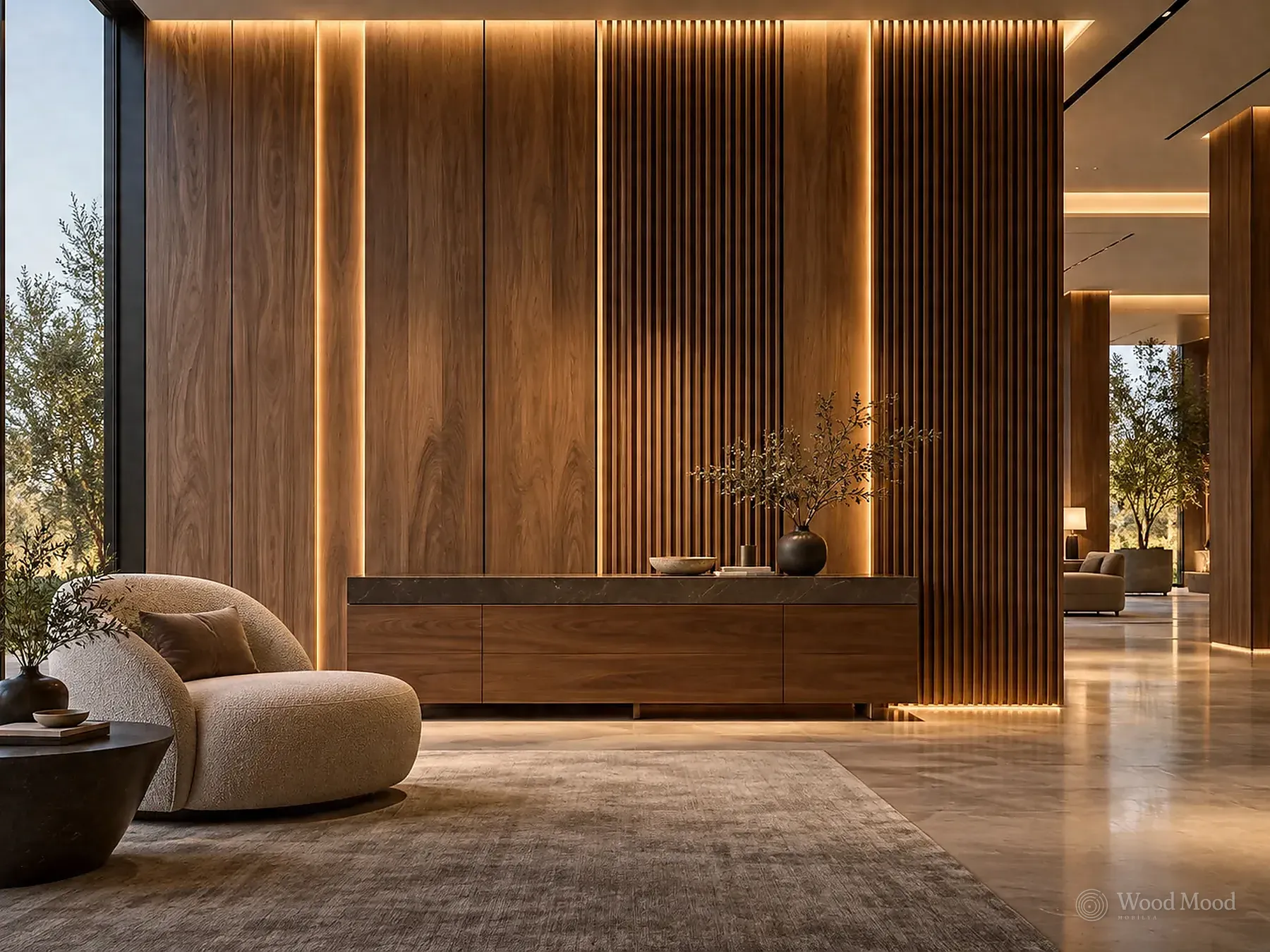
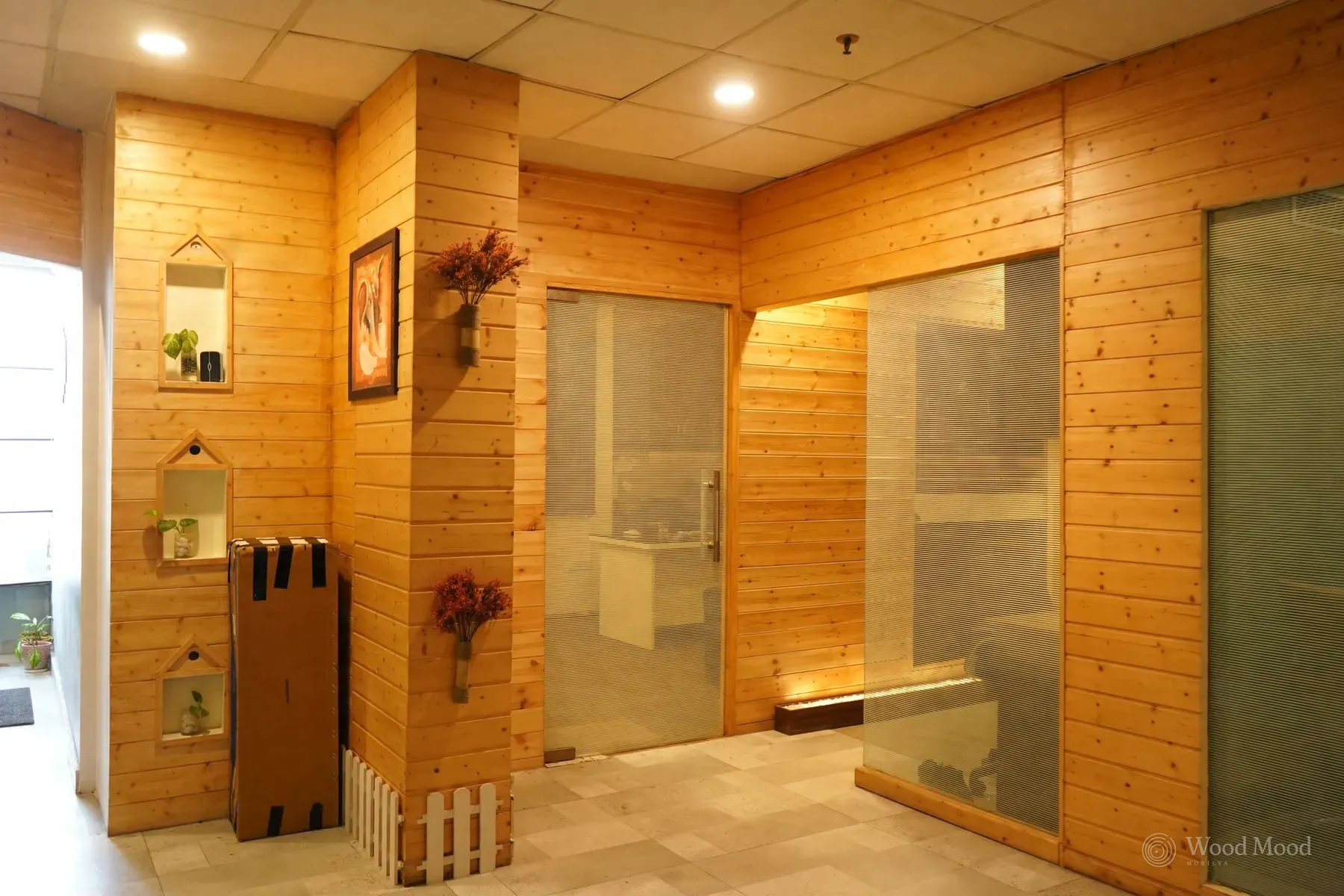
Lambri, known in English as wainscot or timber panelling, is wall cladding made from boards, usually tongue-and-groove, set side by side to cover the lower half or the whole of a wall. It was once applied to protect walls from cold, damp and knocks. Today it is both protective and decorative.
It can be made from solid wood such as pine, spruce or oak, from MDF or from PVC. There are flat, grooved, slatted and panelled types. The tongue-and-groove system lets the boards fit together neatly and easily and leaves room for the timber to move with humidity. Finishes include painted, lacquered and natural oiled surfaces. Fixing is usually done onto battens nailed or screwed to the wall.
Lambri is used in living rooms, bedrooms, hallways, kitchens, garden rooms, bathrooms, office corridors, restaurants and cafes. It is also applied on ceilings. When used on the lower half of a wall, the upper part is left painted and a rail sits between the two.
When choosing, make sure the timber is properly dried and check its moisture content, because overly moist boards can open up after fitting. In damp rooms like bathrooms and kitchens, PVC or a highly moisture-resistant material is preferred. Wiping painted surfaces with a soft cloth and lacquered ones with a damp cloth is enough care.