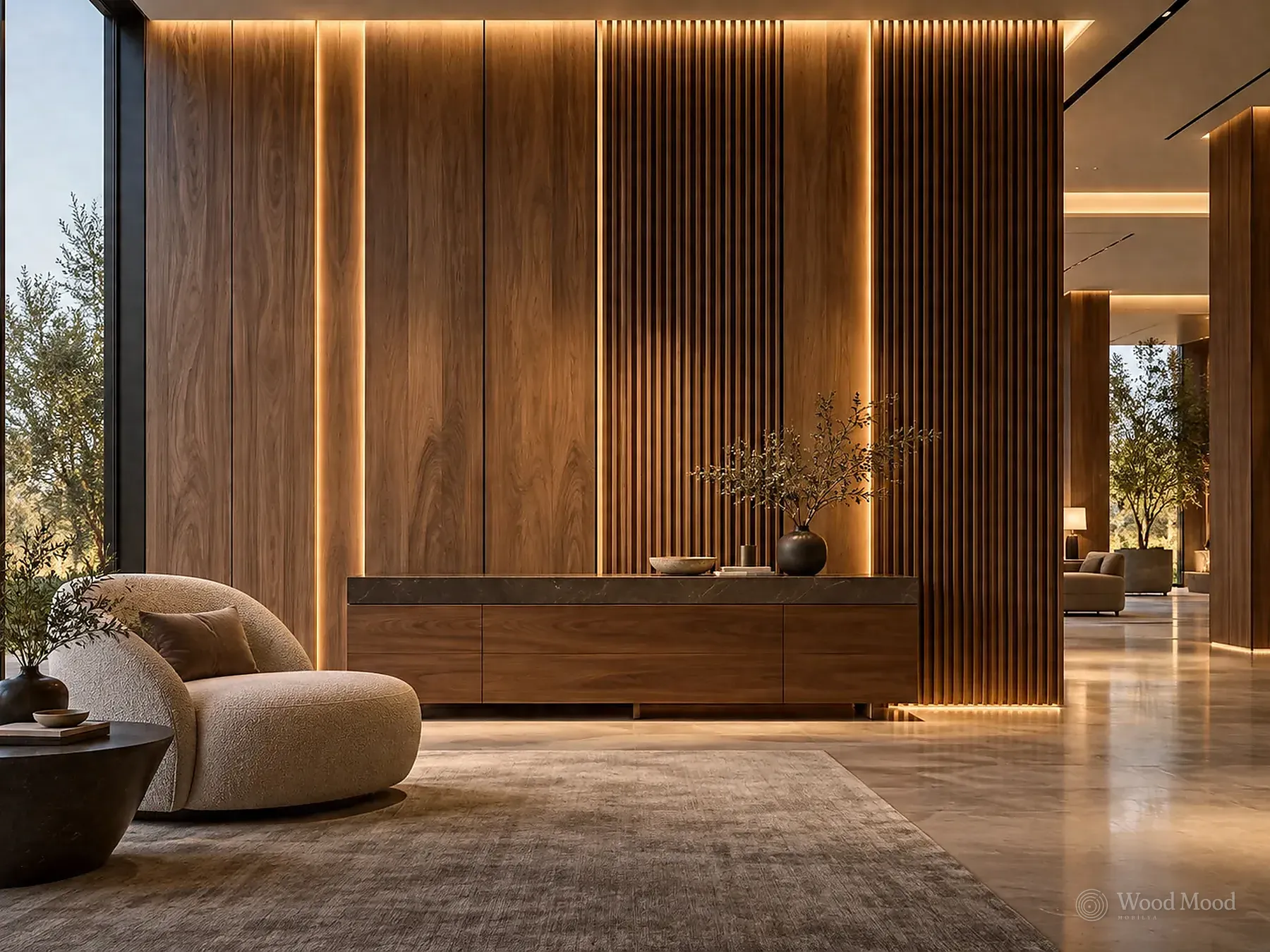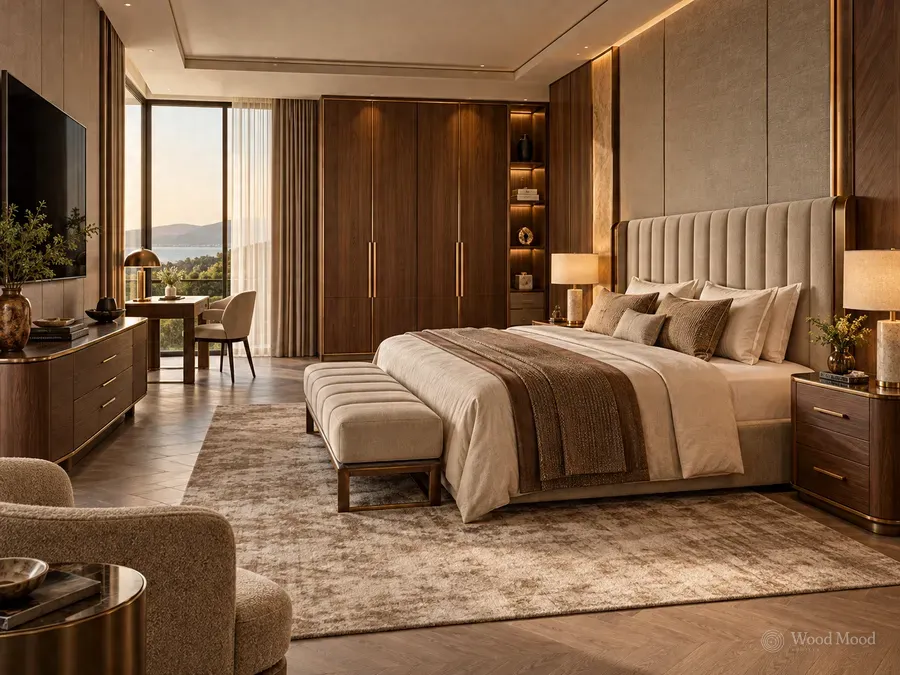
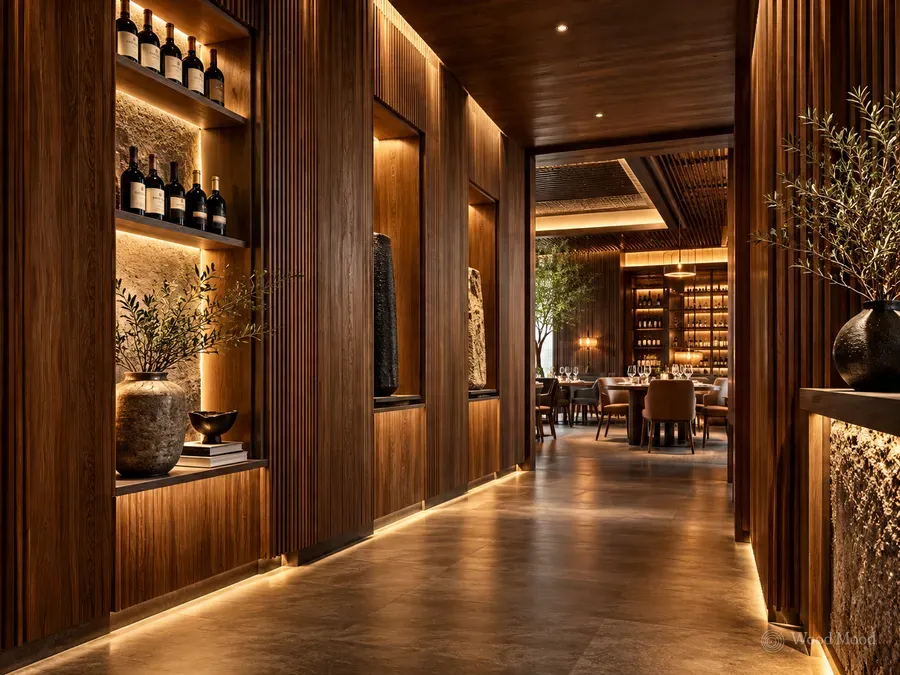
Wall cladding is the covering of a wall surface with timber, veneered board, fabric, leather or similar panels. It gives deeper texture, warmth and character than paint or wallpaper. It is widely used in hotel rooms, lobbies, restaurants, offices and homes.
Cladding panels are prepared to size and fixed to the wall on a supporting frame. Materials include solid wood, veneered MDF, lacquered surfaces, slatted panels, buttoned panels and panels backed with acoustic felt. Concealed lighting, sockets, mirrors and niches can be planned into the panelling as part of the design. If the frame, services and electrical runs are considered from the start, the installation comes out clean.
Cladding is often seen on headboard walls, TV walls, in dining rooms, behind reception desks, at lift entrances and in corridors. If a wall is uneven or damaged, cladding hides it. It can also contribute to sound absorption and thermal comfort.
When choosing, look at the neatness of the panel joints, the fire class and the durability of the facing. In heavily used places such as hotels and restaurants, surfaces that resist knocks and cleaning should be preferred. A soft cloth and a suitable cleaning product are enough for care.