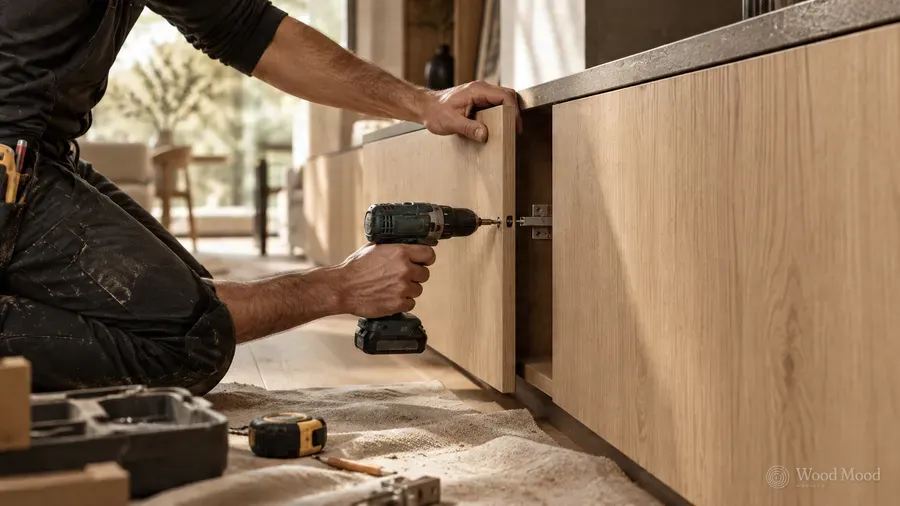
Wall fixing covers all the plugs, screws, hanging rails and special fixings that connect furniture to a wall. Wall-hung upper cabinets, floating vanity units, TV units and shelves pass their load to the wall through these fixings. Tall units and high bookcases are fixed to the wall to prevent tipping, which is an important safety measure, especially in homes with children.
The right fixing depends on the wall type. Brick, concrete, aerated block, plasterboard and light partition walls each hold differently. Steel or nylon plugs are used in concrete and brick, special wide-wing plugs in aerated block, and load-bearing supports or cavity-type fixings in plasterboard. Screw length and diameter are chosen according to the weight of the furniture and the load it will carry. Wall cabinets usually have adjustable hanging brackets, which allow the level to be fine-tuned.
Before installation, the structure of the wall and the services inside it, such as electrical cables and pipes, are checked, and drilling must not damage them. A cabinet should not be fixed before it is levelled, and every fixing point should be secure under load. The load limit stated by the manufacturer should not be exceeded, and if loosening is noticed in use, the fixings should be checked straight away. Reliable fixing determines both the safety and the life of the furniture.