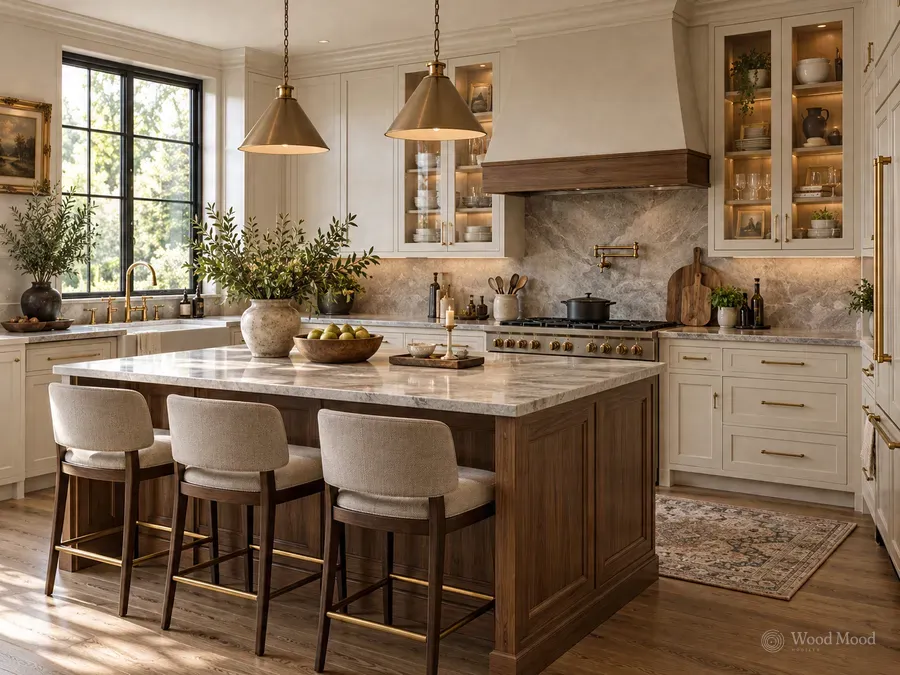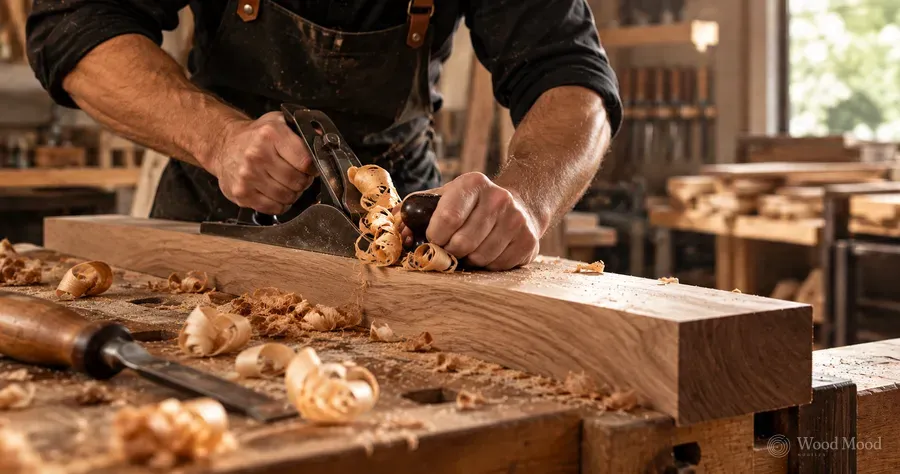
A back panel is the thin board that closes the rear of a cabinet carcass. It keeps the box square so the side, top and bottom panels do not rack, blocks dust and insects, and stops items from falling against the wall. Although it is hidden, it plays an important part in the strength of a cabinet.
For the back, a hardboard, thin MDF or faced fibreboard of about 3 to 8 mm is generally used, and cabinets carrying heavy loads may take a 16 mm board. The panel can be slotted into grooves cut in the carcass, nailed or stapled and glued, or fixed with battens. A panel set into a groove gives a stronger and straighter result. Cut-outs are made for cables, pipes or sockets. Cabinets needing ventilation may use a perforated panel.
When choosing, avoid materials that absorb water in damp rooms. In wall-hung cabinets, the panel thickness also matters for load-bearing. The space left between the cabinet and the wall can serve services or provide ventilation for heat-producing appliances. During installation, check that the panel has pulled the carcass fully square and that the doors close without rubbing.