Bamboo is technically a fast-growing grass, not a tree. In furniture, the culms are cut into strips and glued into boards, panels, worktops and flooring. Because it matures in a few years, it is regarded as a renewable material, which is why it appeals to sustainable design.
Bamboo boards are made by laying strips flat or on edge and pressing them. They come in a light natural tone and a darker “carbonised” tone, which is produced by steaming the strips. Hardness can rival many hardwoods, but adhesive quality and manufacturing method determine real strength. It has a distinctive, regular linear look.
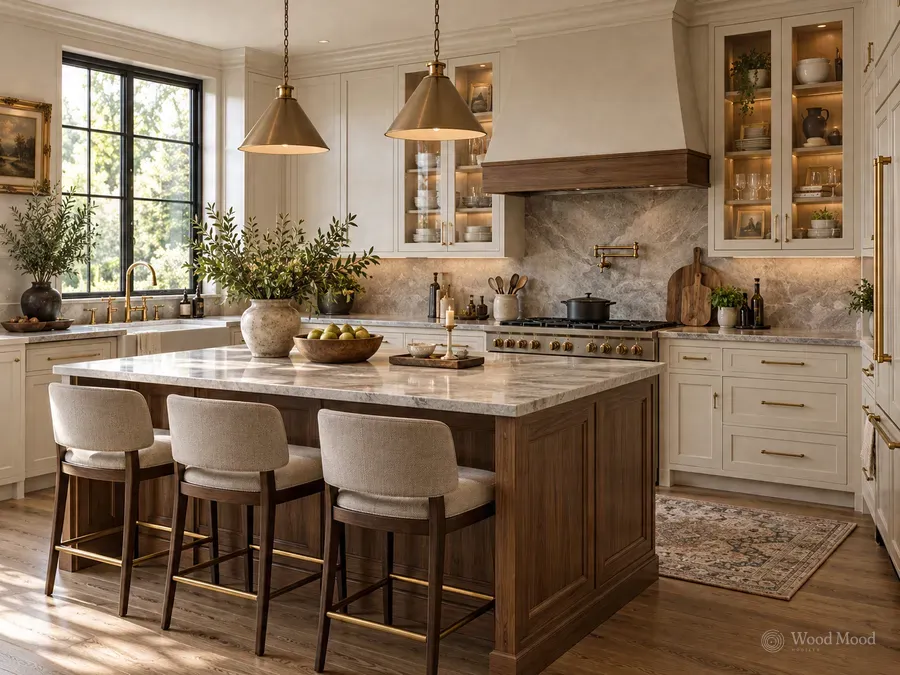
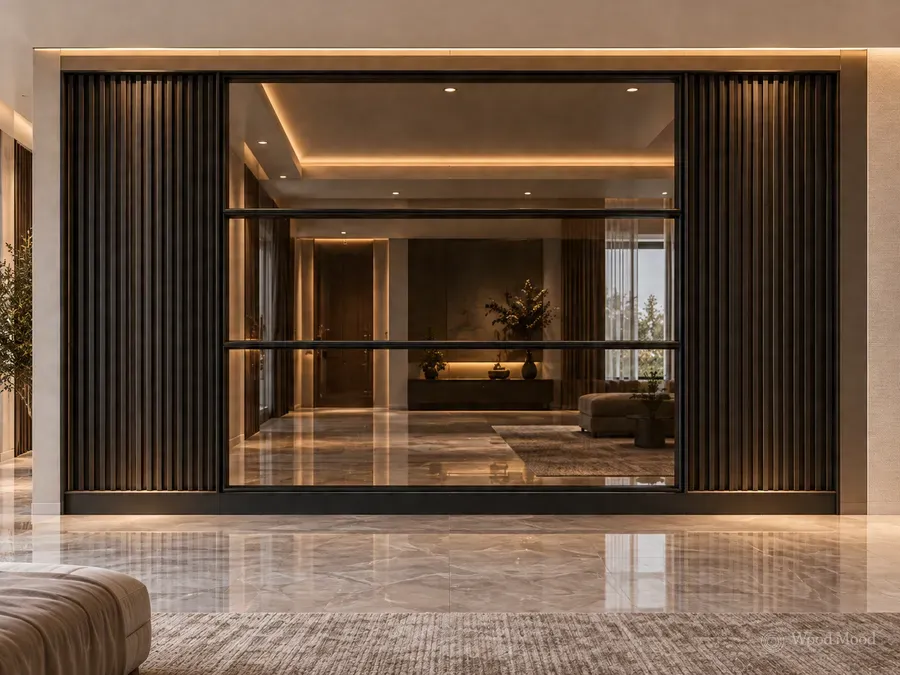
It is used for kitchen worktops, shelves, tabletops, doors and wall panels, chopping boards, accessories and children’s furniture. It suits modern, minimal and natural-style interiors.
When specifying, check that the adhesive is low-emission (for example E1-compliant), and look at the thickness and surface quality. Bamboo can swell and crack if it is exposed to standing water for long, so the surface should be protected with oil or varnish and care taken in wet areas. A damp cloth is enough for cleaning.