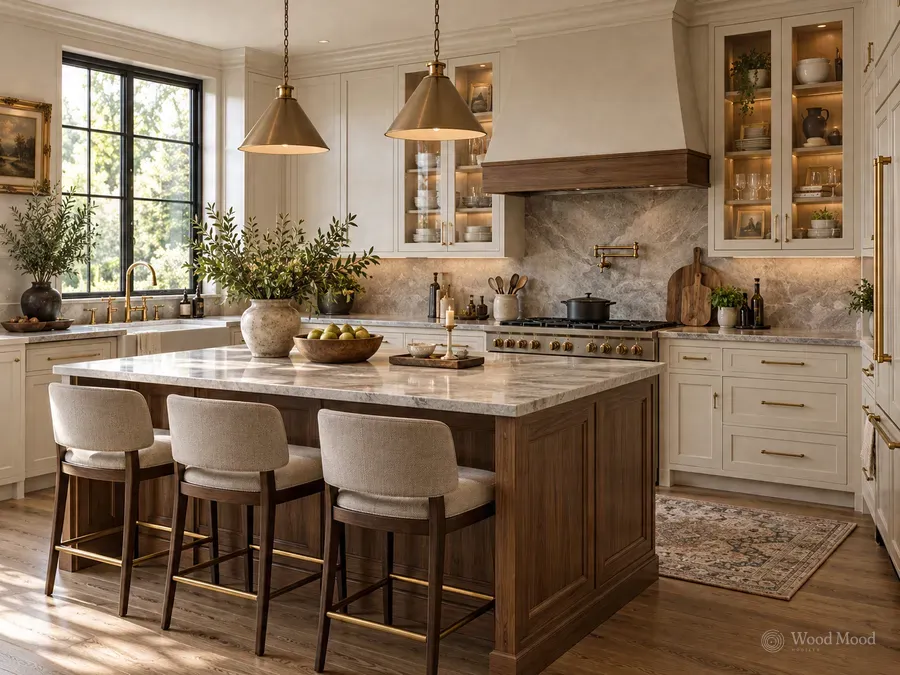
A blind corner is the storage space where two runs of cabinets meet in an L-shaped or U-shaped kitchen, and where the inside cannot be seen directly through the door. If it is not resolved well, this volume becomes unusable: items get lost at the back and you have to reach deep inside. This makes the blind corner one of the points in kitchen planning that needs special attention.
Several solutions make the corner usable: half-round or full-round carousel shelves, pull-out corner organisers that move with the door, drawer systems, and an angled door that cuts across the corner. In some designs a cabinet is placed diagonally across the corner instead. The mechanism is chosen according to the corner width, door direction and the weight to be carried.
When choosing, weigh the load capacity, ease of use and cost of the mechanism. Hinge directions and door gaps are planned in advance so that the corner door does not collide with the doors of the two runs. If the stored items are rarely used, a simpler solution can be enough. With the right mechanism, the corner can become one of the most useful storage areas of the kitchen.