A brushed wood finish is a textured surface made by removing the soft growth rings of the timber with steel or stiff-bristle brushes, leaving the hard rings standing proud. It is used particularly on species with pronounced grain such as oak, walnut, chestnut and ash. The result is that the grain can be felt under the hand as well as clearly seen.
Brushing gives the surface depth and natural texture. Because it reflects light softly, small scratches and marks are less noticeable, which is a practical advantage in everyday use. Oil, wax, varnish or a coloured stain can be applied over brushed wood, and dark pigments collect in the soft rings to create contrast. Dust and dirt can settle in the recesses, so cleaning needs a little more care.
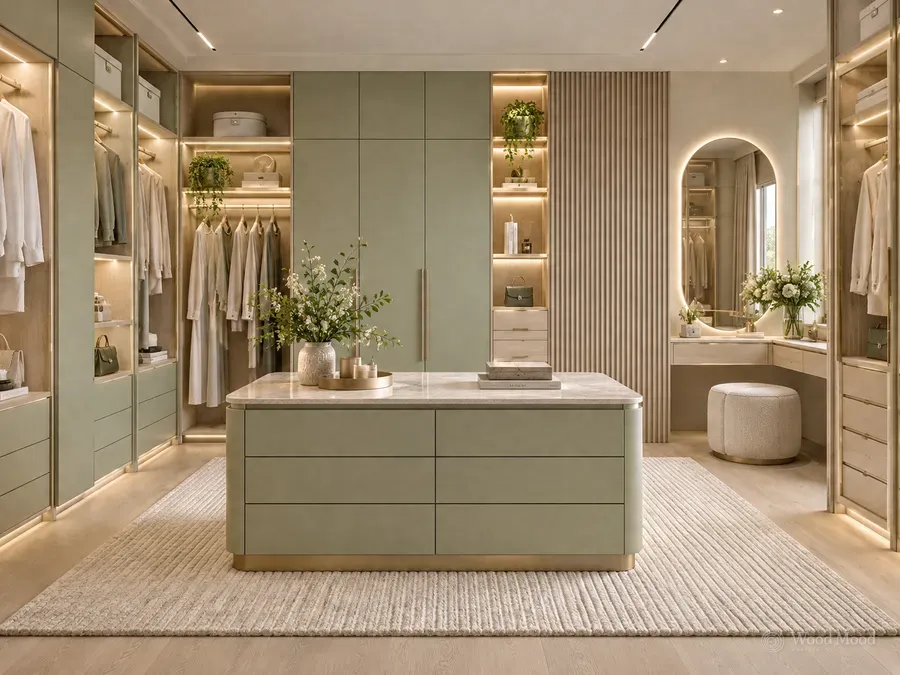
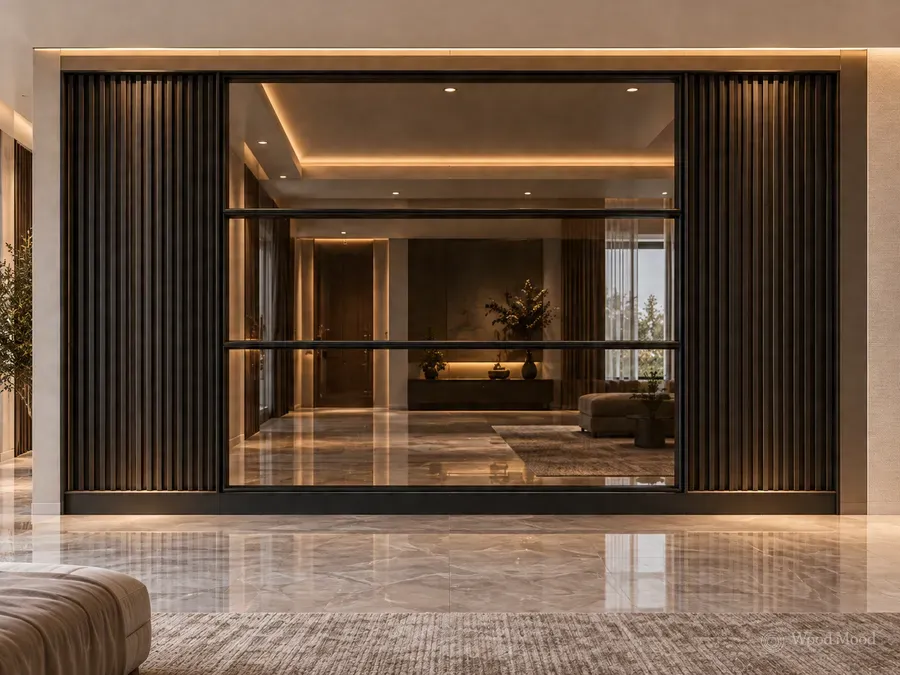
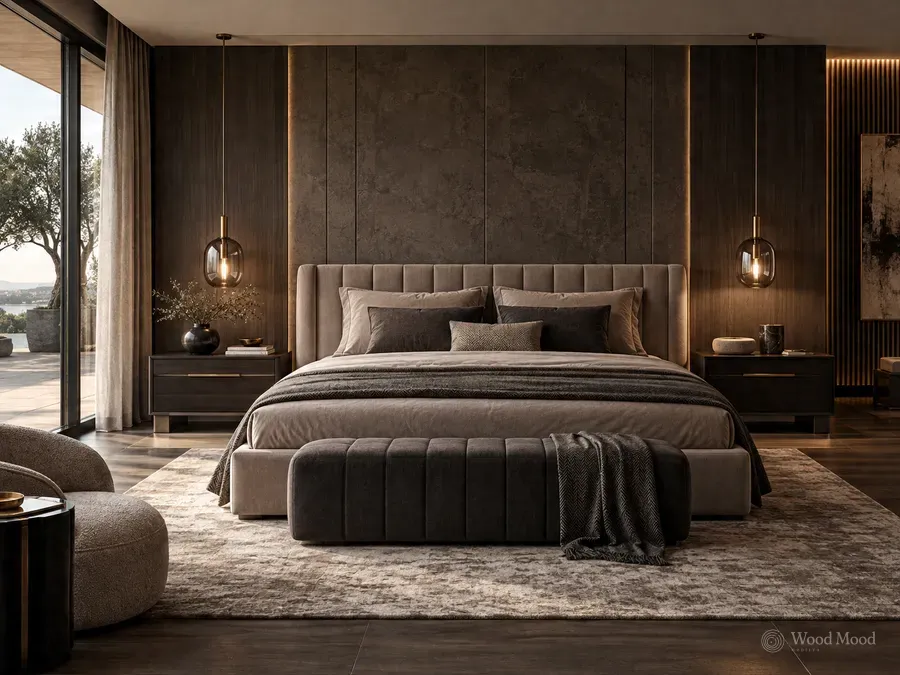
It is used for wardrobe and cabinet doors, wall panels, headboards, tabletops, flooring and kitchen fronts. When specifying it, ask about the depth of brushing, the timber species and the final protective coat. A soft brush or a damp cloth wiped along the grain is enough for care; abrasive pads can damage the texture. Oiled surfaces should be re-oiled from time to time, while varnished surfaces do not need this.