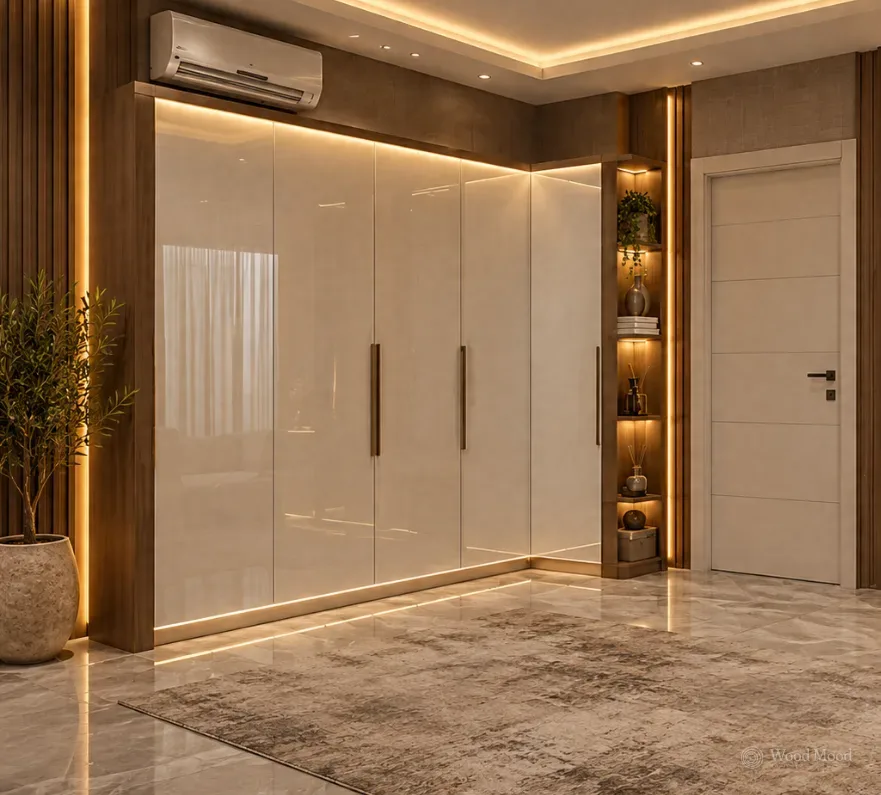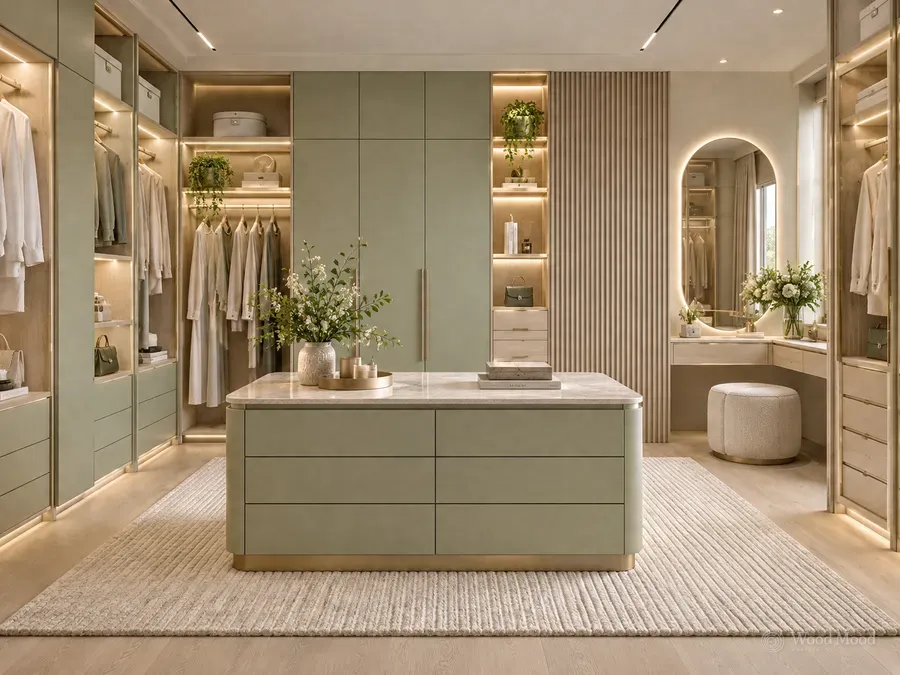

A cloakroom unit, known in Turkish as a vestiyer, is a cabinet or unit at an entrance where people leaving or arriving place coats, shoes, umbrellas and bags. In homes it is a hallway cabinet, while in hotels, restaurants, offices, schools and gyms it is made for shared use. By dealing with belongings as soon as someone comes in, it keeps the interior tidy.
Home cloakroom units usually include a hanging rail or wall hooks, a shoe cabinet, shelved sections, drawers, a mirror and a seat. They can be designed with doors or open. Commercial cloakrooms have numbered compartments, rows of hangers, umbrella stands and lockable cabinets. At restaurant and hotel entrances there are also cloakroom rooms run by an attendant. Wood veneer, lacquer and melamine board are commonly used.
When designing, the available space, volume and number of users are the deciding factors. Ventilation matters for wet coats and shoes, and holes or grilles that let air circulate inside the cabinet reduce damp and smells. Shoe shelves can be made sloping.
When choosing, look at the load capacity of the rail, the depth of the shelves and how cleanable the floor surface is. In narrow entrances, sliding doors or open systems save space. Using a water-resistant material in areas that get wet makes care easier.