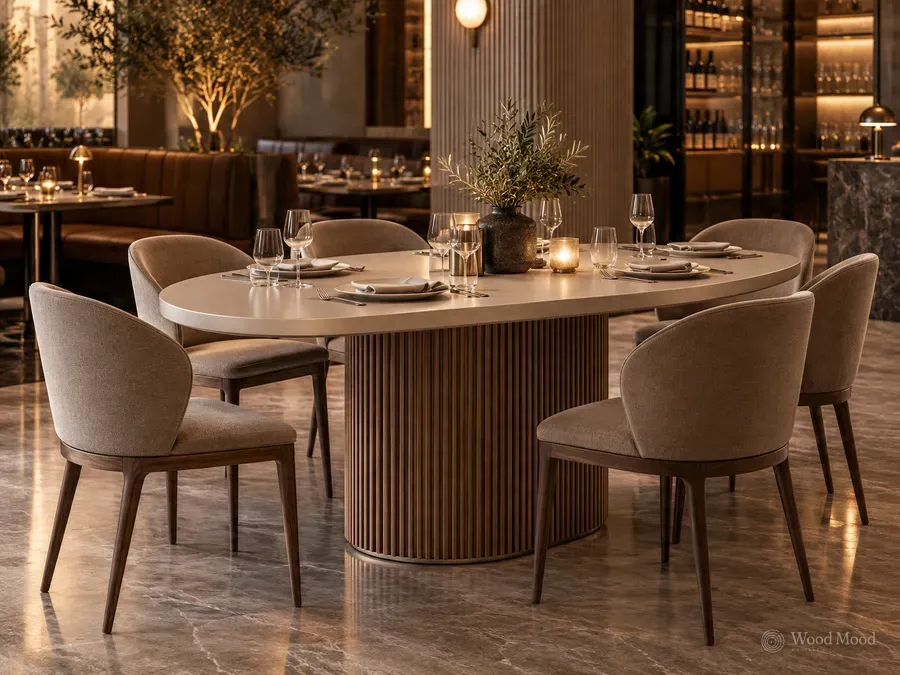
Heat resistance is the degree to which a surface keeps its colour, sheen and structure when in contact with hot objects, steam or high temperatures. It is an important property for kitchen worktops, dining tables, bathrooms and furniture around cookers. If a surface does not resist heat well enough, ring marks, blistering, discolouration or cracking can result.
There are major differences between materials. Natural stone, quartz, ceramic, stainless steel and porcelain surfaces are generally resistant to hot pans, although sudden temperature change can crack stone and ceramic. High-pressure laminate and compact laminate give a moderate level of heat resistance. Varnished timber, lacquer, melamine and membrane foil surfaces are more sensitive, and a hot pan can leave a white ring. Membrane surfaces can blister from heat around ovens or hobs.
Doors used next to a hob need heat-resistant facings, or heat-insulating tape and aluminium foil protection. The heat of kitchen appliances can also damage door edges, so heat barriers and clearance gaps are planned for this reason.
When choosing, read the heat resistance the manufacturer gives for the surface. In daily use, put hot pots and pans on a trivet, not straight on the worktop. On heat-sensitive surfaces, even one hot pan can make a mark permanent, and a trivet is the easiest protection.