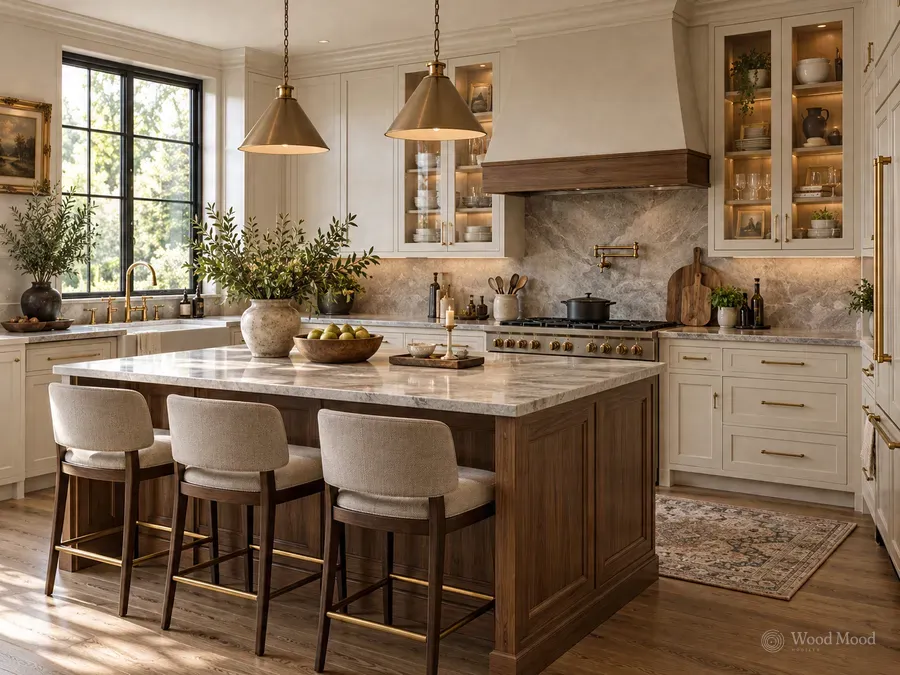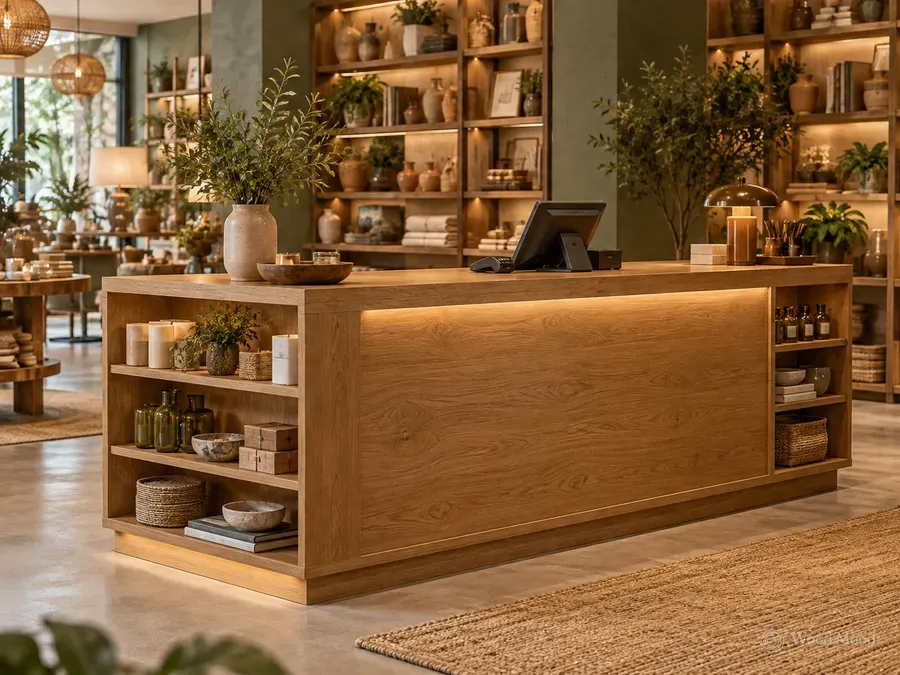
A laminate worktop is made by bonding high-pressure laminate (HPL), a thin and hard decorative sheet, to a chipboard or MDF core. HPL is produced by pressing layers of resin-soaked paper under heat and pressure, which gives the face resistance to scratching and wear.
Its main advantage is the huge choice of patterns and textures, including stone, timber, concrete and plain colours. It is much cheaper and lighter than stone worktops. Edges and joints that take in water can make the core swell, so these areas must be well sealed. Hot pans and sharp knives can burn or cut the surface, and repair options are limited.
Laminate is widely used in kitchens, offices, shops, hotel room furniture, counters and desks. When choosing, compare a rolled postformed edge, a square edge and an ABS edge strip. Around the sink in particular, the cut edges should be sealed with silicone. A damp cloth with a little soap is enough for daily cleaning; abrasive pads and solvents can spoil the gloss. For heavily used or damp areas, a moisture-resistant core board is a sensible choice.