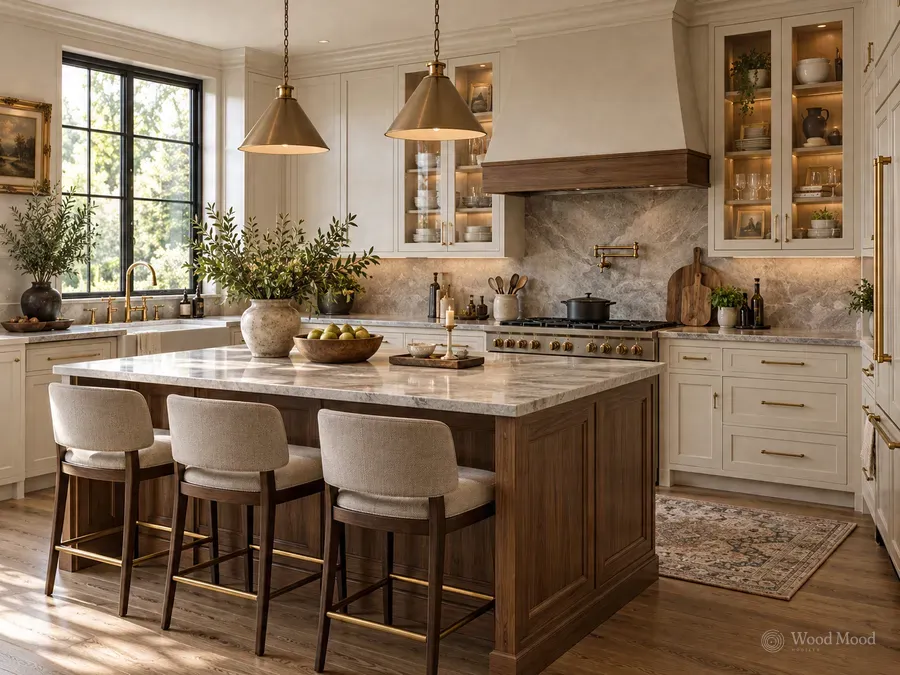
Marble is a natural stone made mostly of calcium carbonate, formed when limestone is changed by heat and pressure. It comes in white, grey, beige, green and black, each with its own veining. Worktop slabs are usually cut 2 to 3 cm thick and finished polished or honed.
Because it contains calcium, marble reacts with lemon juice, vinegar, wine and acidic cleaners, leaving dull marks known as etching. It is softer than granite and can pick up fine scratches over time. Many owners accept this patina as natural ageing. A sealer reduces staining but does not remove the risk.
Marble is often chosen for bathroom vanity tops, pastry and baking areas in kitchens, fireplace surrounds, coffee tables and hotel bathrooms. In a kitchen used for heavy cooking, consider a harder stone, or reserve marble for lighter-use zones. Wipe up spills promptly and clean with warm water and a neutral soap. Selecting slabs from the same block helps the veining run continuously across joins.