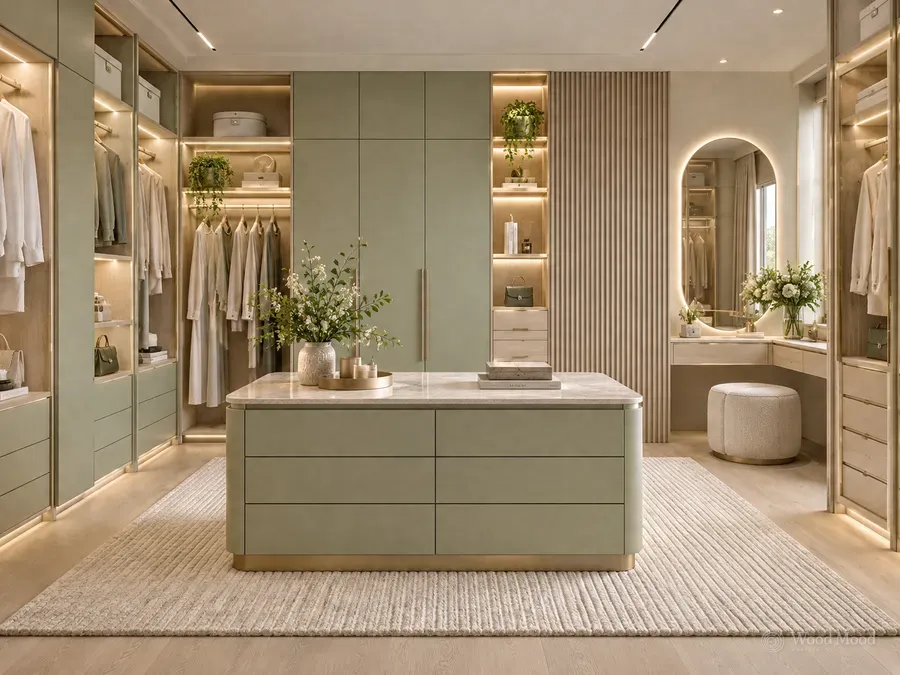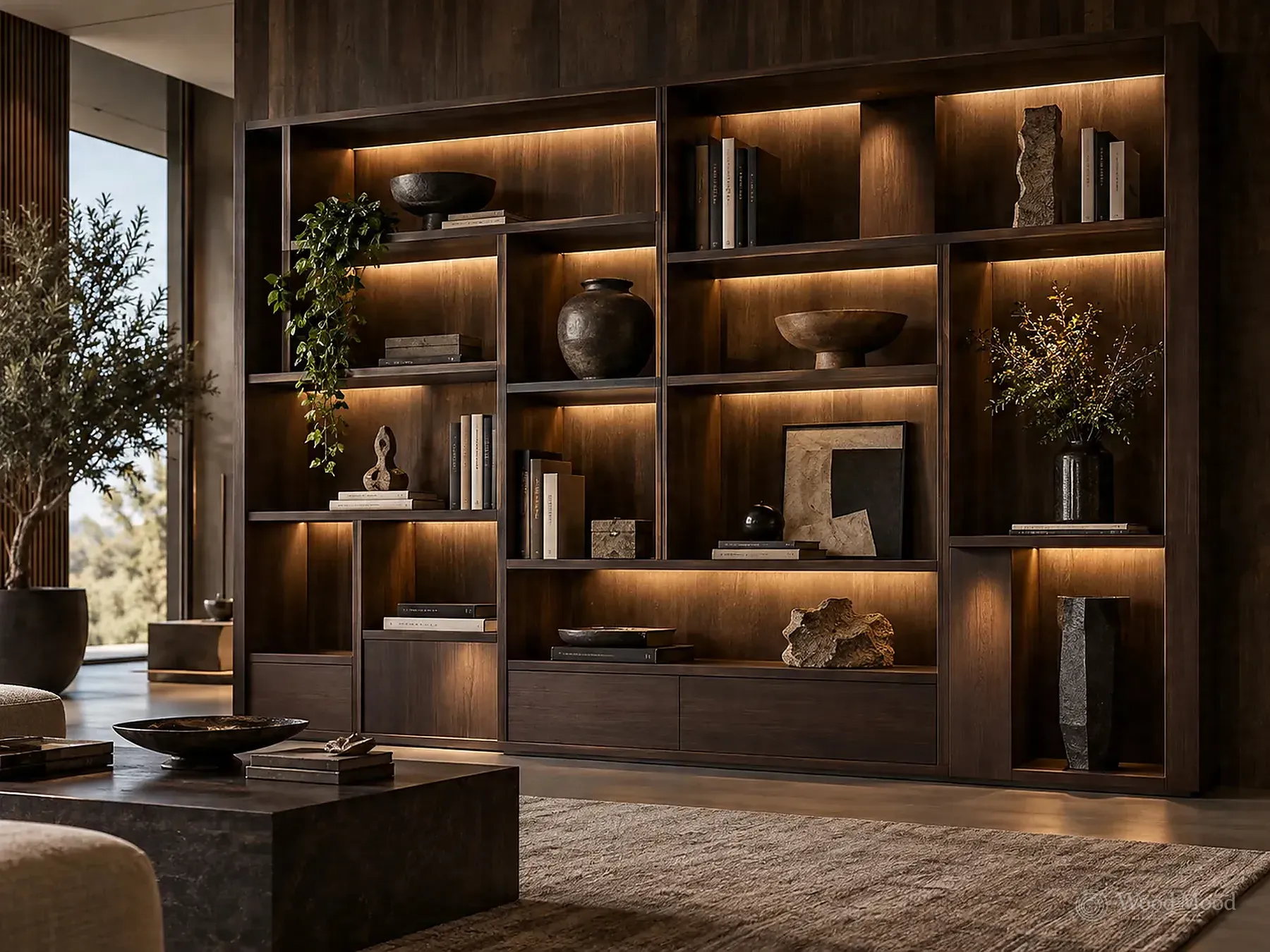
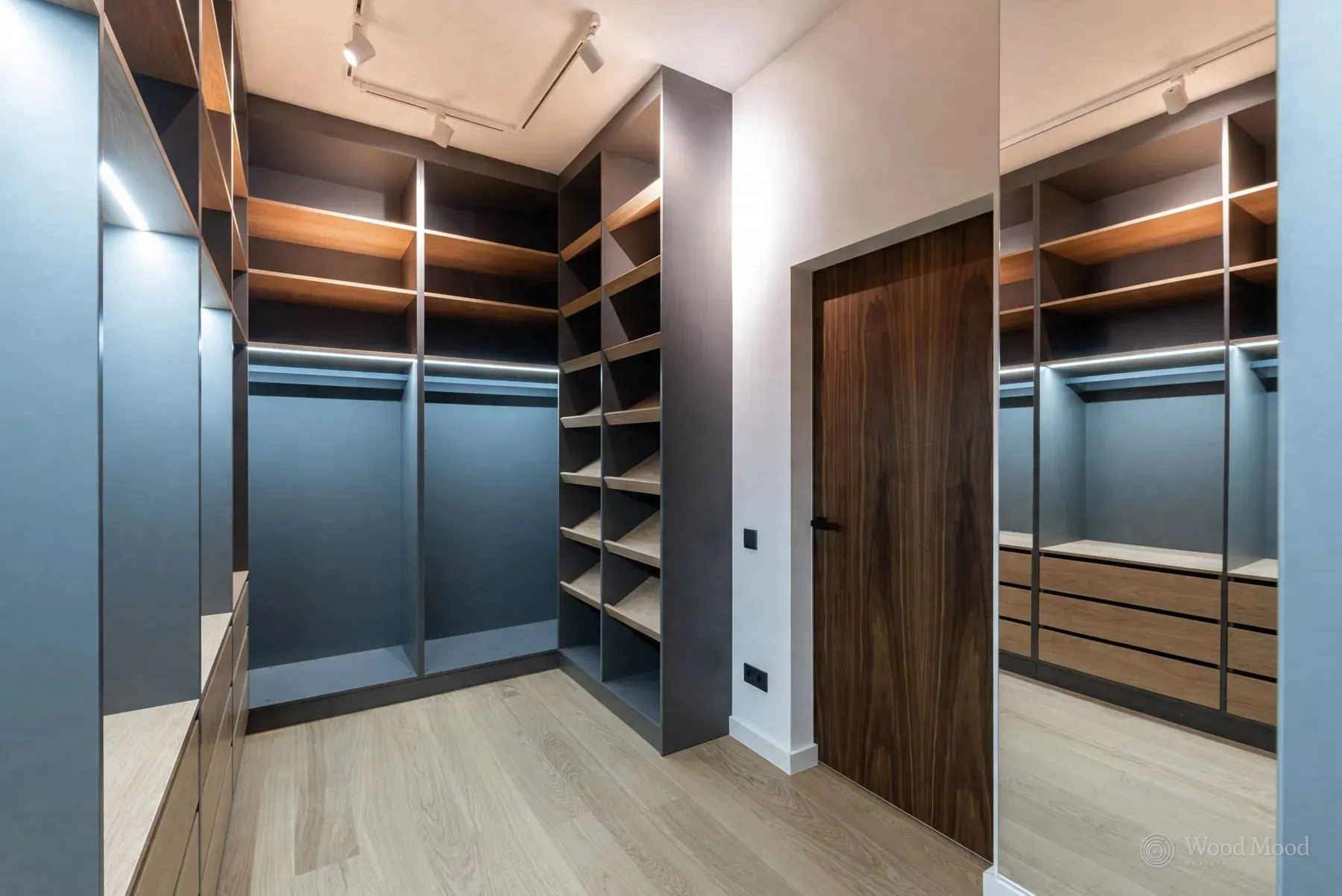
A shelf is a board that carries items on a horizontal plane inside a cabinet or on a wall. It divides storage space into levels, prevents items being piled on top of each other and keeps everything visible. It is one of the most basic building blocks in kitchens, wardrobes, pantries, libraries and shop display units.
Shelves can be fixed or adjustable. Adjustable shelves rest on pins in holes drilled in the side panels, so the height can change as needs change. An open shelf is mounted on a wall or frame without a door. Glass, timber, melamine-faced and metal shelves are the main types. Thickness is generally 16 to 25 mm, and a long span can sag over time.
When choosing, balance the shelf length against the weight it must carry; for heavy items such as books and plates, a thicker board or a support batten at the front edge is used. A centre support on long shelves prevents sagging. Edge banding improves both appearance and moisture resistance. Glass shelves should be toughened for safety and have a finished edge. Planning the spacing according to the height of the items avoids wasted space.