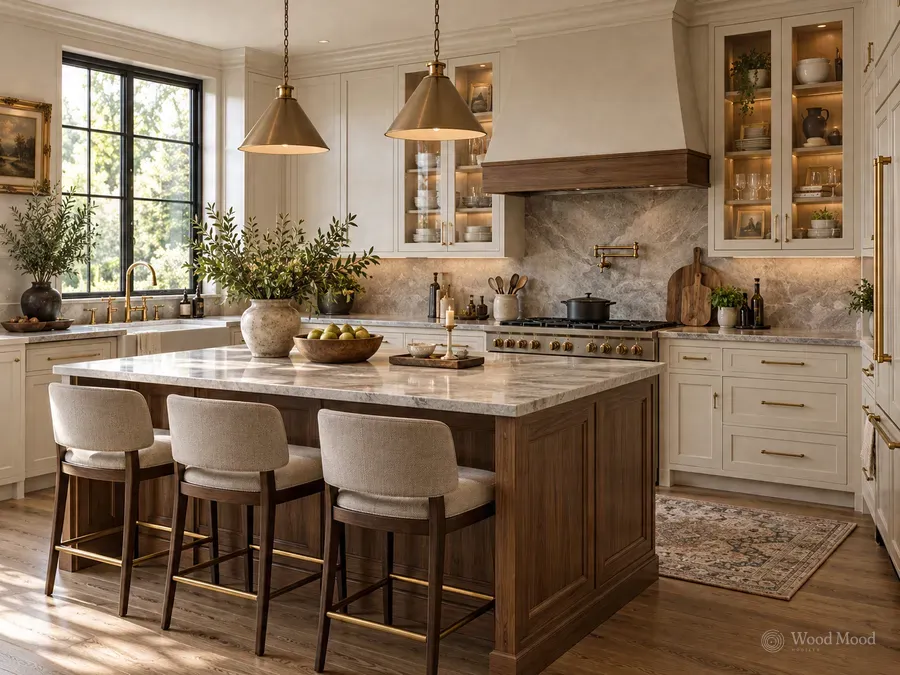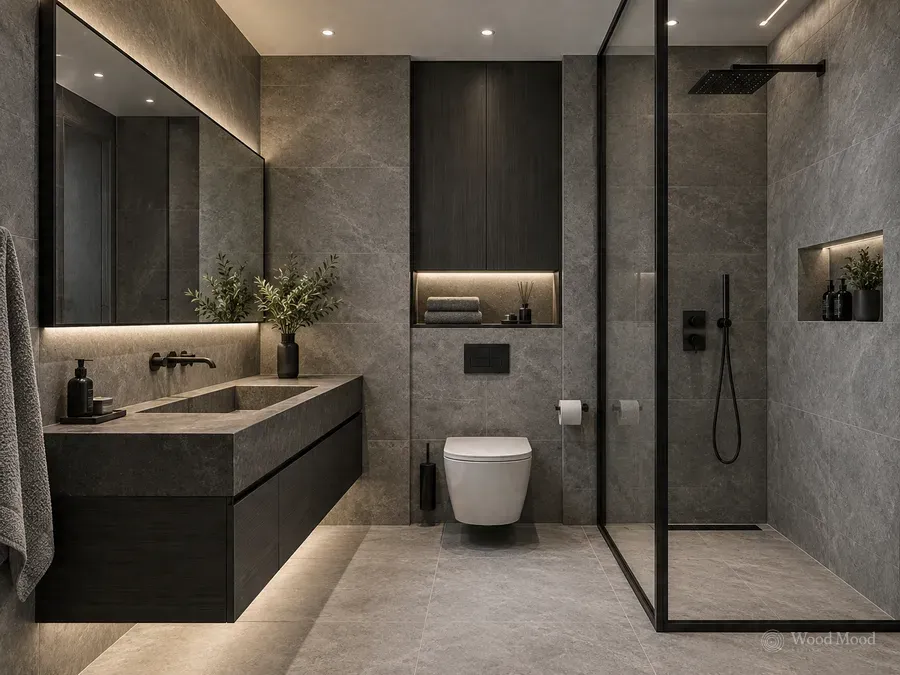
Sintered stone, also sold as ceramic worktop, is made from natural mineral powders such as clay, feldspar and silica. The powders are compressed under very high pressure and fired at high temperature until they fuse. It contains no resin, so it tolerates heat and sunlight well. Slabs are generally produced from about 6 mm to 20 mm thick.
The surface is non-porous and highly resistant to stains, scratches, abrasion and UV light. A hot pan can be put straight on it, and knives leave little mark. Printed patterns that imitate marble, concrete, oxidised metal and timber are common. Depending on thickness, there is a risk of chipping at edges and corners if struck sharply.
It is used for kitchen worktops, islands, bathrooms, wall and facade cladding, and outdoor kitchens. Thin sheets also serve as splashbacks and as a surface for furniture doors. Cutting and edge work need specialist equipment, so fabrication should be done in an experienced workshop. Warm water and a mild detergent are enough for daily cleaning. Beyond avoiding hard impacts on edges, no special care is needed.