
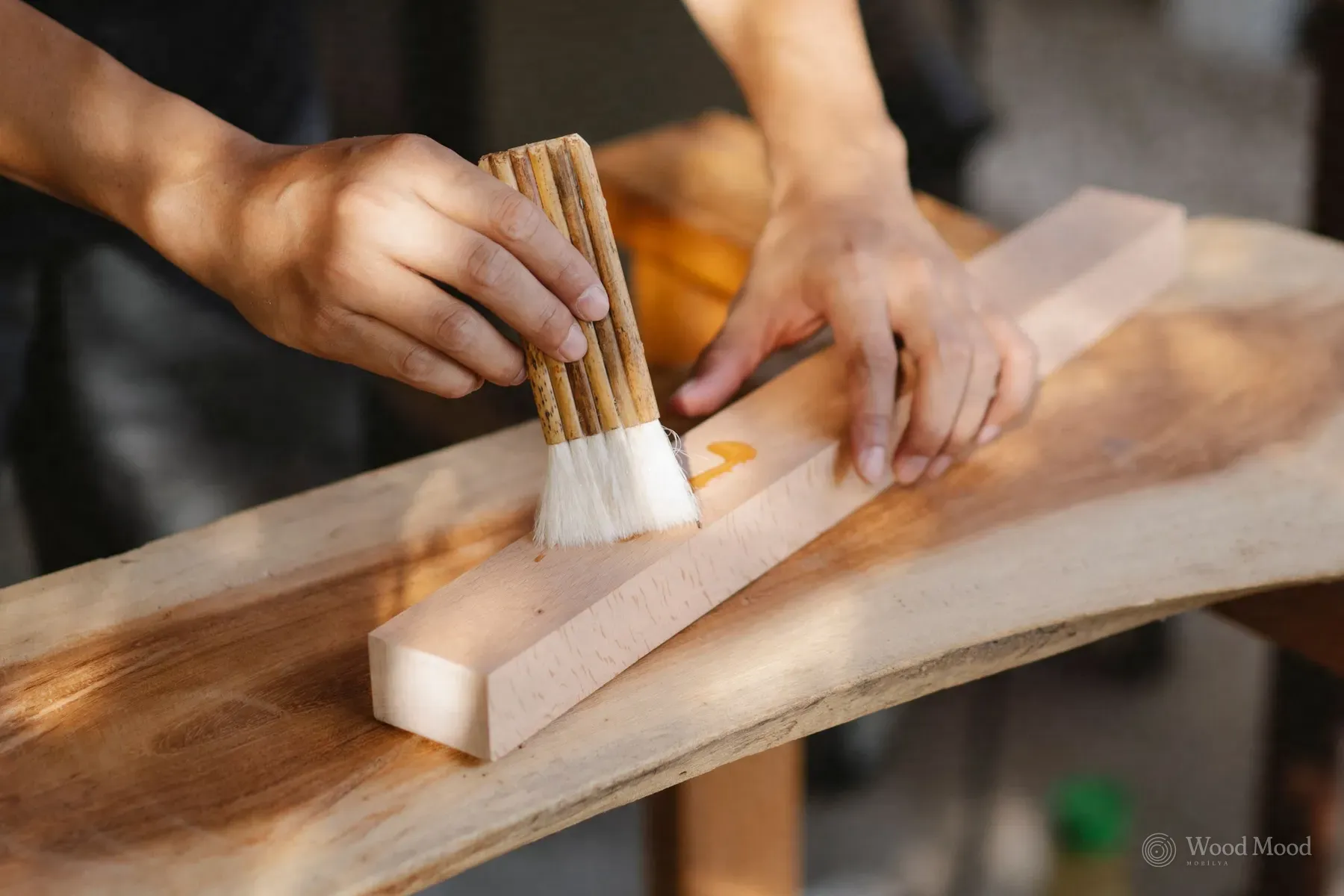
Wood oil is a protective product made from plant oils such as linseed, tung, soy or sunflower, sometimes blended with waxes, that soaks into the fibres of the timber. Unlike varnish, it does not form a thick film on the surface; it penetrates the wood and leaves the texture open. The result is a natural matt or satin look that emphasises the grain and colour of the wood.
An oiled surface feels natural, and when scratched or stained it can be repaired by re-oiling just the affected area rather than stripping the whole surface. Oil gives some resistance to water and stains but does not form as complete a barrier as varnish. Oil can take days to cure, and oily rags carry a risk of spontaneous combustion, so used rags should be spread out in the open air or soaked in water.
It is used on solid wood worktops, tables, chairs, shelves, veneered doors and children’s furniture. For surfaces in contact with food, choose products stated to be food safe. Ask about colour (clear or pigmented), the level of matt and the intended use. An oiled surface should be refreshed once or several times a year depending on how heavily it is used. A damp cloth is enough for care, and the surface should be clean and dry before re-oiling.