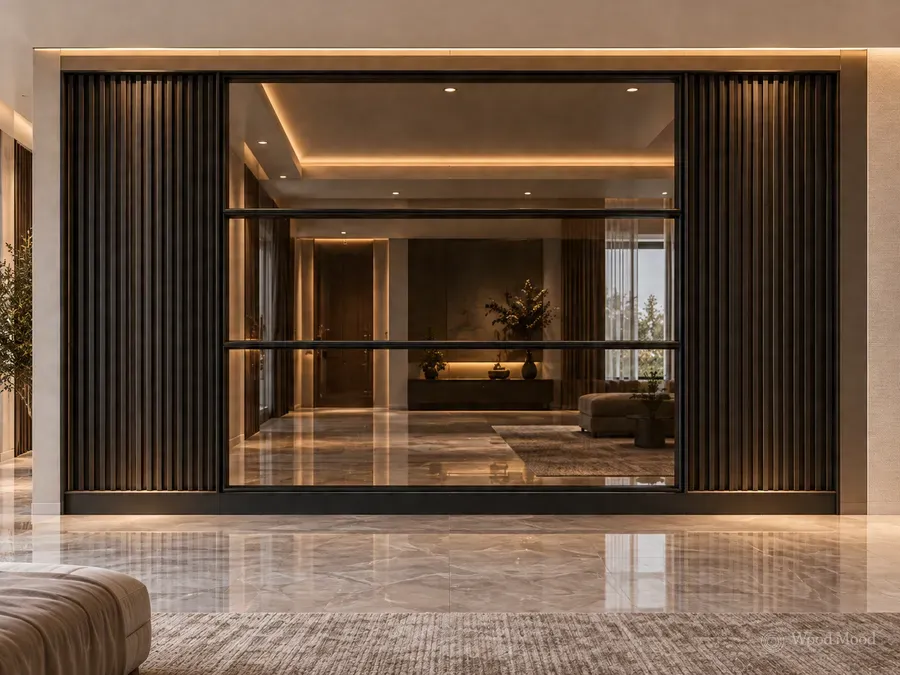

Wood veneer is a thin layer of natural timber, usually around 0.5 to 0.6 mm thick, sliced from logs of oak, walnut, ash and other species. It is pressed and glued to a core such as MDF, plywood or chipboard. The result carries the real grain, colour and texture of solid wood on a board that is more stable and less costly.
The slicing method changes the pattern: plain-sliced, half-round and quarter-cut veneers each show a different figure. Consecutive leaves from one log can be matched side by side to create symmetrical patterns such as book-match. Dyed, stained and reconstituted veneers are also made.
Typical applications include kitchen and wardrobe doors, wall panelling, doors, office and hotel furniture, headboards and TV units.
Veneered surfaces are protected with varnish, oil or lacquer. Because the layer is very thin, sanding needs care. Strong sunlight can change the colour over time, and surfaces should be kept clear of standing water and direct heat. Choosing veneer from one batch improves colour match, and exposed edges must be banded.