Compact laminate is a thick form of HPL, made by pressing layers of phenolic-resin paper at high pressure through its entire thickness. Typical thickness is 6 to 20 mm. As it needs no substrate, it can be cut and used as a board in its own right. The core is often dark, and the exposed edge is a visible feature.
It resists water, moisture, impact, scratching and chemicals very well. The surface is non-porous and hygienic and cleans easily. UV-stable grades are made for exterior use. It is dense and heavy, and cutting calls for hard-tipped tooling.
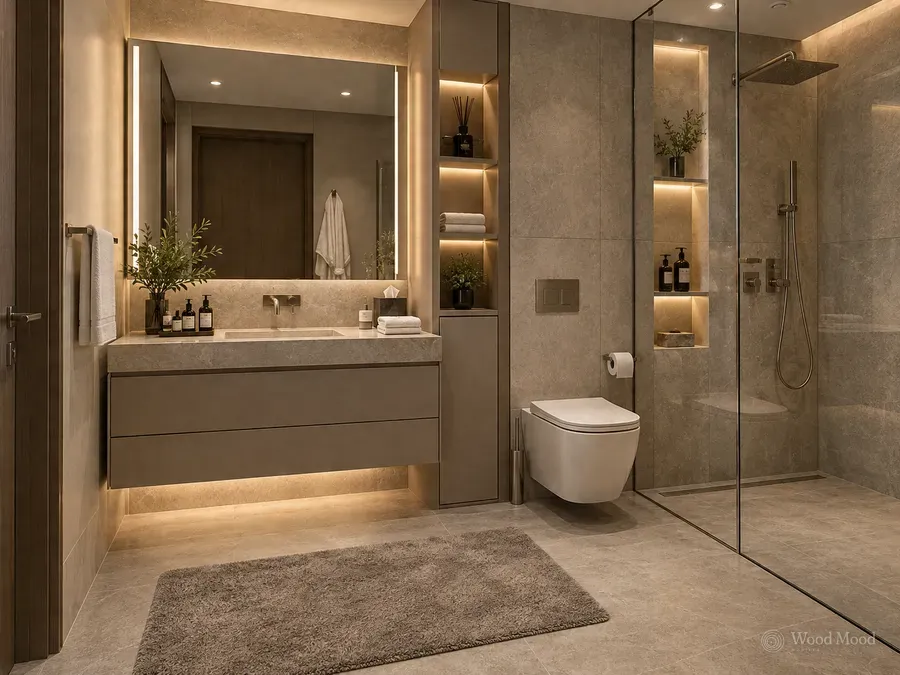
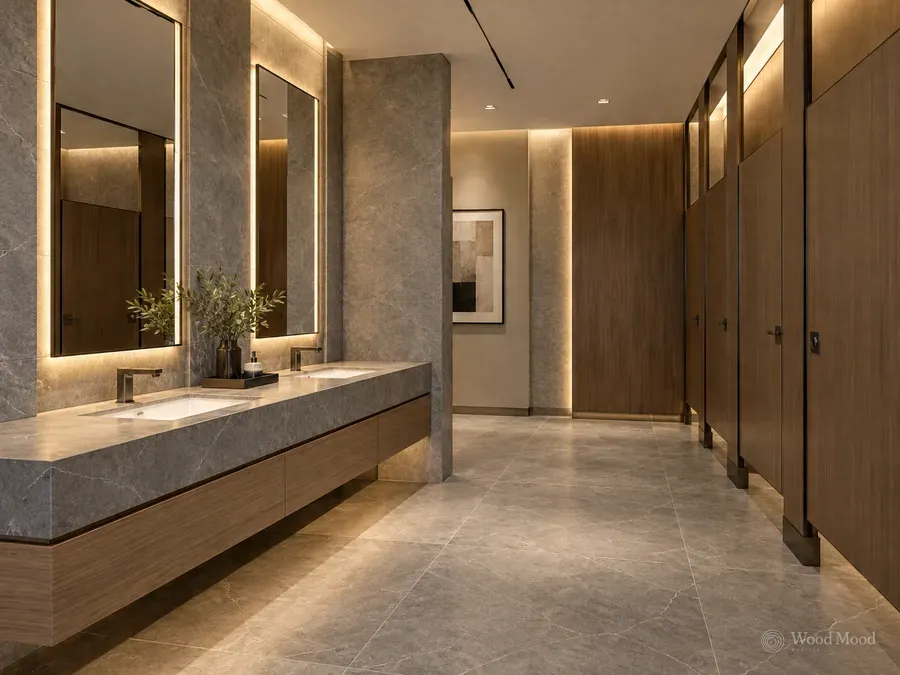
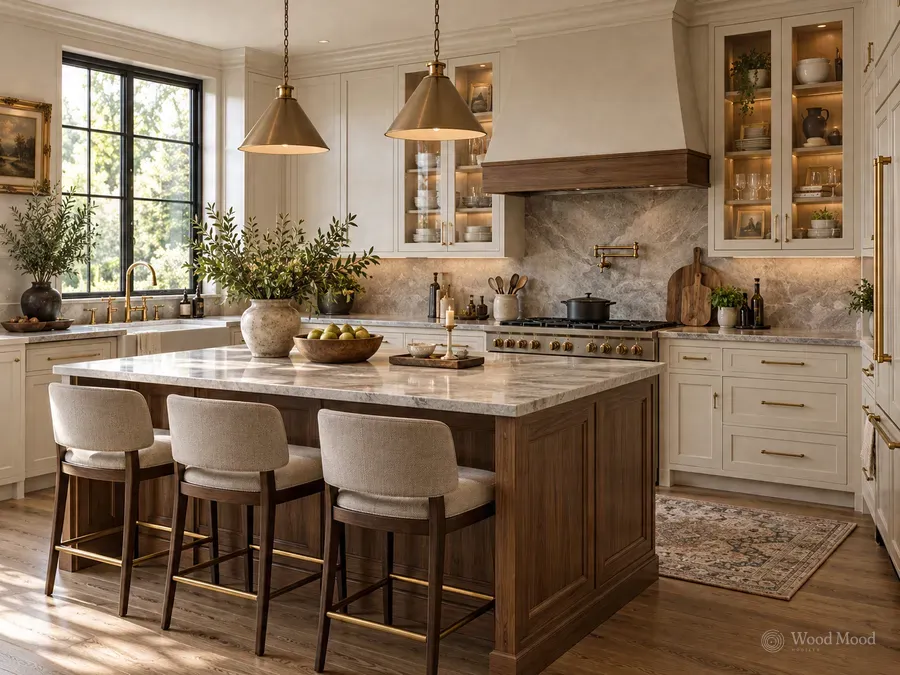
It is used in damp or busy places such as bathroom and shower cubicles, washbasin counters, toilet partitions, laboratory and kitchen worktops, cabinet doors, facade cladding and balcony balustrades.
When choosing, look at thickness, surface texture and light resistance. The edge can be left exposed, and in many designs the edge profile becomes part of the look. Leave allowance for expansion when fixing, and drill with suitable bits. Handle the sheets carefully so that the edges are not chipped during transport and fabrication.