A hinge is the movable joint that attaches a door or a cabinet front to the carcass and allows it to open and close. In furniture it is most often used on cabinet doors, display units and wardrobe doors. Choosing the right hinge decides whether the door closes evenly, avoids sagging over the years and works quietly.
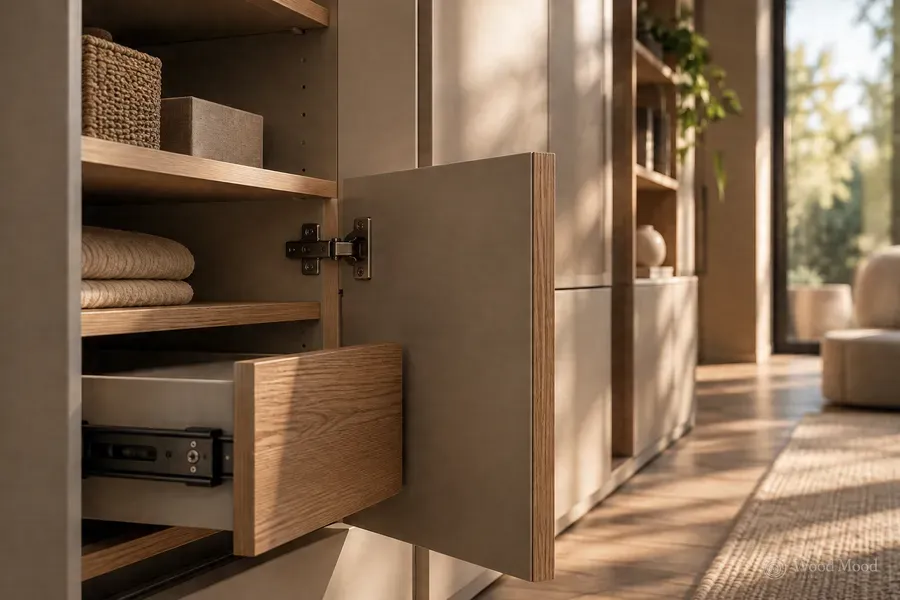
The most common types in furniture are the concealed (cup) hinge, the piano hinge and the pivot hinge. A concealed hinge cannot be seen from outside when the door is shut, which is why it is preferred in modern kitchens and dressing rooms. Thanks to three-way adjustment screws, the door can be aligned to the millimetre in height, depth and side gap.
Soft-close hinges slow the door just before it shuts, so the slamming noise and the vibration in the carcass are reduced. The opening angle is usually between 95 and 110 degrees, and some wide-opening models reach 165 degrees. As the size and weight of the door grow, the number of hinges must grow too; a tall pantry door commonly uses four or five.