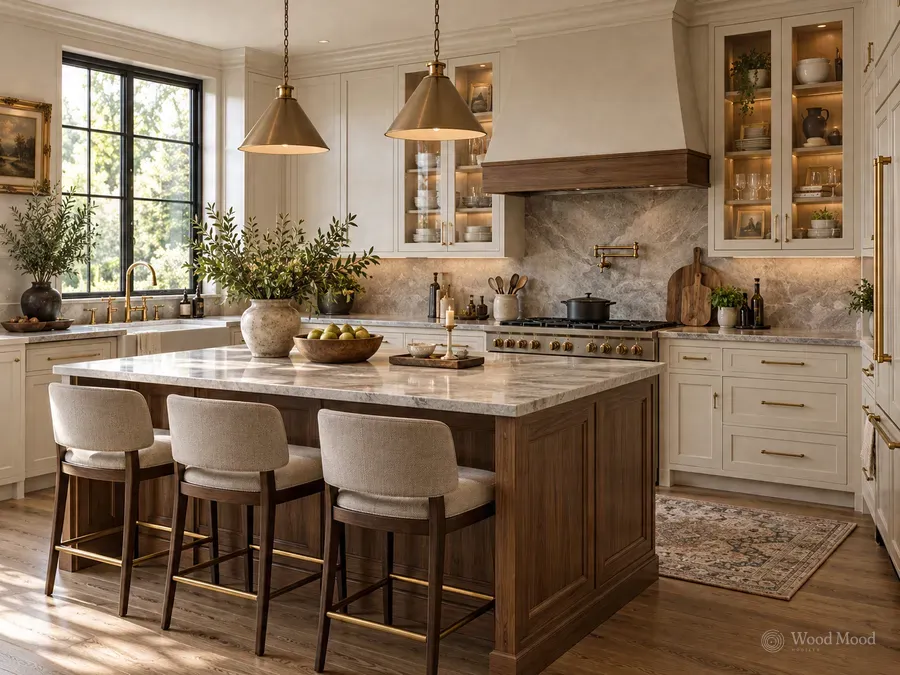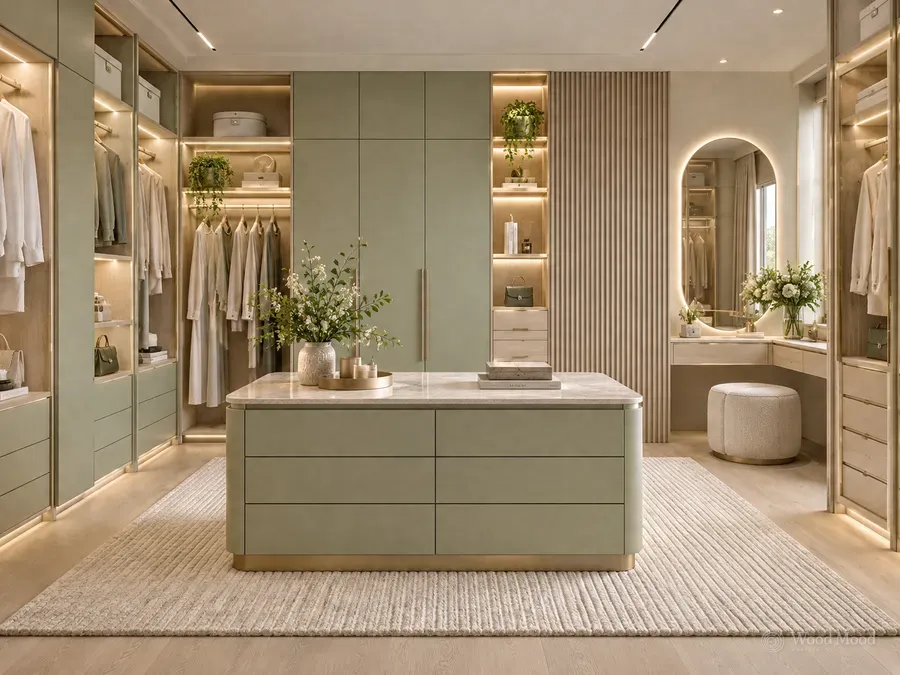

An LED strip is a thin band of light made of small LEDs mounted on a flexible circuit board, with an adhesive backing. It can be shortened to the length needed at cutting marks placed at set intervals. It is widely used for indirect lighting under kitchen wall cabinets, inside wardrobes, under shelves, in display units and in ceiling recesses.
Strips are made for 12 or 24 volts and are connected to the mains through a driver. The number of LEDs per metre and the light output vary, and warm white, natural white, cool white and colour-changing RGB types are available. Those with a high colour rendering index (CRI) show colours such as clothes and food correctly. Dimmable models let the light level be adjusted. Strips with a waterproof coating can be used in bathrooms and kitchens.
Rather than sticking the strip to a bare surface, fitting it into an aluminium profile spreads the heat, lengthens its life and softens the light. At planning stage the transformer power, the total length and the cable routes need to be decided, and access to the transformer should be left for maintenance. The surface must be clean and dry, and the ends should not be strained at the connections. For care, the strip is cleaned of dust, and a failed section can be replaced without changing the whole strip.