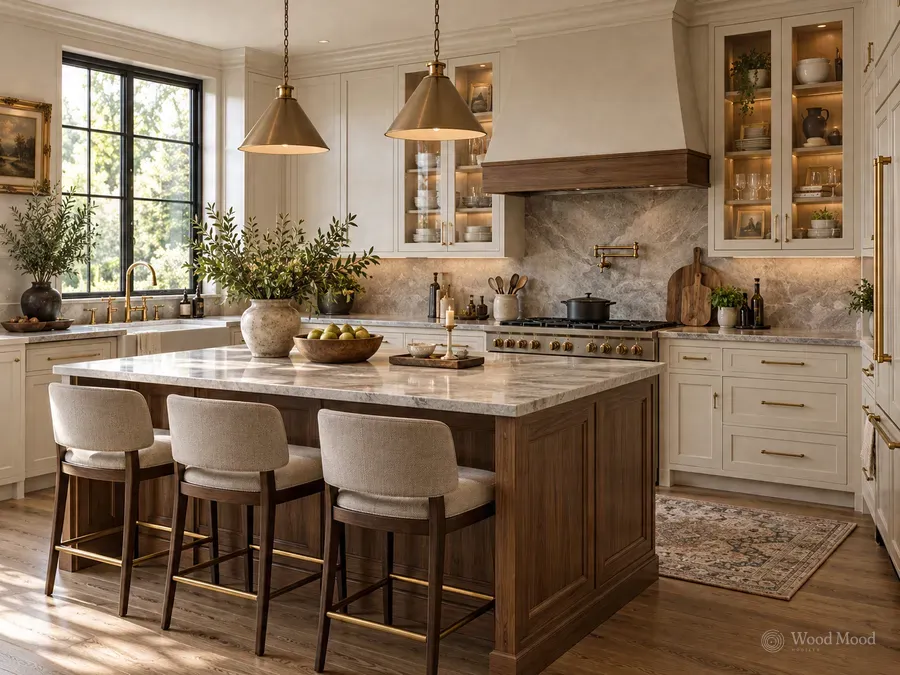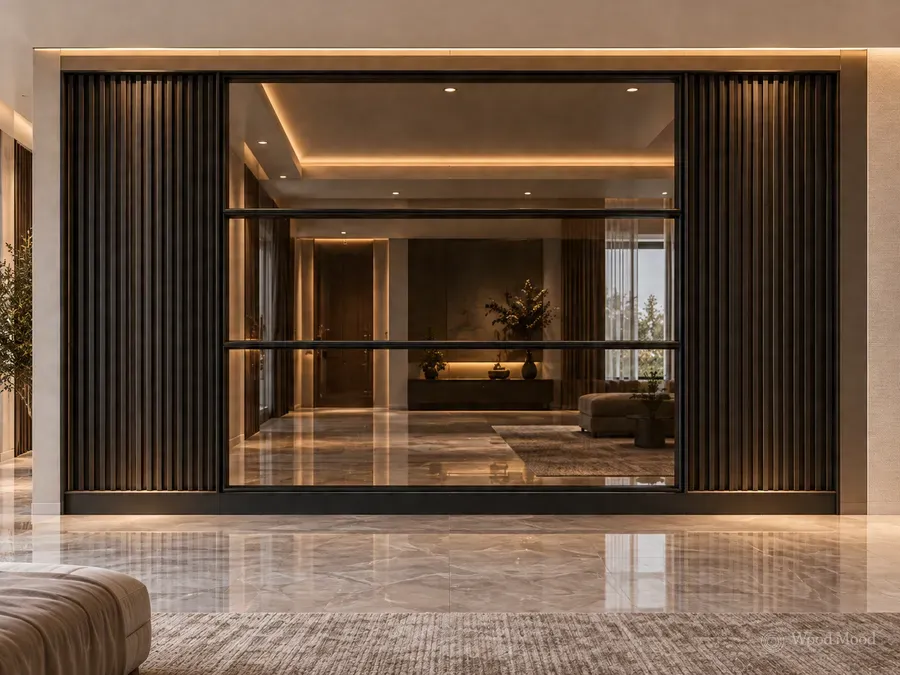
MDF, or medium-density fibreboard, is a panel made by breaking wood down into fine fibres and pressing them with resin under heat. The inside is uniform, so edges can be routed cleanly, the face is smooth and there is no grain to show through paint. That makes it one of the most common core materials for painted, lacquered and veneered furniture.
Boards are typically made in thicknesses from about 8 to 30 mm. Plain, melamine-faced, veneered and moisture-resistant grades are available. MDF machines well on a CNC router, which suits carved, embossed and profiled doors and the classic Shaker or raised-panel styles.
Typical uses include kitchen and wardrobe doors, wall panelling, skirting, door linings and decorative screens. For structural parts that carry heavy loads, designers often combine it with plywood or chipboard.
When choosing, check density and edge quality. MDF is sensitive to water, and cut edges or screw holes that are left unsealed can swell. In damp rooms, specify a moisture-resistant grade and seal every edge with banding or paint. Screw holding is weaker than in solid timber, so fixing points need suitable fittings and sensible spacing.