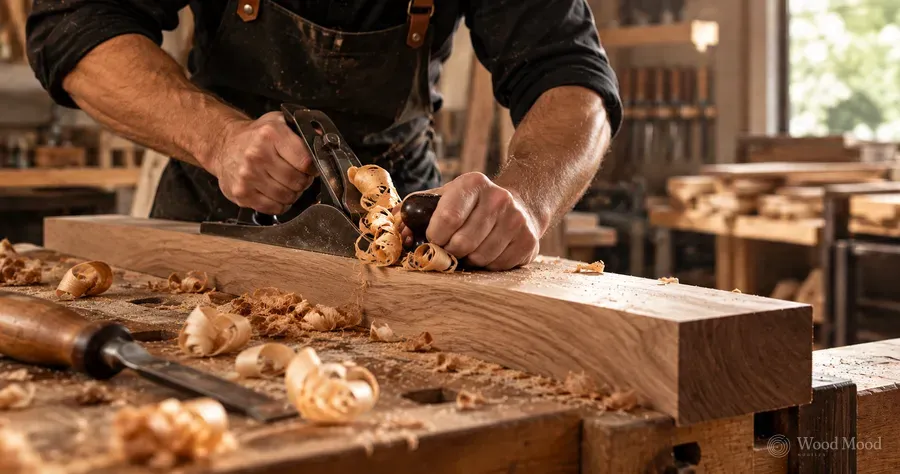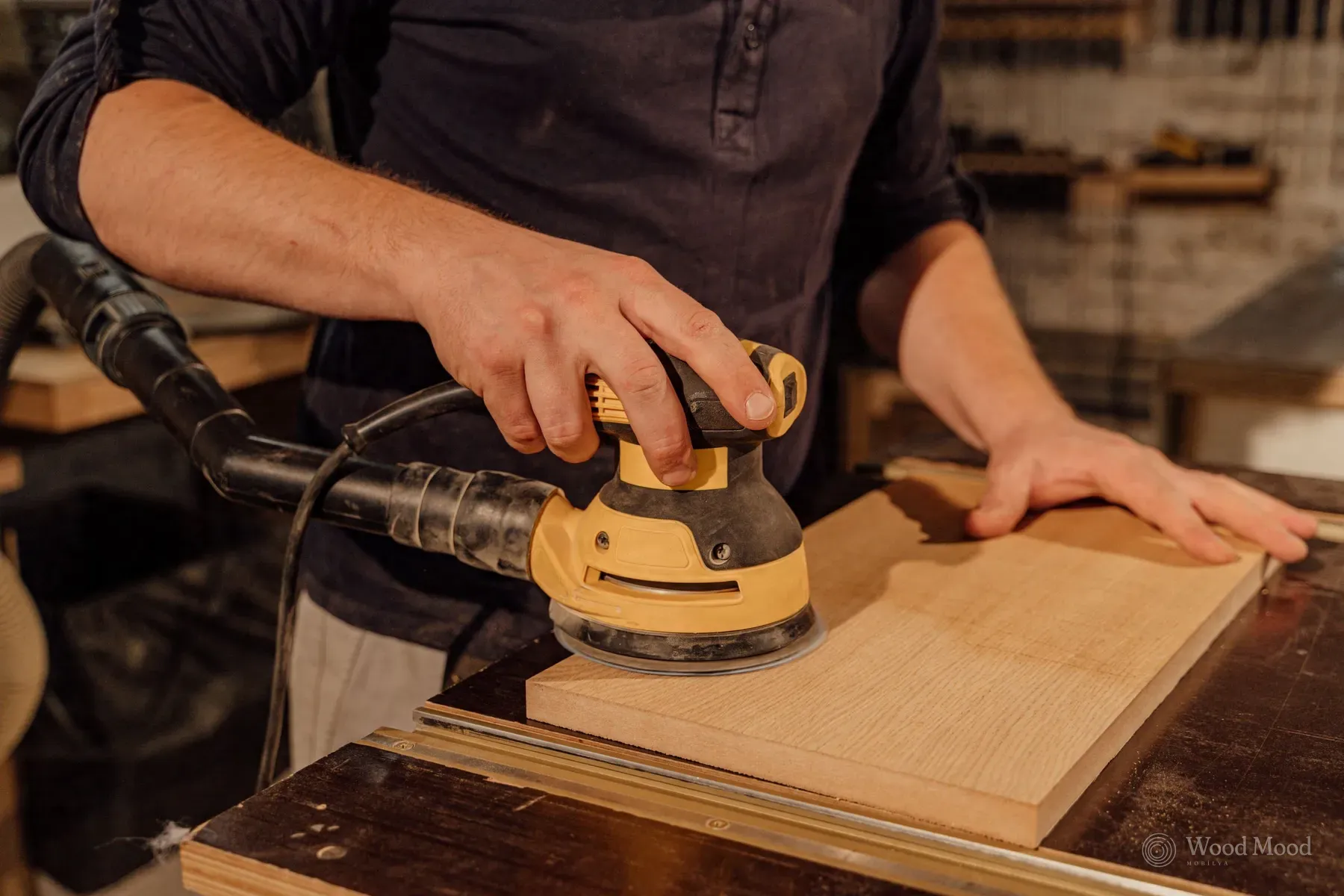
Sanding removes roughness, tool marks and small flaws from wood, MDF or veneered surfaces using abrasives, preparing them for paint, lacquer or varnish. Much of the final surface quality in furniture is decided at this stage. On a poorly sanded surface, even the best finish cannot hide the defects.
Sanding is done in stages. Work usually starts with a coarse grit, for example 80 to 120, then moves to 180, 240 and finer grades where needed. Workshops use random orbital and orbital sanders, wide belt or calibrating machines for large panels, and hand blocks or sponge pads for corners and profiles. Between coats of paint or varnish, very fine grit is used to smooth the surface.
On solid wood, sanding follows the grain, because cross-grain scratches show up strongly once a finish is applied. Veneer is very thin, so too much pressure can cut through to the layer beneath. After sanding, all dust must be cleaned away, since leftover dust causes bubbles and roughness in the finish. Dust extraction and a mask are also needed for healthy working conditions.