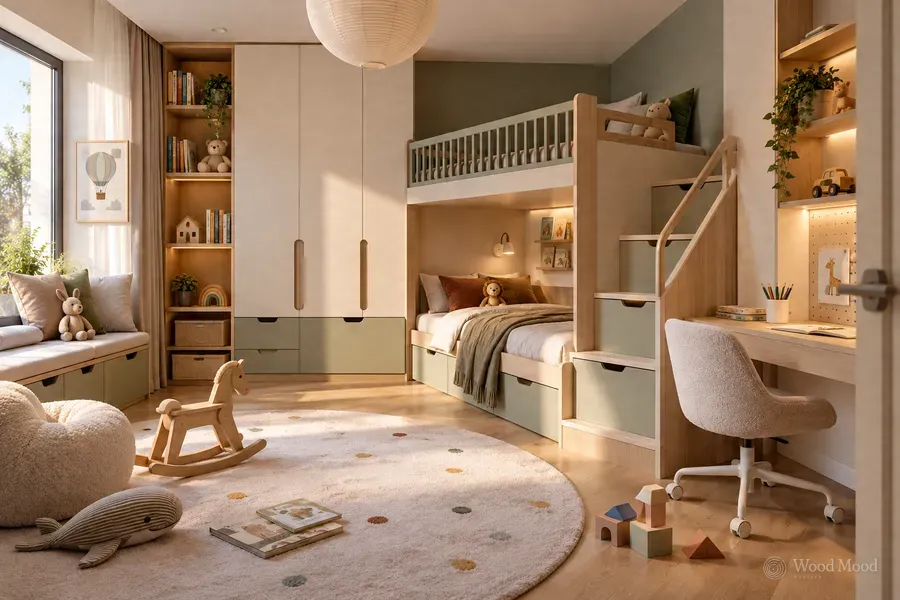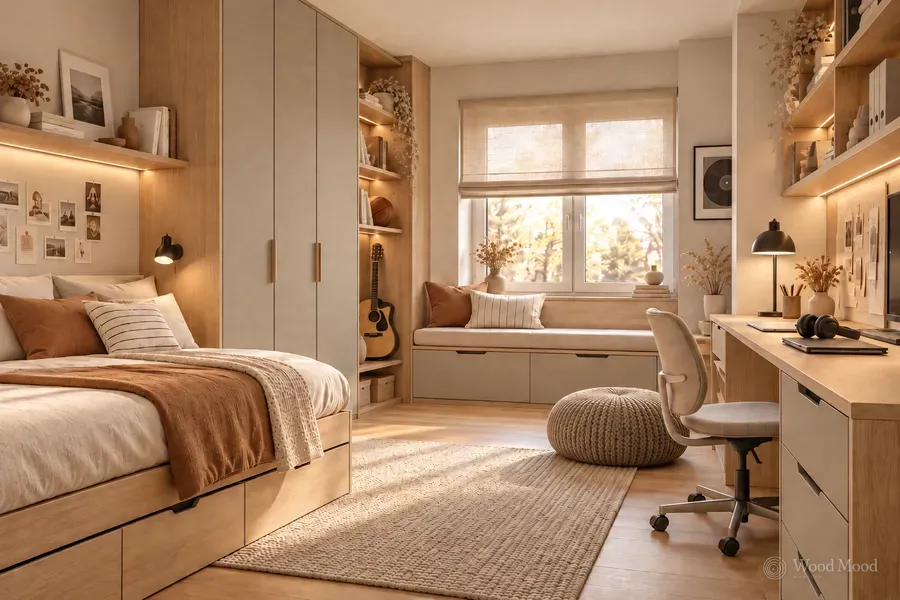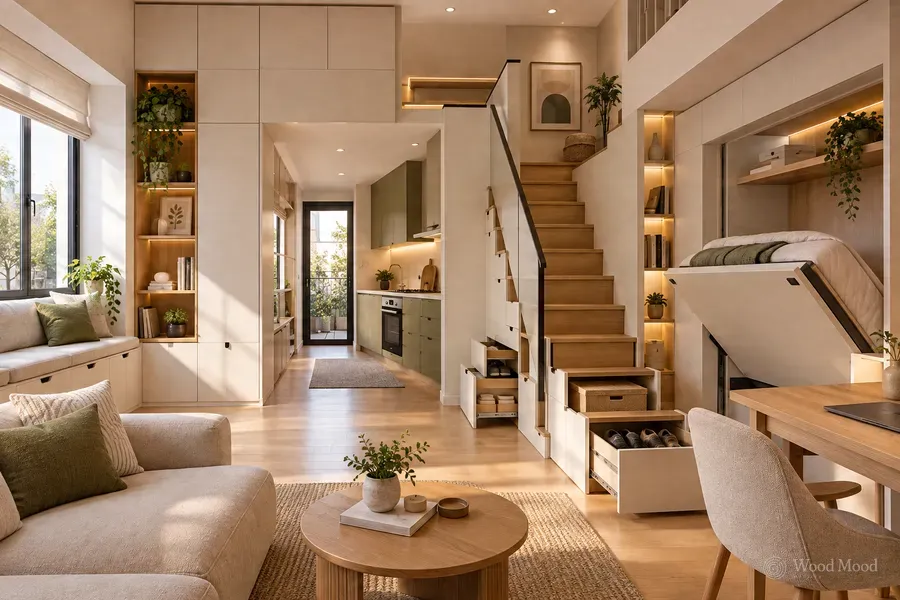
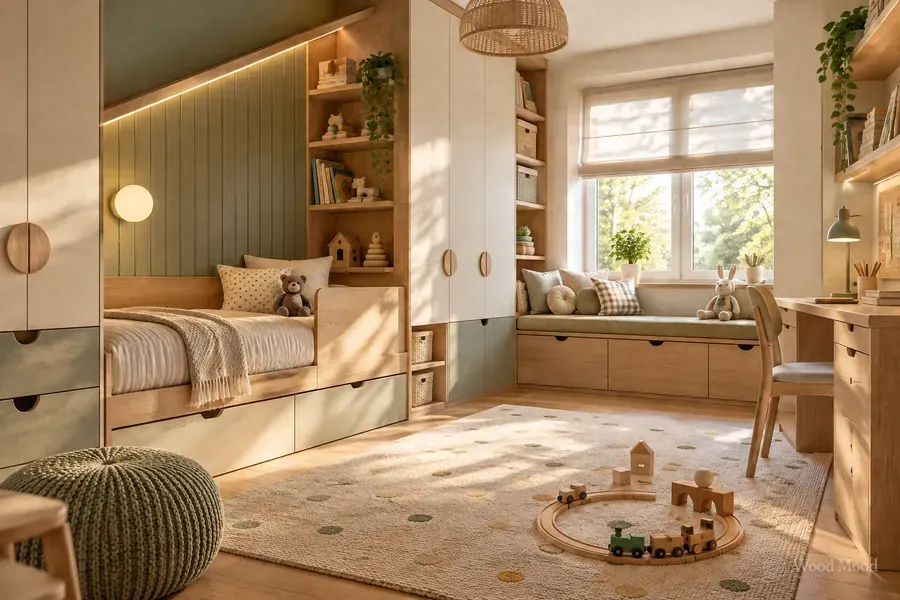
A child’s room is one of the fastest-changing living spaces in the home. In infancy the cot and changing unit take centre stage; in later years toy cupboards, a desk and bookcases become more important.
Choosing designs that adapt as your child grows, rather than replacing all the furniture at each age, makes better use of the space and helps the furniture last longer.
So how should you plan a room that grows with your child?
What is convertible furniture?
Convertible furniture is designed so that it can serve different functions over time.
With adjustable shelves, interchangeable modules and a choice of ways to use them, pieces can adapt as your child develops.
A chest of drawers used as a changing unit in infancy, for example, can later become an ordinary chest of drawers. Shelves used for toys can in time become a bookcase or storage for hobby materials.
What matters in these designs is that the main carcass of the furniture is sturdy and suited to changing needs.
How a child’s room needs change with age
The furniture children need in their rooms differs with age.
Infancy: A safe cot, a changing area, a clothes cupboard and storage that parents can easily reach come first.
Pre-school years: Low toy shelves, cupboards within easy reach and enough clear floor space for play become more important.
Primary school years: A desk, a bookcase, stationery drawers and tidy storage for the school bag are needed.
Teenage years: A larger bed, a study area, a wardrobe and closed compartments for personal belongings become more important.
When planning furniture, it pays to think not only about today’s needs but also about how the room will be arranged a few years from now.
Beds that grow and convert
The bed is one of the main pieces of furniture in a child’s room that has to change over time.
Some cots can be converted into a child’s bed using the conversion parts supplied by the manufacturer.
Extendable children’s beds can be lengthened to match your child’s height.
For older children, bed frames with drawers can provide extra storage under the mattress. Where siblings share a room, bunk bed systems that can separate into two single beds when needed are worth considering.
Safety matters: A cot should only be converted using the system and parts approved by the manufacturer. For bunk beds too, the guard rails, ladder, mattress size and age limits must meet the relevant safety requirements.
Flexible cupboards and storage systems
In a child’s room, storage needs do not only grow; they change shape over time.
Sections that hold toys when your child is small can be given over to books and stationery at school age.
For this reason, you may prefer adjustable shelves and interchangeable interior layouts in cupboards.
Practical storage ideas:
- Shelves that can be moved to different heights
- Open compartments that can be adapted from toys to books
- Low drawers your child can reach
- Hanging space with adjustable height
- Door modules that can be added later
- Large storage drawers under the bed
When children can reach their own things easily, it is also easier for them to keep their room tidy.
Tall cupboards that could tip over should be fixed to the wall with suitable fixings.
A study area that grows with your child
A small table used for drawing and play before school gives way to a larger study area in later years.
To adapt to this change, consider height-adjustable desks or desktops that can be repositioned later.
The dimensions of the desk should suit your child’s height and habits.
An adjustable chair and a footrest, where needed, support a good sitting position.
Adjustable shelves on or beside the desk also make it easier to organise books, notebooks and any computer equipment you may add later.
Choosing colours and materials
Children’s tastes in colour and design can change over time. That is why plain, lasting colours on large pieces of furniture pay off in the long run.
Light oak, off-white, sand beige and natural wood tones can work with different decor schemes from infancy to the teenage years.
The colours that give the room its character can be added through details that are easy to change.
For example:
- Bed linen and curtains
- Rugs and cushions
- Wall paint and decorative boards
- Furniture handles
- Toy boxes and accessories
This way, when your child’s tastes change, you can update the look of the room without replacing all the furniture.
Safety in children’s room design
In convertible furniture, durability and safety matter as much as appearance.
When choosing furniture, pay attention to these details:
- Corners and edges should be properly rounded.
- Drawer and door fittings should be suited to heavy use.
- Tall cupboards should be fixed against tipping.
- Check moving parts for risks such as trapped fingers.
- Materials and surface finishes should be chosen to suit areas where children spend time.
- The fixings and extra parts used during conversion should be safe.
For beds, bunk beds and raised furniture in particular, the relevant product safety requirements should form the basis of the design.
Designing a room for many years of use
The best solution for a child’s room is to plan for the needs that may arise later as well as choosing furniture for the current age.
The placement of fixed cupboards, the position of the study area and adjustable shelving systems make it easier to rearrange the room at different ages.
At Wood Mood Furniture, we consider furniture dimensions, storage needs and future use together in children’s and teenage room projects. We prepare the designs with 3D drawings, manufacture the approved furniture in our own factory and install it on site.
A well-planned child’s room can change as your child grows and stay easy to use.