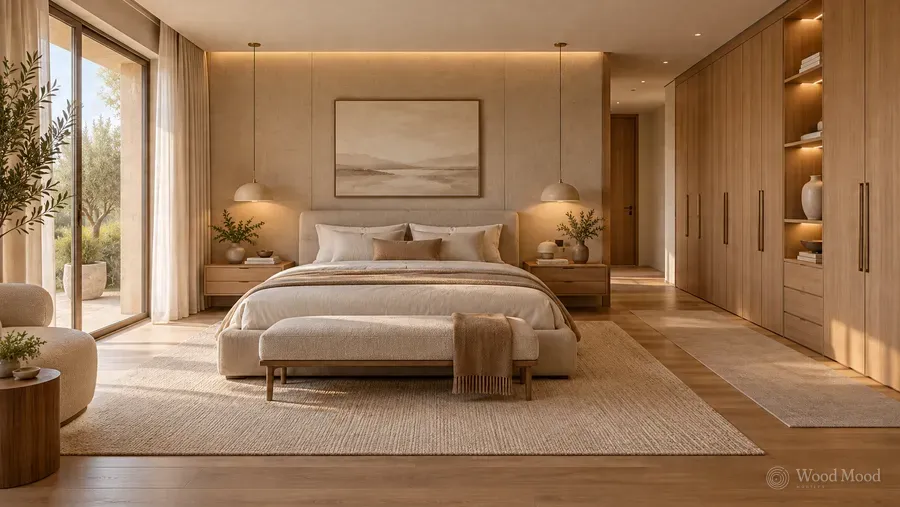
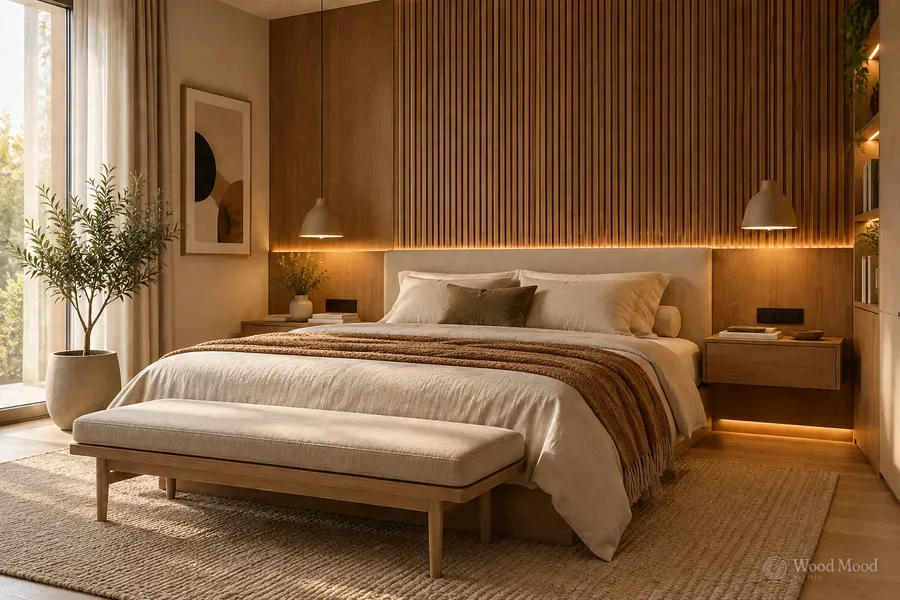
The wall behind the bed is one of the main things that set the look of a bedroom. A well-designed headboard or wooden wall panel can turn a plain bedroom into a warmer, more cohesive living space.
Headboards are not only decorative. They can also provide back support, protect the wall, hold lighting and offer storage.
So what should you look for when choosing a headboard? And how do you create a balanced design with wooden panels?
Headboard styles
Headboards can be made in different ways to suit how you use the room and its design.
Wooden headboards: Can be designed with solid wood or natural wood veneer surfaces. The grain and warm tones of the wood give the bedroom a natural look.
Upholstered headboards: Their padded surfaces give more comfortable back support when you sit up in bed. They can be combined with wooden frames to create modern designs.
Wall-mounted headboards: Fixed to the wall independently of the bed. The width and height of the headboard can be designed to span the bed and the bedside tables together.
Headboards with integrated bedside tables: Floating bedside tables or small shelves made from the same material as the headboard save space, especially in narrow bedrooms.
Headboards with storage: Shelves and cupboards added around the bed create extra storage.
How to decide headboard dimensions
The dimensions of the headboard should suit the width of the bed and the overall proportions of the room.
The headboard should be at least as wide as the bed. A wide design that also covers the bedside tables can give the bed wall a more cohesive look.
Height should be judged against the bed base and mattress. A headboard that shows about 40–70 cm above the mattress can be a starting point for back support, depending on the design.
In rooms with high ceilings, you could choose wooden panels that run up to the ceiling. In small bedrooms, horizontal, light-toned panels can help the wall look wider.
Types of wooden wall panel
Wooden wall panels can complete a headboard or create a decorative effect on their own.
Slatted wood panels
Wooden slats fixed vertically or horizontally give the wall a rhythmic, modern look.
Thin, closely spaced slats give a more refined effect, while wide slats create a bolder design language.
They can look striking, especially on either side of the bed or behind the headboard.
Flat wood panels
Large flat panels suit anyone who wants a simpler, more unified look.
Continuous natural wood grain makes the panel read as a single piece.
Fine shadow gaps left between the panels can add a modern detail to the design.
Wood and fabric combinations
An upholstered headboard in front of flat wood panels brings two different textures together.
A walnut-toned wall panel, for example, can be completed with a cream fabric headboard and bedside tables in the same colour.
In combinations like these, keeping the number of materials and colours limited gives a more balanced look.
Choosing materials and colours
The material used for the headboard affects both how the design looks and how it is used day to day.
Solid wood stands out for its natural texture and characteristic grain. Its movement with changes in temperature and moisture must be allowed for in the design, however.
Natural wood veneer gives the look of real wood over large surfaces. It suits wall panels in particular, where continuous grain is wanted.
Lacquered surfaces suit simple, modern designs where colour matters more than wood texture.
Light oak and natural wood tones give an airy look, while dark tones such as walnut and smoked oak have a stronger effect.
In small bedrooms, using dark wood in limited areas helps keep the visual balance.
Concealed LED lighting and bedside details
Lighting is an important complement in headboard design.
LED strips hidden behind the headboard can create a soft, indirect glow on the wall.
Thin lines of light set between the wooden panels bring out the panel’s texture and lines.
Other details you can use at the head of the bed include:
- Adjustable reading lights
- Sockets within easy reach on the bedside table
- Light switches you can use from the bed
- Integrated shelves for phones and small items
- Lighting systems with the cable routes concealed
The positions of sockets, switches and LEDs should be decided before the furniture is made. The electrical connections must be made by qualified specialists.
What to consider for installation
For wall-mounted headboards and panels, accurate measurements and secure fixings matter.
Check the flatness of the wall, the position of the bed, the ceiling height and the existing electrical points before installation.
Large, heavy panels should be fixed with fasteners suited to the wall construction.
For panels on external walls, the risk of moisture and condensation should also be assessed. If there is an existing damp problem, deal with its source first.
Common mistakes in headboard design
- Not setting the headboard dimensions in proportion to the bed and bedside tables
- Using panels that are too dark and heavy in a small room
- Thinking about sockets and lighting points afterwards
- Choosing a headboard colour that clashes with the wardrobe and other furniture
- Overlooking ease of cleaning and care on fabric surfaces
- Not planning the fixing and installation details of the wall panels properly
Considering these details at the design stage gives a cleaner, more practical result.
Made-to-measure headboards and panels
With the right dimensions and materials, a headboard and wooden wall panels can be one of the most eye-catching design features of a bedroom.
At Wood Mood Furniture, we design headboards, wooden wall panels and integrated bedside tables around the dimensions of the room. We review the material, colour and lighting details in 3D drawings, then manufacture the approved furniture in our own factory and install it on site.
A well-designed headboard completes the look of the bedroom and adds to its comfort in daily use.