What is wood veneer and how does it differ from solid wood?
Not every natural wood surface we see on furniture is solid. Natural wood veneer is often chosen for wide cabinet doors, wall panels and decorative furniture in particular.
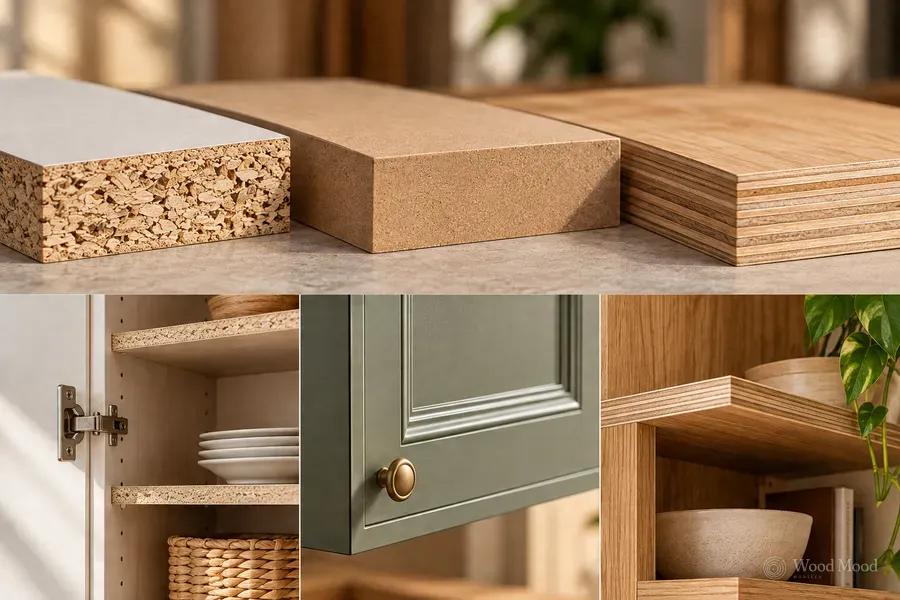
Wood veneer is made by applying thin leaves cut from real timber to a base board such as MDF. This keeps the natural colour and grain of the wood while giving wide, even and stable surfaces.
So what is the difference between natural wood veneer and solid wood? Which is more durable, and which furniture should each be chosen for?
How is natural wood veneer made?
Veneer production begins by slicing selected logs into thin leaves.
These leaves are usually less than a millimetre thick. After cutting, they are dried, joined according to the grain pattern and pressed onto a suitable base board.
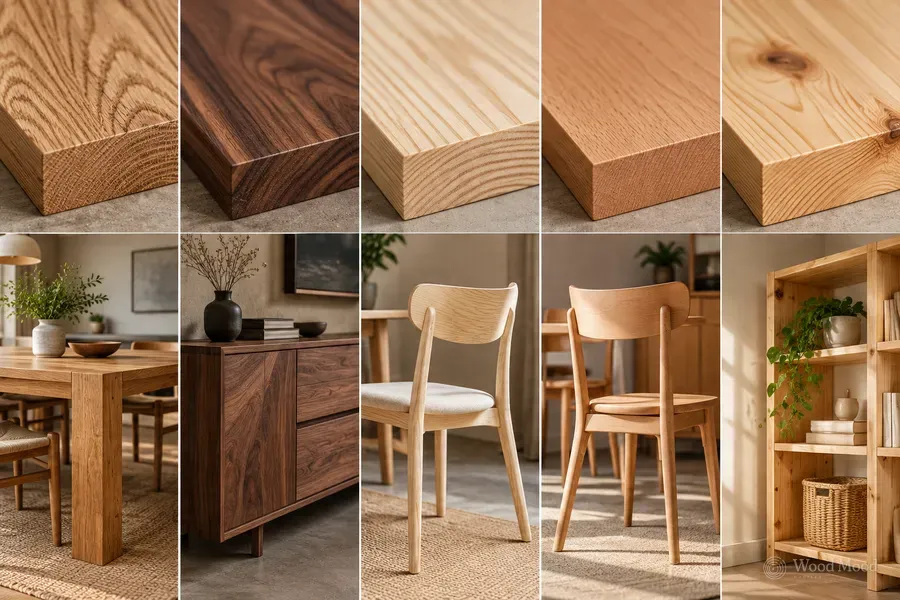
Natural veneer can be produced from different species such as oak, walnut, ash, beech and cherry.
The look of the veneer depends not only on the species but also on how the log is cut.
- Flat cut: can produce natural grain patterns in flame or cathedral shapes.
- Quarter cut: gives straighter, parallel grain lines.
- Rotary cut: gives wide, wavy patterns.
With these methods, surfaces with very different looks can be prepared from the same species.
What is grain matching?
One of the main design advantages of natural wood veneer is that the grain can be matched in a set pattern.
Successive veneer leaves are placed side by side in different ways to form a continuous pattern.
Book match: two veneer leaves are joined so that they mirror each other. It gives a striking look, especially in species with pronounced grain, such as walnut.
Slip match: the leaves are laid in the same direction. This gives a calmer grain, with each leaf following the next.
Random match: leaves with different grain structures are combined to create a natural look.
Grain matching can be applied not only to a single panel but also across cabinet doors that sit side by side.
For example, in a floor-to-ceiling wardrobe, having the grain continue from one door to the next gives the furniture a unified look.
The grain direction and matching style should therefore be decided before manufacturing.
Differences between solid wood and wood veneer
Both materials contain real wood. Their construction and behaviour in use are different, however.
Solid wood is a material in which the whole piece is natural timber. Its natural texture and the fact that it can be reworked are important advantages. It can, however, expand and contract with ambient moisture.
Wood veneer is made by applying a real wood surface to a base board. This construction can give an advantage in dimensional stability, especially on wide, flat panels.
Feature | Solid wood | Natural wood veneer |
|---|---|---|
Construction | Entirely natural timber | Thin real wood surface on a base board |
Appearance | Natural grain variation | Matched, continuous grain patterns |
Moisture movement | Can be more pronounced | More controlled when properly made |
Repair | Can be sanded and refinished | Limited by the thin surface |
Cost | Generally higher | More economical in most applications |
Use | Tables, chairs, bespoke pieces | Cabinet doors, panels, wide surfaces |
Solid wood and veneer do not have to be alternatives to each other. Used together in the same piece of furniture, they can bring different advantages.
Which furniture is wood veneer used for?
Natural wood veneer is chosen to show off the grain of the wood, especially on wide surfaces.
Wardrobe and cabinet doors: gives a natural wood look and continuity of grain on large doors.
TV units and wall panels: creates a warm, unified wood surface on large walls.
Headboards: different designs can be prepared with decorative panels and timber details.
Consoles and bookcases: allows natural wood texture to be used on flat surfaces.
Tabletops: both veneer and solid wood can be used; solid wood is preferred for heavy use.
Natural veneer can also be used in areas with more moisture, such as kitchens and bathrooms. The base board, edge protection and surface finish must be chosen to suit the conditions of use, however.
How can you tell natural wood veneer?
Natural wood veneer and wood-effect decorative surfaces can look alike at first glance.
There is an important difference between them, though: natural veneer is made from real timber, whereas on wood-effect decorative surfaces the wood look is applied as a pattern.
To tell them apart, you can look at a few features:
- Grain structure: in natural wood, the pattern of each leaf is unique.
- Colour variation: real timber can show slight changes in tone.
- Pattern repeat: on printed decor surfaces, the same pattern may repeat at regular intervals.
- Effect of light: the colour of natural wood veneer can change over time with exposure to light.
That said, advanced decorative surfaces can imitate natural wood very convincingly. To be certain, check the technical information for the product.
Varnish and surface protection on wood veneer
The protective finish plays an important part in the durability of natural veneer surfaces.
Varnish systems are generally used on veneered furniture. Varnish forms a protective layer over the wood surface and can give resistance to stains and wear in daily use.
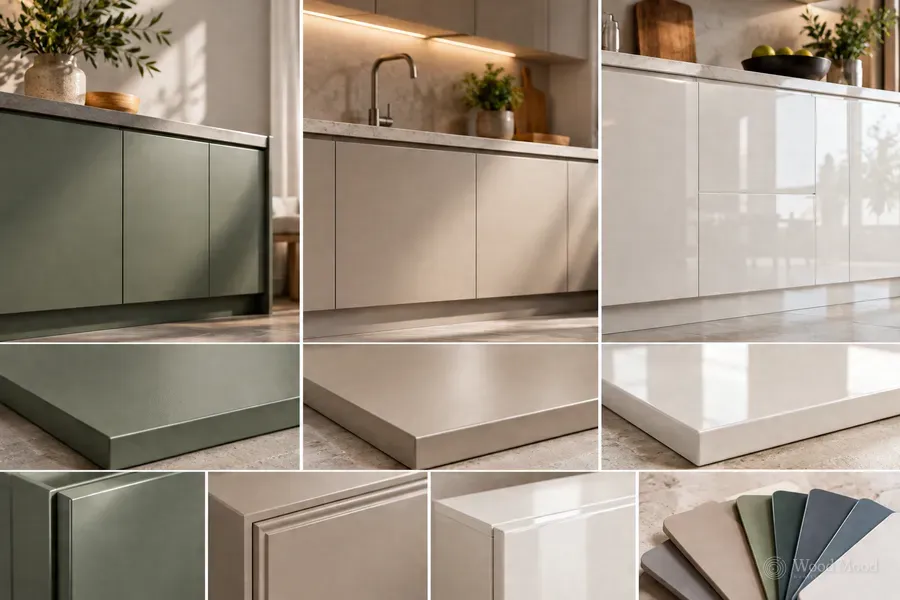
Different looks can be achieved with matt, satin and high-gloss varnish.
Wood veneer can also be coloured. For example, a light oak veneer can be taken to a darker or smoked tone with suitable treatments.
When choosing a colour, do not look only at a raw veneer sample. After the protective varnish is applied, the colour of the wood and the contrast of the grain can change.
So where possible, make your decision from a finished surface sample.
Caring for wood veneer furniture
How you care for veneered furniture depends largely on the protective finish on it.
In daily use, pay attention to the following:
- Remove dust with a soft, slightly damp microfibre cloth.
- Use a neutral cleaner suited to the surface when needed.
- Dry the surface after cleaning.
- Wipe up spills without leaving them.
- Avoid abrasive sponges and strong solvents.
- Do not expose the furniture to direct sunlight or intense heat for long periods.
Because natural veneer is thin, deep scratches cannot always be sanded out.
For serious damage, professional repair is therefore the better choice.
Which is more suitable for your furniture?
When choosing between solid wood and natural wood veneer, consider the purpose and design of the furniture.
Solid wood can be an advantage for pieces that get heavy use, such as a table or chairs. For wide wardrobe doors, TV walls and decorative panels, natural veneer can offer a more balanced solution.
At Wood Mood Furniture, for furniture where natural wood texture will be used, we treat the species, grain direction, surface colour and protective finish as part of the design.
What matters is not to choose between solid wood and veneer on looks alone, but to choose the material to suit the furniture it is for.