With its natural texture and individual character, solid wood has an important place in furniture design. But not every species has the same properties. A dining table made of oak and one made of walnut or pine differ in colour, hardness, weight and the way they are used.
So when choosing solid wood, look beyond its appearance to where and how the furniture will be used.
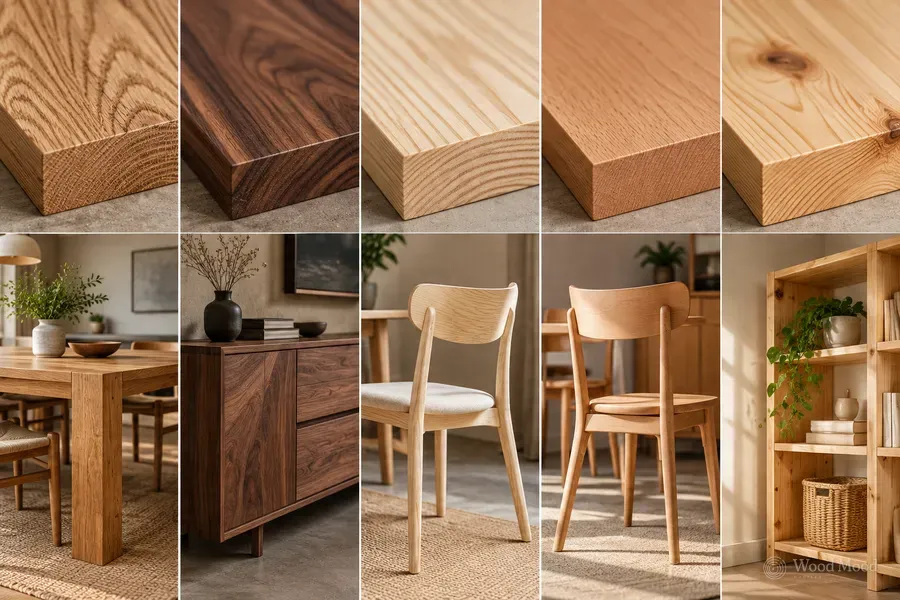
Oak: strong and long-lasting
Oak is one of the species most often chosen in furniture manufacturing for its hardness and durability. Its light brown tones and distinct grain give it a natural, characterful look.
Its resistance to knocks and wear is an advantage, especially in furniture that is used heavily. As it is a heavy timber, however, the joints of large pieces need careful planning.
Uses: dining tables, desks, coffee tables, stair treads and solid wood cabinet doors.
Walnut: warm and refined
Walnut stands out for its dark brown tones and distinctive grain movement. It gives furniture a warm, understated and refined look.
It is easy to work and has a natural texture, so it is favoured especially for bespoke furniture. Because it is softer than oak, it may need more care on surfaces that take heavy knocks.
Its colour can change naturally as it is exposed to sunlight.
Uses: dining tables, console tables, coffee tables, headboards, bookcases and decorative furniture.
Ash: light-coloured and durable
Ash is one of the species frequently used in modern furniture, with its light cream tones and pronounced grain.
Its flexible, impact-resistant nature is an advantage in chairs and slender supporting parts. It also takes stain well and can be shaped, which allows it to be used in different designs.
It is not suitable, however, for permanently damp environments.
Uses: chairs, tables, shelving systems, children’s room furniture and bent wood details.
Beech: plain and sturdy
Beech is known for its pale beige and slightly pinkish tones. Its fine, even grain gives a calmer surface appearance.
Besides being hard and dense, beech is easy to machine and suitable for steam bending, which makes it one of the preferred materials for chair making in particular.
It can, however, move noticeably with changes in moisture. Proper drying and suitable joint details are therefore important on wide solid surfaces.
Uses: chairs, table legs, furniture frames, children’s furniture and painted timber parts.
Pine: natural and economical
Pine offers a warm, rustic look with its light yellow tones, distinct growth rings and knots.
It is generally lighter and more economical than other species, which are important advantages. It is easy to work, but its soft structure means knocks and scratches mark it more easily.
Darkening in colour over time under the effect of light is one of pine’s natural characteristics.
Uses: rustic furniture, furniture for holiday homes and country houses, shelves, decorative panels and furniture for light use.
Solid wood species compared
Wood species | Main characteristic | Typical use |
|---|---|---|
Oak | Hard, durable, pronounced grain | Dining tables and desks |
Walnut | Dark, warm texture | Consoles and bespoke furniture |
Ash | Light-coloured, flexible and strong | Chairs and shelving systems |
Beech | Hard, fine and even grain | Chairs and furniture frames |
Pine | Light, economical, knotty | Rustic furniture and shelves |
What should you look for when choosing solid wood?
How the timber is prepared and worked matters as much as the species.
Drying: before furniture is made, solid wood must be dried to a moisture content suited to the conditions where it will be used. Inadequate drying can lead to cracking and warping later on.
Wood movement: solid wood expands and contracts with the moisture in its surroundings. In North Cyprus, the difference between humid summer months and air-conditioned interiors can make this movement more pronounced. Fixing details that allow for this movement should be used, especially on large tabletops.
Surface protection: oil, varnish and other suitable finishes affect the look of the wood and how much care it needs.
Natural variation: pieces cut from the same species can differ in colour, grain and knots. These are part of the natural character of solid wood.
Choosing the right wood for your furniture
There is no single best species of solid wood. On a dining table that gets heavy use, the durability of oak comes to the fore, while the natural texture of walnut may be preferred for a bespoke console. Beech and ash can be considered for chairs, and pine for rustic designs.
At Wood Mood, we assess timber species according to the purpose of the furniture, its design and the conditions of the project. We settle colour, grain and finish preferences together with you at the design stage.
Choosing the right wood means bringing natural beauty together with the demands of everyday use.