With its natural texture and lasting good looks, wooden furniture brings warmth to a home. Keeping that appearance for years, though, depends on caring for the furniture in a way that suits the material.
A solid wood dining table, a wardrobe in natural wood veneer and a lacquered kitchen unit do not need the same cleaning and care. The wrong cleaning products, excess moisture, direct sunlight or high temperatures can cause unwanted changes to furniture surfaces over time.
So how should wooden furniture be cleaned? What are the differences between solid wood, natural veneer and lacquered surfaces? What should you watch for to prevent scratches, stains and surface damage?
In this guide we cover the care methods that help you protect the appearance and lifespan of your furniture.
Know your furniture’s surface
The first step in proper care is knowing what the furniture is made of and what protective finish is on its surface.
Solid wood, natural wood veneer and lacquered surfaces may look alike, but their cleaning and care needs are different.
Solid wood furniture
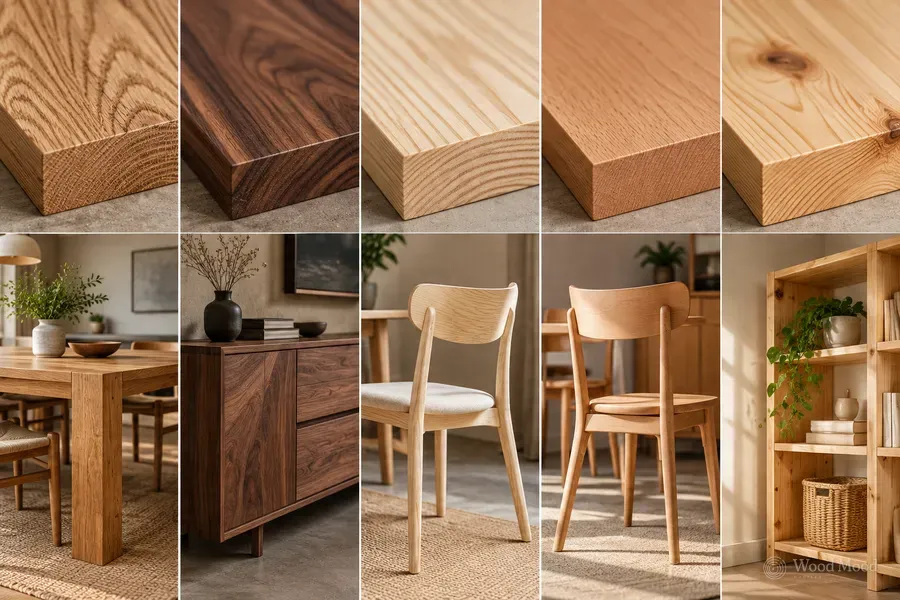
Solid wood furniture is made by working pieces of natural timber. The grain, colour variation and texture that are unique to the tree give each piece its character.
One important characteristic of solid wood is that it reacts to changes in humidity and temperature. Depending on the moisture in its surroundings, wood can expand or contract.
It is therefore important to keep suitable conditions around solid wood furniture.
Different protective finishes can be used on solid wood, such as oil, wax or varnish. The care method should be chosen according to the properties of this finish, rather than the type of wood.
Natural wood veneer furniture
Natural wood veneer is made by applying a thin layer of real timber to a suitable base such as MDF.
This method brings the distinctive grain and texture of natural wood to the furniture surface.
Because the veneer layer is thin, it is important to protect the surface from hard knocks, deep scratches and long contact with moisture.
Natural wood veneer furniture is usually finished with varnish or a similar protective finish.
When cleaning, the main aim is not to wear down this surface layer, which keeps the wood looking as it should.
Lacquered furniture
Lacquer is a surface produced by multiple coats of paint and a topcoat system, usually applied over MDF.
In matt, satin or high-gloss finishes, it is used in many areas, from kitchen units and bedrooms to TV units and bathroom furniture.
For lacquered surfaces, use soft cloths and cleaners suited to the finish.
On high-gloss lacquer, fingerprints and fine scratches can show more. On matt lacquer, hard, repeated rubbing of the same area can cause local differences in the sheen of the surface.
Gentle cleaning methods should therefore be used on both finishes.
How to clean wooden furniture day to day
One of the most effective ways to look after wooden furniture is to build regular, correct cleaning habits.
Dust, fingerprints and light marks that build up through daily use can usually be cleaned without strong chemicals.
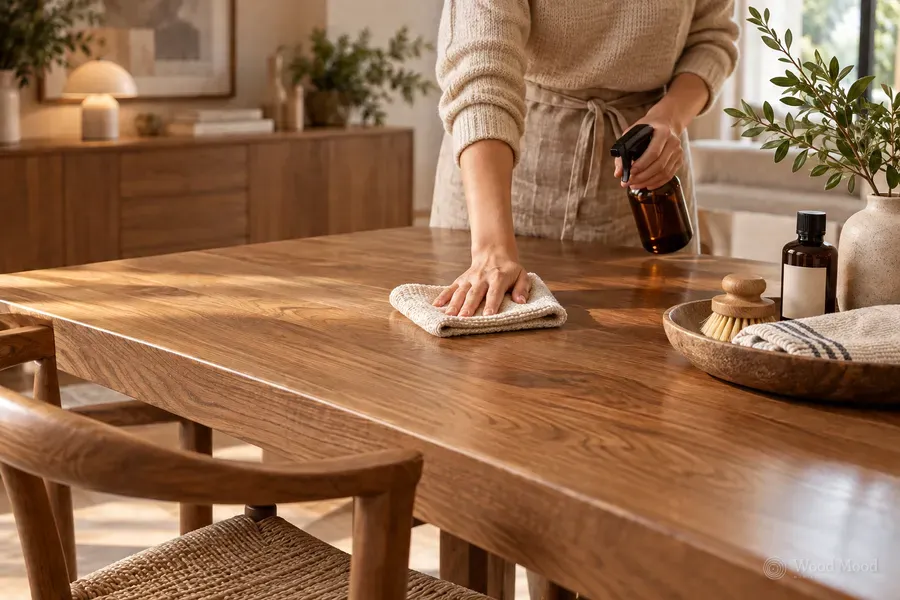
If the surface allows it, use a soft microfibre cloth, lightly dampened and wrung out well. It is important to wipe away any remaining moisture with a dry cloth afterwards.
You can follow these steps for daily care:
- Dusting: gently clear the dust that has built up on the surface with a soft, clean cloth.
- Light damp cleaning: if the manufacturer’s care instructions allow it, use a cloth dampened with a small amount of water.
- Removing marks: for grease and fingerprints, use a mild, neutral cleaner suited to the surface.
- Drying: take care not to leave moisture behind, especially at edge joints and on wooden surfaces.
- Spills: wipe up water, coffee and other drinks with a soft cloth straight away, without letting them sit on the surface.
In kitchens, the areas around handles, doors next to the hob and frequently used drawers get dirty faster.
Cleaning these areas regularly helps stop grease and dirt settling into the surface over time.
Which cleaning products should you avoid on wooden furniture?
Some damage to furniture surfaces comes from using the wrong cleaning products.
Strong chemicals and abrasive cleaning materials in particular can damage the protective layer of the surface.
Abrasive cleaning products
Scouring powders, hard cleaning sponges and products containing abrasives can leave fine scratches on lacquered and varnished surfaces.
On glossy surfaces especially, these scratches can reflect light differently and dull the finish.
Use a soft cloth and cleaning products suited to the surface.
Alcohol and strong chemicals
Cleaners containing alcohol, ammonia and strong solvents can change the colour or sheen of some paints, varnishes and surface coatings.
Glass cleaners and strong multi-purpose cleaning products in particular should not be used on furniture surfaces without the manufacturer’s approval.
Too much water and steam
In wood-based furniture, long contact with water can cause swelling or surface deformation, especially at edges and joints.
Furniture should therefore not be washed with plenty of water, and a wet cloth should not be left on the surface for long.
Steam cleaners are also unsuitable for wooden furniture because of the high temperature and heavy moisture.
Using polish without care
Not every furniture surface needs polish or care oil.
Applying unsuitable oil or silicone-based products to lacquered and varnished furniture in particular can leave residue and uneven areas of shine.
Do not use a care product until you know what the surface finish is.
How does sunlight affect wooden furniture?
Natural wood can be affected by sunlight over time.
Depending on the type of wood and the finish applied, it may lighten, darken or show differences in tone.
Similarly, long exposure to direct sunlight can change the colour of lacquered and other decorative surfaces.
This effect can become more noticeable on dining tables, TV units and wardrobes in front of large windows.
To reduce the effects of the sun, use sun control such as curtains, roller blinds or venetian blinds.
Occasionally moving decorative items that have stood in one place on a table for a long time can also reduce obvious differences in colour on the surface.
Natural wood changing colour over time is not always damage. Some changes are part of the material’s natural ageing.
Protecting furniture from heat sources
High temperatures and sudden changes in heat can cause different problems on the surface and structure of wooden furniture.
Furniture placed very close to radiators, stoves and other strong heat sources can dry out too much and the surface can deform. In North Cyprus, the high temperatures and humidity of the summer months, combined with sudden humidity differences in air-conditioned rooms, can cause slight movement in doors and edges.
Solid wood in particular can be more noticeably affected by changes in temperature and humidity.
It is therefore important to leave a suitable distance from heat sources when positioning furniture.
Heat protection for kitchen furniture
In kitchens, the units around the oven, hob and dishwasher can be more exposed to heat and steam.
When fitting integrated appliances, follow the ventilation gaps and installation requirements the manufacturer specifies.
Also avoid letting hot steam from the dishwasher reach the edges of the units directly for long periods.
Hot pots, pans and dishes just out of the oven should not be placed directly on a wooden worktop or table.
Using heat-resistant mats and protective pads is one of the simple ways to prevent surface damage.
How moisture in the air affects wooden furniture
Wood is a natural material that reacts to the humidity around it.
In very dry conditions, the risk of shrinkage and cracking in solid wood can increase. In very humid conditions, wood and wood-based materials can swell, bend or deform in other ways.
Keeping relative humidity at home at about 40–60% can be a suitable general target for much indoor furniture. The recommendations of the material and manufacturer come first, however.
To keep the humidity balanced, ventilate rooms regularly, provide suitable ventilation where a lot of moisture builds up and do not leave furniture exposed to water for long.
In bathrooms and kitchens especially, the edge joints of units and the gaps around pipework need protecting from water.
Caring for oiled solid wood surfaces
Some solid wood furniture is finished with oil or oil-wax to bring out the natural texture.
Depending on the product used, these surfaces may need maintenance at certain intervals.
If the surface loses its former look or its water protection weakens, it may be time to consider maintenance.
Watch for these points when doing the maintenance:
- Use a care product that is compatible with the finish already applied.
- Follow the application amount and waiting time the manufacturer recommends.
- Do not let excess oil build up on the surface.
- Make sure the surface is clean and in suitable condition before renewing it.
Important: cloths soaked with some wood care oils can catch fire by themselves if stored incorrectly. Store and dispose of used cloths according to the safety instructions on the product label.
Do not apply wood care oil to varnished or lacquered surfaces unless it is specifically stated to be suitable for this.
How to deal with scratches on furniture
Small scratches can appear on tables, coffee tables, unit doors and other furniture surfaces during daily use.
Not every scratch can be put right in the same way, though.
Scratches on solid wood
On solid wood furniture, depending on the type of finish, light scratches can be reduced with suitable care or by refinishing the surface.
On oiled surfaces, some small marks can become less noticeable with a compatible care oil.
Deeper damage may need careful sanding and renewal of the finish.
Scratches on natural wood veneer
Because the wood layer is thin on natural veneer surfaces, sanding needs care.
Uncontrolled work can wear through the veneer and expose the base material underneath.
For deep scratches and damage, choose professional repair methods.
Scratches on lacquered surfaces
Repairing scratches on lacquered furniture depends on whether the surface is matt or glossy and on how deep the damage is.
Small surface marks can be removed with suitable professional treatment, while more obvious damage may need a local paint repair or a replacement door.
Treating a lacquered surface carelessly with household abrasive polishes can leave a difference in shine that is more noticeable than the scratch.
Water marks and heat marks
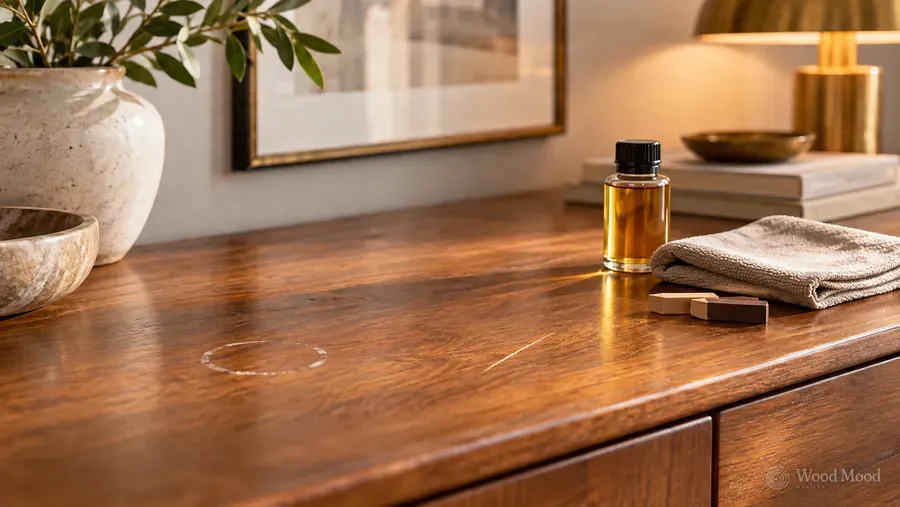
One of the most common problems on tables and coffee tables is the marks left by glasses or hot dishes.
Whitish rings can appear on some varnished surfaces when moisture or heat affects the protective layer.
The cause of the mark varies with the type of surface and the protective finish used, however.
Marks removed with methods suggested online, such as an iron, a hairdryer or strong chemicals, can leave permanent damage on the surface.
First establish the properties of the surface, then choose a suitable repair method.
If the mark has gone deep or the protective layer is damaged, getting professional help is the safer course.
Caring for hinges and drawer runners
How long furniture lasts depends on more than protecting its surfaces.
Door hinges, drawer runners, handles and moving mechanisms also need regular checks.
Over time, small alignment differences can develop in frequently used unit doors. Dust and dirt building up in the drawer runners can also make movement stiffer.
It is therefore useful to carry out the following checks at regular intervals:
- Hinge adjustment: check the gaps between doors and how they close.
- Drawer runners: clean off the dust and crumbs that build up, using suitable methods.
- Handle fixings: tighten loose screws without damaging the fixing points.
- Sliding doors: keep the tracks clean and check that the doors move smoothly.
- Special mechanisms: follow the manufacturer’s care instructions for lift-up doors, pull-out larders and similar systems.
Do not apply oil or spray to moving hardware at random unless the manufacturer recommends it.
Using the wrong product can affect how the mechanism works or make more dust collect.
Small habits that extend the life of wooden furniture
Daily habits also play an important part in looking after furniture.
Simple precautions can reduce the damage that builds up over time, especially on tables, coffee tables and frequently used unit surfaces.
- Use coasters: they reduce water rings and marks from hot drinks.
- Do not put hot dishes straight on the surface: use suitable heat-resistant mats.
- Protect the area under plant pots: stop water that overflows when watering from reaching the furniture surface.
- Fit felt pads to furniture feet: they help reduce scratches on the floor.
- Do not drag heavy items: lift them when moving them.
- Do not cut directly on the worktop with a knife: use a chopping board on wooden worktops.
- Do not leave surfaces wet for long: protect the edges and joints in particular.
These habits are among the easiest ways to protect furniture surfaces in daily use.
6 common mistakes in wooden furniture care
- Using the same cleaner on every surface: ignoring the different care needs of solid wood, natural veneer and lacquered surfaces can cause damage.
- Cleaning furniture with a soaking wet cloth: water can reach the wood-based material through the joints in particular and lead to swelling and deformation.
- Trying to remove marks with strong chemicals: unsuitable cleaners can damage the protective surface layer.
- Exposing furniture to strong sun and heat: long exposure can cause differences in colour and structural changes in the surfaces.
- Repairing scratches without care: wrong sanding, polishing or painting can make a small piece of damage more noticeable.
- Neglecting hinge and mechanism care: loose fixings and hardware that has gone out of adjustment can, over time, make the furniture less comfortable to use.
The right care for long-lasting use
Wooden furniture does not need complicated care to look good for years. What matters is knowing the surface you have and adopting the basic care habits the material requires.
Gentle cleaning, a suitable humidity balance, protection from heat and sun, and regular hardware checks help furniture stay in good condition for a long time.
With made-to-measure furniture, choosing the right material and surface also makes care easier. In kitchens, bathrooms and heavily used living areas in particular, it is important to choose the material to suit the conditions of use.
At Wood Mood Furniture, when designing and making furniture we consider everyday use and the properties of the materials as well as appearance. For the furniture we make in our own factory, we plan the surface and hardware choices to suit where it will be used.
Keeping wooden furniture looking good does not mean constantly renewing it; using it with care and the right methods is enough.