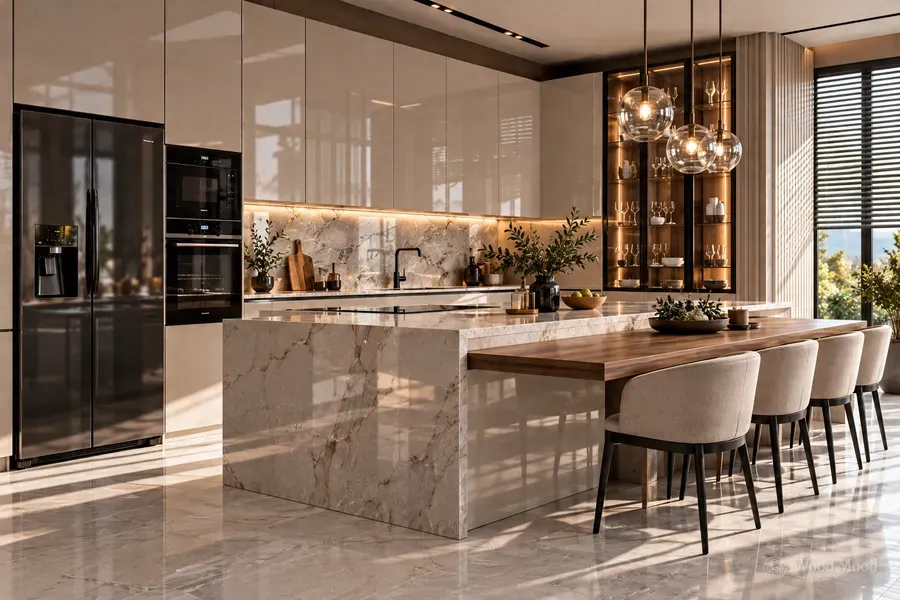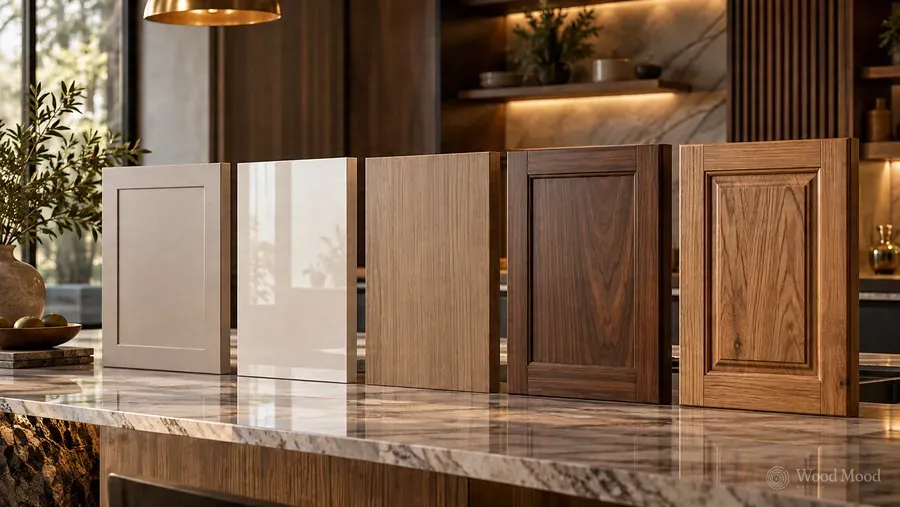
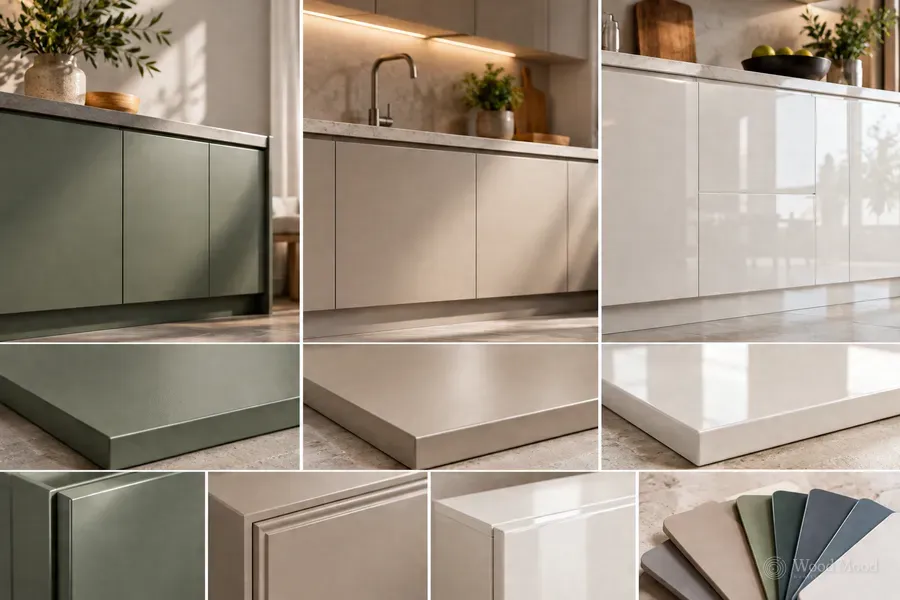
With their wide choice of colours and smooth surfaces, lacquered doors are a popular choice for kitchens, bathrooms, wardrobes and TV units. They can be applied to many designs, from modern flat doors to classic framed styles.
When choosing a lacquered door, though, colour alone is not enough. Whether the surface is matt, satin or high-gloss affects its look, everyday use and upkeep.
So what are the differences between these finishes, and which lacquered door suits which setting?
How are lacquered doors made?
Lacquered doors are usually made with a multi-coat paint system applied over MDF.
During manufacturing, the doors are cut to size and, where needed, decorative grooves and edge profiles are machined. The surface is then prepared, primed and painted in the chosen colour.
Sanding and surface correction between coats give the door its smooth appearance.
One of the main advantages of lacquered doors is that the edges can be painted too. This gives a consistent look between the face and the edges.
The quality of the result depends on the paint system, but equally on surface preparation, application conditions and workmanship.
Differences between matt, satin and high-gloss lacquer
Matt lacquer
Matt lacquer gives a calm, modern surface that reflects little light. It is favoured especially for kitchen and wardrobe designs with clean lines.
Advantages:
- It creates a soft, natural look.
- Fine scratches can draw less attention than on glossy surfaces.
- It reduces strong light reflections.
Points to watch: greasy fingerprints can show, especially on dark colours. Scrubbing the surface hard can leave a patch of sheen on some matt paints.
Satin lacquer
Satin lacquer is a balanced option between matt and gloss.
It gives the surface some life with a slight reflection of light, without the pronounced mirror effect of high-gloss lacquer.
Advantages:
- It can be used in both modern and classic furniture.
- It offers a balanced surface appearance.
- It combines easily with different colours.
Points to watch: in side light, small undulations in the surface can be more noticeable than on matt finishes.
High-gloss lacquer
High-gloss lacquer gives a smooth, glass-like look that reflects light strongly.
In light colours especially, it can make a room seem brighter.
Advantages:
- It offers a lively, eye-catching look.
- By reflecting light, it can add to the feeling of spaciousness.
- Flat surfaces can be cleaned easily with suitable methods.
Points to watch: fingerprints, dust and fine scratches are noticed more easily. Achieving a high gloss requires careful surface preparation and painting workmanship.
How durable are lacquered doors?
The durability of lacquered doors depends on the paint system used, the quality of the application and the conditions of use.
Lacquered surfaces that are properly made for everyday use can last a long time with the right care. Like any painted surface, however, they are sensitive to some influences.
Scratching: hard and abrasive objects can mark the surface. Fine scratches show up more on high-gloss lacquer in particular.
Impact: the edges and corners of doors can be vulnerable to knocks. Slightly rounded edges can be an advantage for both paint application and use.
Heat and steam: lacquered surfaces can be damaged by high heat and steam. Around ovens, hobs and dishwashers, you should therefore leave the clearances the appliances require and fit protective details.
Sunlight: some colours that get direct sun for long periods can change tone over time.
When choosing a lacquered door, the intensity of use and the setting of the furniture should therefore be taken into account.
Choosing the style and colour of lacquered doors
Lacquered doors are not limited to flat surfaces. The workable nature of MDF means different door styles can be made.
- Flat doors: suit modern, simple furniture.
- Framed doors: used in classic and modern classic designs.
- Grooved doors: create a decorative look with vertical or horizontal lines.
- Doors with integrated handles: a handle detail worked into the door edge gives a handleless look.
When choosing a colour, it is important to look at real samples rather than catalogue photographs alone.
The same colour can look different in daylight and under artificial light. The same colour code can also look different in matt and gloss.
Colour, sheen and door style should therefore be considered together.
Cleaning and caring for lacquered doors
Regular, correct cleaning is enough to keep lacquered surfaces looking their best.
Do:
- Use a soft, slightly damp microfibre cloth.
- If needed, choose a mild, neutral cleaner suited to the surface.
- Dry the surface after cleaning.
- Wipe up spills and grease stains straight away.
- Follow the manufacturer’s care instructions.
Avoid:
- Hard sponges and abrasive cleaning products
- Acetone, thinners and unsuitable solvents
- Steam cleaners
- Scrubbing matt surfaces hard
- Polishes not stated as suitable for the surface
When small scratches and knocks occur on a lacquered door, touching up or respraying can be considered, depending on the size of the damage. On high-gloss surfaces in particular, it can be harder to make the repaired area invisible.
Which lacquered door should you choose?
Among matt, satin and high-gloss lacquer, there is no single right option for every use.
If you want a plain, non-reflective look, consider matt lacquer; for a balanced surface, satin lacquer; and for a livelier design that reflects light, high-gloss lacquer.
At Wood Mood Furniture, we consider the colour, sheen and style of lacquered doors together with the area where the furniture will be used. We make approved designs to measure in our own factory and install them on site, taking care to protect the lacquered surfaces.
Choosing the right lacquered door means bringing the look you like together with your everyday habits.