Two pieces of furniture that look alike at first glance can turn out very differently over the years. In one, the doors keep closing properly; in the other, the drawers stick, the shelves sag or the edges start to swell.
The material alone does not make this difference. Manufacturing details, joints, the choice of fittings and the quality of the installation all affect how durable a piece is.
So how can you tell good furniture? Here are the main points you can check before you buy or accept delivery.
Edge banding and workmanship
Edge banding covers the cut edges of wood-based panels. It completes the look and helps protect the surface from moisture.
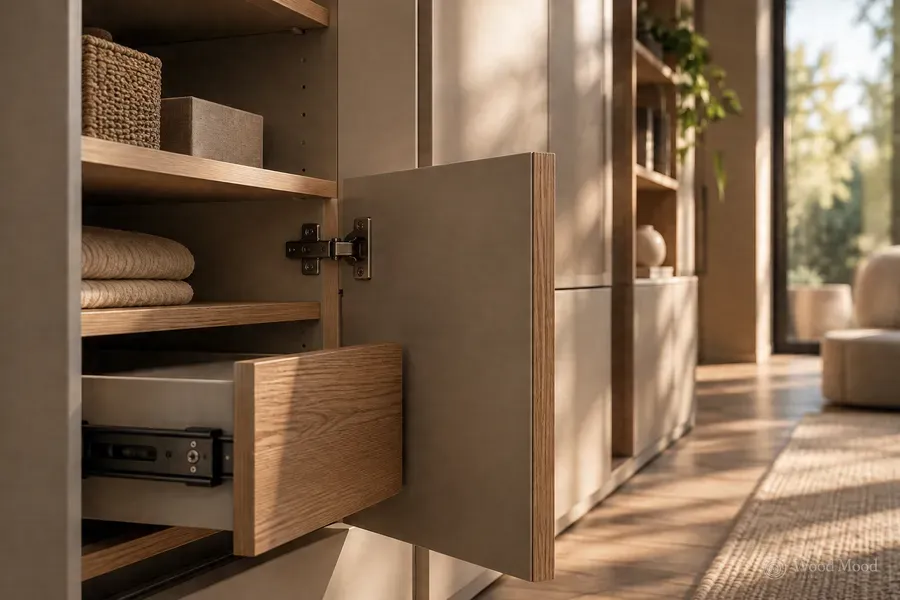
On a well-finished piece, the banding sits flush with the panel surface and leaves no rough spots at the corners.
There should be no visible gap between the banding and the door, no glue residue and no lifting.
In kitchen and bathroom units especially, it matters that any cut surfaces that may be exposed to moisture are properly sealed.
Tip: Look beyond the front of the cabinet. Check the shelf edges and the parts you cannot normally see, such as under the sink.
Carcass and joint quality
The strength of a piece of furniture depends largely on its carcass construction.
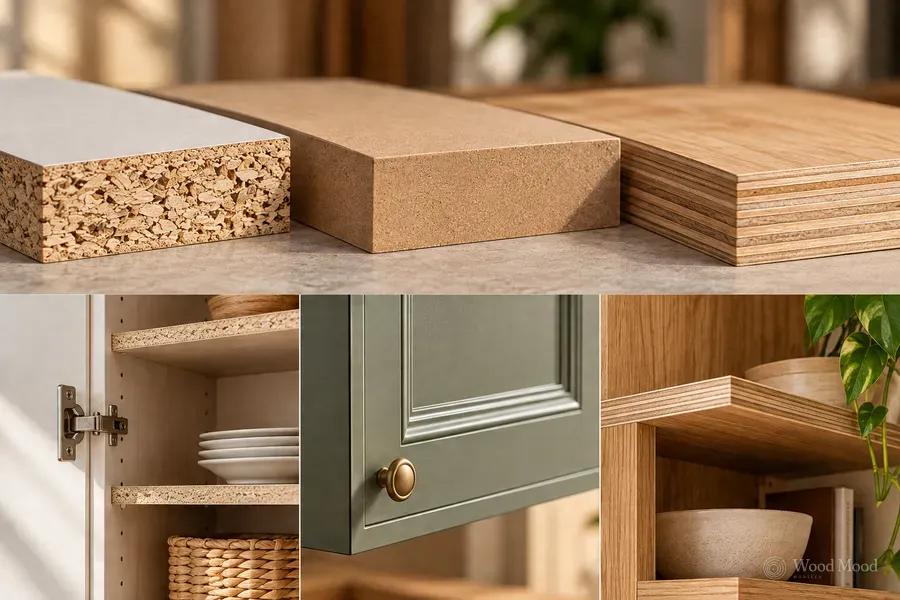
MDF, chipboard and other wood-based materials can each suit different uses. What matters is that the material is suited to the size of the piece and the load it will carry.
The parts of a carcass can be joined with different systems, such as dowels, screws and cam fittings.
Correctly executed joints help a cabinet stay square and keep its parts firmly together.
A cabinet can have neat-looking doors and still have a warped carcass or loose joints. That is why you should also check the inner partitions and the corner joints.
Why back panels matter
The back panel is often out of sight, but it adds to the strength of the carcass.
Back panels can be set into grooves cut in the carcass or fixed with suitable fasteners.
What matters is the panel’s thickness, how it is fixed and whether it suits the construction of the cabinet.
On tall and wide cabinets in particular, the back panel needs to be designed to support the carcass.
The surface quality of the back panel, as seen from inside the cabinet, also says a lot about the overall workmanship.
Door alignment and surface quality
Doors are the most visible parts of a piece of furniture, and the ones used most often.
In quality furniture the gaps between doors are even and the surfaces form a straight line.
If one door sits proud of its neighbour, closes at an angle or the gaps vary noticeably, the cause may be adjustment or manufacturing.
Different details need checking on the surface, depending on the material used.
Lacquered doors should show no paint runs, surface ripples or colour differences.
Natural wood veneer should have neat grain joins, with no swelling or veneer lifting on the surface.
Wood-based panel doors should have clean joins between surface and edge, and tidy corners.
Hinges and drawer runners
Quality fittings directly affect how easy the furniture is to use every day.
For hinges, it matters that the type and number suit the weight of the door. Soft-close hinges make doors close in a controlled, quiet way.
For drawer runners, look at the extension, the load capacity and how smoothly they move.
Full-extension runners make it easier to reach the back of a drawer, while soft-close systems stop drawers slamming.
How to check: Open and close the doors and drawers several times. Notice whether the movement is smooth, listen for friction noises and see how stable the drawer is when open.
Quality in solid wood and veneered furniture
In solid wood furniture, what matters is how the pieces of timber are joined, the surface finish and joints that allow for the natural movement of the wood.
On wide solid wood tops, the wood’s movement with changes in temperature and moisture has to be allowed for.
In furniture with natural wood veneer, quality depends on grain matching, a clean glue-up of the veneer and carefully prepared edge details.
Varnish and other protective finishes should be applied evenly. There should be no obvious brush marks, tacky areas or uneven sheen.
Why installation quality matters
Even a well-made piece needs correct installation to last.
Units that are level, carcasses that join neatly side by side and finished door adjustments all make a direct difference in daily use.
For wall-mounted furniture, the fixings must suit the wall construction and the load to be carried.
Tall cabinets that could tip over must be fixed securely to the wall.
Once installation is complete, check the door gaps, the drawer movement and the visible joints.
What to check when buying furniture
When you buy furniture or accept delivery, you can check the following:
- Is the edge banding neat and complete?
- Are the carcass and shelves sturdy, and the joints neat?
- Is the back panel fixed properly?
- Are the door gaps even and the surfaces flush?
- Do the drawers open and close easily?
- Are the hinges and runners suited to the size and load of the furniture?
- Are the properties and emission class of the panels stated?
- Has the necessary fixing and final adjustment been done after installation?
These checks help you judge not only how the furniture looks but also the quality of its manufacture and installation.
Quality is in the details
Quality furniture shows itself not in how it looks on day one, but in how easy it is to use over the years.
Sturdy carcass joints, neat edge banding, well-chosen fittings and careful installation all play a major part in how long furniture lasts.
At Wood Mood Furniture, we plan the materials and fittings of our furniture around the needs of each project and pay close attention to joints and surface details during manufacturing. During installation on site, we complete the door and drawer adjustments, so the furniture is handed over ready to use.
Real quality shows not only in the surfaces you see, but in every detail of the furniture.