When you move into a new home, renew your kitchen or rearrange your living spaces, one of the big decisions is whether to buy ready-made furniture or have it made to measure.
Ready-made furniture offers quick delivery and a set range of standard products, while made-to-measure furniture can be designed around the features of your home and your personal needs.
Both options have their strengths and their drawbacks. The right decision depends on more than price: think about how long you will use the furniture, the size of the space, your storage needs, your material preferences and what you expect from it.
So should you choose ready-made or made-to-measure furniture? What are the differences, and which option suits which space?
In this guide we compare the two options and cover the main points to consider when choosing furniture.
Advantages of ready-made furniture
Ready-made furniture is mass-produced in set sizes and models and sold through shops or online platforms.
It can be a practical solution for spaces with standard dimensions, or when you need furniture quickly.
Quick delivery and use
One of the biggest advantages of ready-made furniture is that, depending on stock, you can get it quickly.
This matters most if your moving date is close, you are setting up a temporary living space or you want to replace existing furniture fast.
If the item is in stock, the purchase can be completed without a long design and manufacturing process.
Delivery and assembly times can still vary with stock, the supplier and the installation service.
A lower starting cost
In mass production, making many units of the same model spreads the production cost across a larger volume of products.
Ready-made options can therefore be more affordable, particularly for standard pieces such as bedside tables, coffee tables, bookcases and freestanding cabinets.
It is also usually easier to find products at different price points and to compare alternatives that fit your budget.
When comparing prices, though, make sure the materials, hardware and build quality are equivalent.
Seeing the product beforehand
Ready-made furniture can be examined in a shop or seen in its finished form.
You can judge the colour, texture, size and overall look before you buy.
This can make the decision easier, especially if you find it hard to picture how a piece will look in the room.
Portability
Freestanding ready-made furniture can be used in different rooms or in another home if needed.
Portability is a real advantage for tenants, people who move often and anyone who likes to rearrange their living space from time to time.
Whether a piece can be taken apart and reassembled depends on its fixing system and construction.
Advantages of made-to-measure furniture
Made-to-measure furniture is designed around the actual dimensions of the space it will go in and the needs of the person using it.
This approach works particularly well in corners that standard sizes cannot use, in fixed storage systems and in areas that need specialised storage.
Making better use of the space you have
Ready-made furniture is made in set widths, heights and depths.
The walls in a home do not always match these standards, so unused gaps can appear at the sides of cabinets, under the ceiling or in corners.
With made-to-measure manufacturing, cabinets can be planned around the width of the wall and the ceiling height.
In a bedroom, for example, a floor-to-ceiling wardrobe can give more storage than a standard one.
In a kitchen, similarly, the spaces between columns, narrow corners and the areas around windows can be put to use with suitable cabinet systems.
Design that suits difficult architecture
No two homes have the same architecture.
Sloping ceilings, projecting columns, wall niches, spaces under stairs and corners that do not follow standard dimensions can make it hard to fit ready-made furniture.
Made-to-measure furniture is made to suit these architectural features.
You could have drawers of different heights built under the stairs, wardrobes shaped to a sloping loft wall, or hallway storage designed for a narrow entrance hall.
Spaces that seem hard to use can become storage that serves your everyday needs.
An interior layout that suits your needs
One of the main advantages of made-to-measure furniture is that you can decide on the interior compartments as well as the outer dimensions.
In a wardrobe, for example, you can have wide hanging sections for long dresses, shelves for folded clothes and special drawers for accessories.
In a kitchen, the areas for pans, plates, spices, food supplies and small appliances can be arranged around how you use them.
Instead of adapting to standard compartments, the inside of the furniture is shaped around the things you already own.
Freedom of colour and material
With ready-made furniture, colour and material choices are mostly limited to the existing collections.
With made-to-measure manufacturing, you can consider materials, surfaces, door styles and hardware that suit the project together.
Different designs can be created with lacquered surfaces, natural wood veneers, solid wood details, acrylic surfaces and decorative glass.
Using the same colours and materials across neighbouring areas such as the kitchen, TV unit, dining area and entrance hall can give the home a more unified look.
Ergonomics and comfort
Furniture is comfortable to use when its dimensions are right.
With made-to-measure manufacturing, the height of the kitchen worktop, the size of the desk, the hanging rail levels inside the wardrobe and the drawer layouts can all be planned around the people using them.
This matters most for users of different heights, special storage requirements or unusual spaces.
A worktop at the right height for the user, for example, can make long food preparation more comfortable.
Repairs and changes
With made-to-measure furniture, it may be possible to remake some doors, shelves and other parts to the same dimensions.
You can consider replacing a part that has been damaged in use, or rearranging some of the internal compartments as your needs change.
Whether this is possible depends on the material, the hardware, the construction of the design and whether the parts are available.
Any changes you may want to make later should therefore be thought about at the design stage.
Are there any disadvantages to made-to-measure furniture?
Made-to-measure furniture has many advantages, but it may not be the best option for every use.
There are some limitations, particularly around lead time, starting cost and portability.
A longer preparation process
Made-to-measure manufacturing involves several stages before the furniture is ready for handover: site survey, measuring, material selection, drawing approval and manufacturing.
Delivery can therefore take longer than for a ready-made piece that is already in stock.
The timescale depends on the size of the project, the materials chosen, how busy the factory is and any design changes.
Starting cost
Custom dimensions, project-specific details and factory manufacturing all affect the cost.
Lacquered doors, natural wood details, special drawer systems and decorative finishes in particular can add to the budget.
That said, made-to-measure furniture is not always more expensive than ready-made.
A genuine comparison should be made between products of similar size with equivalent materials and hardware.
Portability limits
Fixed furniture designed for a particular wall or architectural space cannot always be moved to another home.
Fitted wardrobes, kitchen cabinets and TV units that run along a wall are made to suit the space they are in.
For people planning to move again soon, some freestanding ready-made pieces may therefore be more suitable.
Differences between ready-made and made-to-measure furniture
Comparing the main characteristics of each type makes it easier to choose the option that suits your needs.
Feature | Ready-made | Made-to-measure |
|---|---|---|
Dimensions | Standard sizes and existing models | Set by the space it will go in |
Design | Choice from existing models | Can be personalised to your needs |
Delivery | Can be quicker, depending on stock | Needs design and manufacturing time |
Starting cost | More economical options are usually available | Varies with design and materials |
Storage layout | Depends on the existing modules | Can be planned around your belongings |
Choice of materials | Limited to the product range | Options to suit the project can be considered |
Portability | An advantage for freestanding models | Can be limited for fixed designs |
Fit with the architecture | Depends on standard sizes | Can be adapted to niches, corners and unusual openings |
Future changes | Depends on the construction of the product | Can be considered, depending on design and materials |
This comparison shows general characteristics. The exact advantages vary with the design, quality and conditions of use of the product you choose.
What determines the price of made-to-measure furniture?
In made-to-measure manufacturing, the cost does not depend only on the length of the cabinet or the price of the material.
Two cabinets of the same size can cost quite different amounts because of different door systems and internal fittings.
The main factors that affect the price are:
- Dimensions of the furniture: width, height, depth and the total number of modules
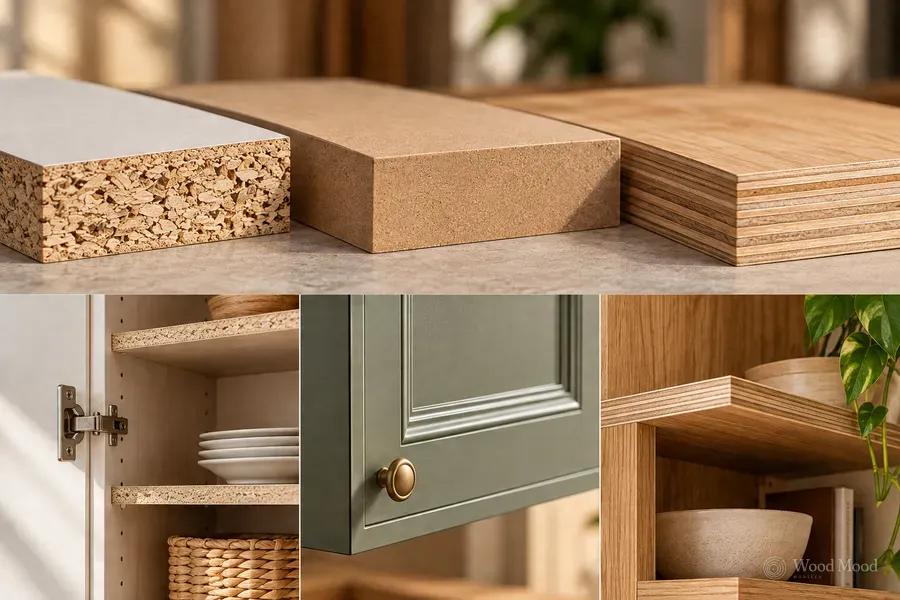
- Carcass material: MDF, chipboard, plywood and other options suited to the use
- Door material: alternatives such as lacquer, acrylic, natural wood veneer and solid wood
- Surface and decorative details: glass doors, mirrors, wooden slats and special door shapes
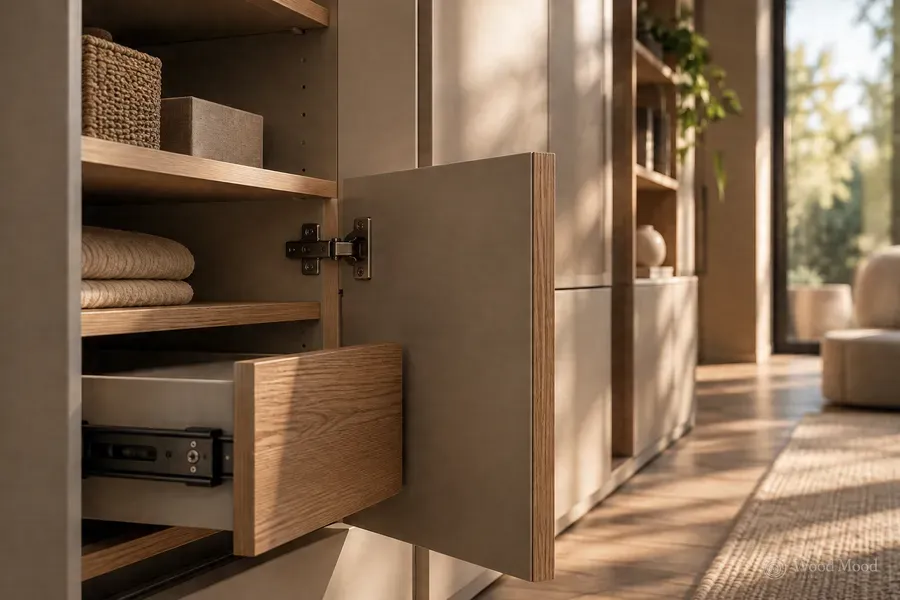
- Drawers and hinges: soft-close runners, full-extension systems and different mechanisms
- Internal accessories: trouser racks, larder mechanisms, corner systems and special organisers
- Lighting: LED lighting inside cabinets, on shelves and for decoration
- Architectural conditions: niches, columns, sloping ceilings and special installation details
- Worktop and complementary products: stone, quartz, glass and other surface options included in the project
Price comparisons based only on the cost per linear metre are therefore not always enough.
For a more accurate assessment, compare the material types, door styles, hardware options and the scope of the installation together.
How does the made-to-measure process work?
Unlike ready-made furniture, made-to-measure furniture goes through a project process.
The process starts with understanding the space the furniture will be used in and what you expect from it.
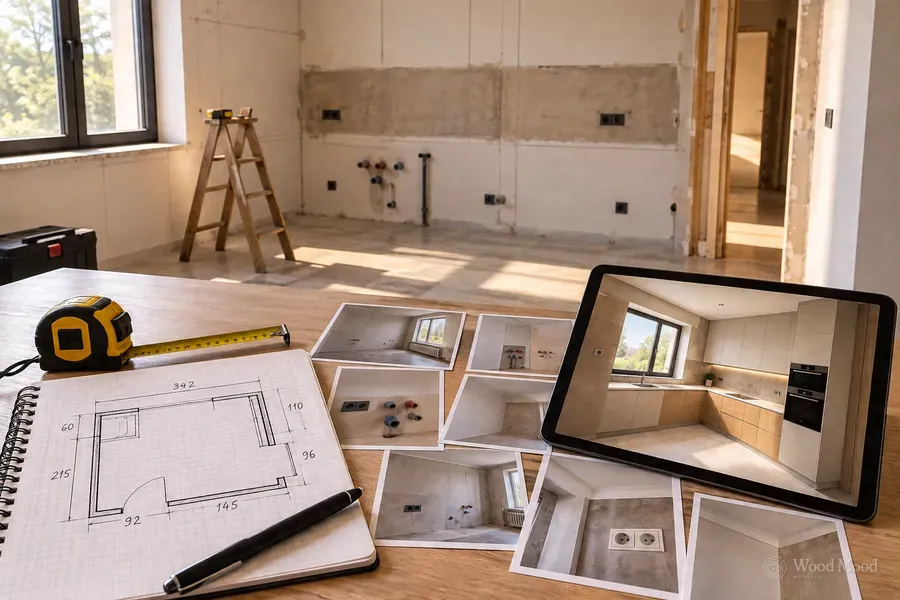
1. Site survey and measuring
At the first stage, the space where the furniture will go is examined.
Wall dimensions, ceiling height, door and window positions and, where relevant, plumbing points are assessed.
The purpose of the furniture and your storage needs are also established.
2. Design and choice of materials
The layout and interior arrangement of the furniture are prepared from the measurements taken.
Door styles, colours, surfaces, drawer systems and other details are reviewed in the design.
Once any necessary changes have been made, approval is given for manufacturing.
3. Manufacturing in the factory
The furniture parts are made to the agreed dimensions according to the approved design.
Cutting, edge work, door manufacturing and the other factory stages are completed.
Manufacturing time varies with the size of the project and the properties of the materials.
4. Installation on site
The finished furniture is taken to the site and installed.
Aligning the cabinets, completing the connections and adjusting the doors and drawers are done at this stage.
In renovation projects, it is important to confirm the final measurements once the relevant wall and floor work has been completed.
Where can you choose ready-made furniture?
Ready-made furniture can work well for freestanding items in standard sizes.
For example:
- Coffee tables and side tables
- Freestanding bookcases
- Bedside tables
- Chairs and seating
- Small portable storage units
- Tables in standard sizes
For these items, quick purchase, the chance to compare options in different shops and portability can be important reasons to choose ready-made.
These advantages can be even clearer if you plan to move in the near future.
Where is made-to-measure furniture more advantageous?
Made-to-measure furniture comes into its own where the furniture is fixed in place and storage matters.
Kitchen cabinets
In kitchens, the worktop height, the position of integrated appliances, the plumbing points and the layout inside the cabinets all need to be thought through together.
Made-to-measure manufacturing lets you address all these requirements in one design.
Wardrobes and dressing rooms
The amount and type of clothing varies from person to person.
In made-to-measure wardrobes, hanging rails, shelves, drawers and accessory compartments can be arranged around the user’s needs.
Bathroom furniture
Bathrooms often have narrow spaces and fixed plumbing positions.
Made-to-measure basin units and storage can help you make better use of the available space.
TV units
The size of the television, the position of the equipment, cable routes and storage needs can be planned around the dimensions of the living room.
The TV unit can then become a piece of furniture that blends into the wall it stands on.
Hallway storage and entrance hall cabinets
Narrow corridors, door openings and the shape of the entrance area can limit what ready-made hallway storage you can use.
Made-to-measure cabinets can be made with compartments suited to shoes, coats and everyday accessories.
Can ready-made and made-to-measure furniture be used together?
Not all the furniture in a home has to be made in the same way.
Using ready-made and made-to-measure furniture together can be a balanced choice for many projects.
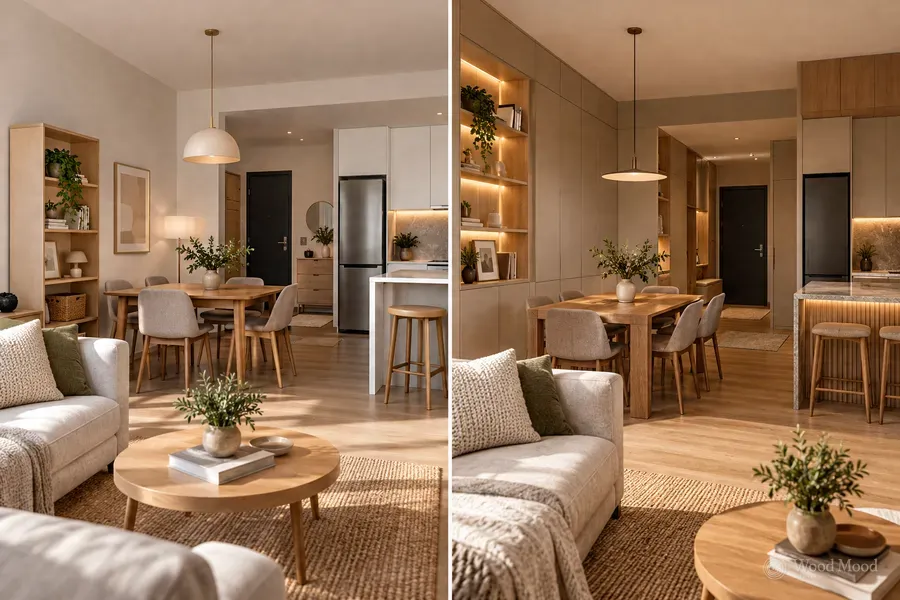
For example, kitchen cabinets, wardrobes and the TV unit can be made to measure, while dining chairs, sofas and coffee tables are chosen from ready-made products.
This lets you plan the fixed furniture in detail around the space, while using a wider range of products for the freestanding pieces.
What matters is thinking at the design stage about how the furniture will look and work together.
Choosing colours, materials, sizes and layouts that work together can also bring unity to furniture from different sources.
What to think about before commissioning furniture
If you are considering made-to-measure furniture, a little preparation before the design meeting helps the process run more efficiently.
First, decide what needs the furniture should meet.
Having an idea in advance of what you will store, which existing furniture you will keep, which electronic devices you will use and what design style you prefer makes decisions easier.
You can put together pictures of furniture and living spaces you like to explain your colour and style expectations more clearly.
Sharing your budget range and the timescale you have in mind for delivery also helps the design stay within realistic limits.
7 questions to ask yourself before you decide
- How long do I plan to live here? Expecting to stay for a long time can affect how much you invest in fixed furniture.
- Does the space suit standard furniture? Niches, columns, sloping ceilings and narrow corners may call for custom dimensions.
- How much storage do I need? If you have a lot of belongings, personalised cabinet interiors can be more practical.
- When do I need the furniture? If you need it quickly, ready-made products in stock can be an advantage.
- Which features are my priority within my budget? Consider materials, design, internal fittings and lifespan together.
- Will I need to move the furniture later? Freestanding furniture is easier to use in different homes.
- Do I have particular requirements for colour, materials or use? The more you need personalising, the clearer the advantages of made-to-measure design become.
The right furniture depends on your needs
There is no single right choice between ready-made and made-to-measure furniture that suits everyone.
Ready-made furniture can offer advantages in quick availability, standard model options and portability. Made-to-measure manufacturing stands out for efficient use of space in fixed furniture, personal storage layouts and design freedom.
When choosing, consider not only the starting cost but also how long you will use the furniture, the material properties, what care you expect to give it and the architectural conditions of your home.
At Wood Mood Furniture, we start made-to-measure furniture design with a site survey and measuring, then work through layout and material options with you. We manufacture approved designs in our own factory and install them on site across North Cyprus.
The right furniture fits more than the space; it suits your life, your habits and your needs.