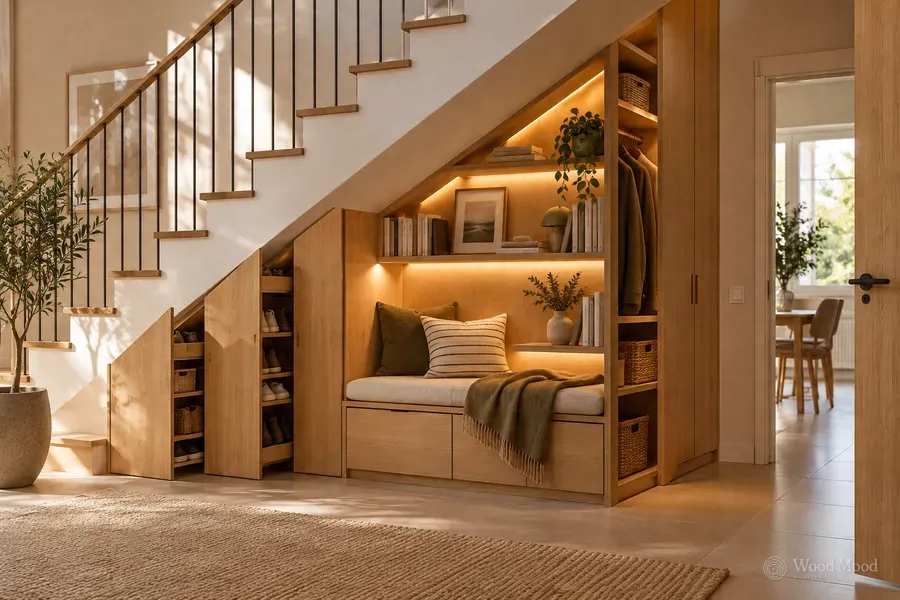
LED lighting built into furniture is one of the design details that can change both the look and the usability of a living space.
A concealed light over a kitchen worktop, wardrobe lighting that comes on when the door opens, or a soft glow from inside decorative shelves gives furniture a different character.
To get a good result, though, the LED lighting needs to be planned at the design stage, not after the furniture is finished.
What is integrated LED lighting?
Integrated LED lighting means placing the light sources inside the furniture, underneath it or in channels prepared for the purpose.
These systems can be used both to light work surfaces and to highlight the architectural details of the furniture.
The main advantages:
- It makes the inside of cabinets and shelves easier to see.
- It gives more even lighting on work surfaces.
- It brings out the texture of wood and other surfaces.
- Concealed installations give a clean look.
- Sensor systems make it easier to use.
Where the light goes should be decided by what the furniture is used for.
Choosing LED strips, profiles and drivers
LED strips are the usual choice for furniture lighting. They can be set into aluminium profiles and built into shelf and cabinet surfaces.
LED strip: Forms a line of light in the length you need. High-density or COB strips can give a more continuous look to the light.
Aluminium profile: Helps the LED strip sit neatly and carries away the heat it produces. Profiles recessed into the furniture are less visible from outside.
Diffuser: The light-spreading cover used in front of the profile. It softens the light and reduces the visibility of the individual LED dots.
LED driver: Converts mains electricity to the voltage and current the LED system needs.
The driver’s capacity should be chosen to match the total consumption of the LED strip. It should also be placed somewhere accessible in case of a fault or maintenance, with proper ventilation.
How to choose the light colour
The colour temperature of the LED lighting directly affects how the furniture looks.
- 2700–3000 K warm white: Creates a warm atmosphere in TV units, bedrooms and decorative niches.
- 3500–4000 K neutral white: A good choice for kitchen worktops, desks and the inside of wardrobes.
- 5000 K and above, cool white: Gives a colder light and may not suit every design in living spaces.
On wooden furniture, warm white light can make the natural colours and grain stand out more.
In areas where seeing colours accurately matters, such as dressing rooms and kitchens, choose LEDs with a high colour rendering index (CRI). Products rated CRI 90 or above are a good choice for this.
LED lighting in the kitchen
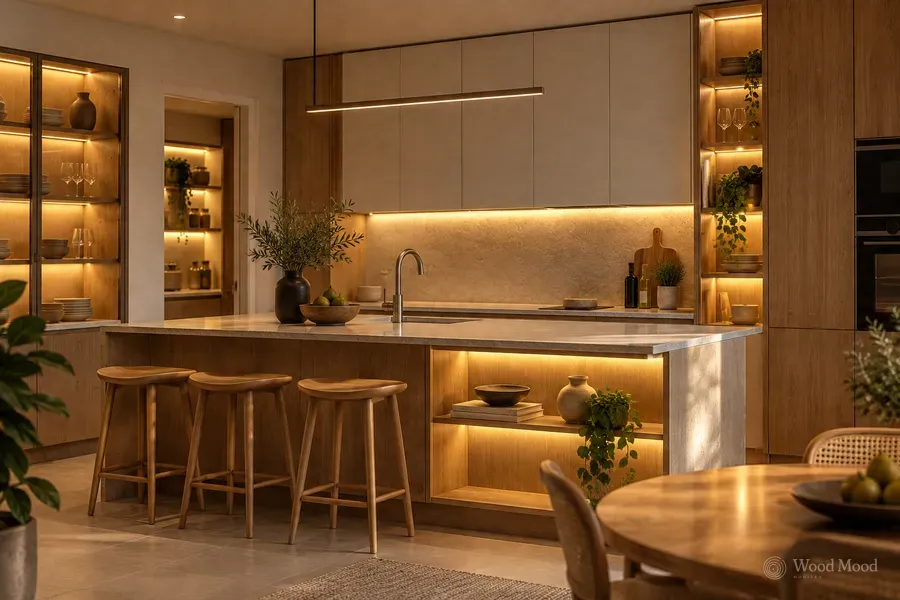
The most common use in kitchens is LED strips fitted under the wall units.
When ceiling lighting is used alone, shadows can fall on the worktop. Lights under the wall units light the preparation area directly and make working easier.
Placing the LED profile near the front edge of the wall unit can help the light reach the worktop more evenly.
Decorative LED lighting can also be used in glazed kitchen units and coffee corners.
Lights hidden in the inner shelves of glazed units in particular bring out the glasses and accessories on display.
Wardrobe and dressing room lighting
In dressing rooms, LED lighting makes daily use easier as well as looking good.
Clothes at the deep back of a wardrobe can be hard to see, especially when there is not enough daylight.
There are several lighting options for these areas:
- Vertical LED profiles: Fitted to the side panels of the wardrobe to light the hanging and shelf sections.
- Under-shelf LEDs: Make folded clothes and shoes easier to see.
- Illuminated hanging rail: Gives light directly to the hanging section.
- Sensor lighting: Switches on automatically when the door opens.
In wardrobes with glass doors especially, warm or neutral white LEDs show off the items and accessories inside.
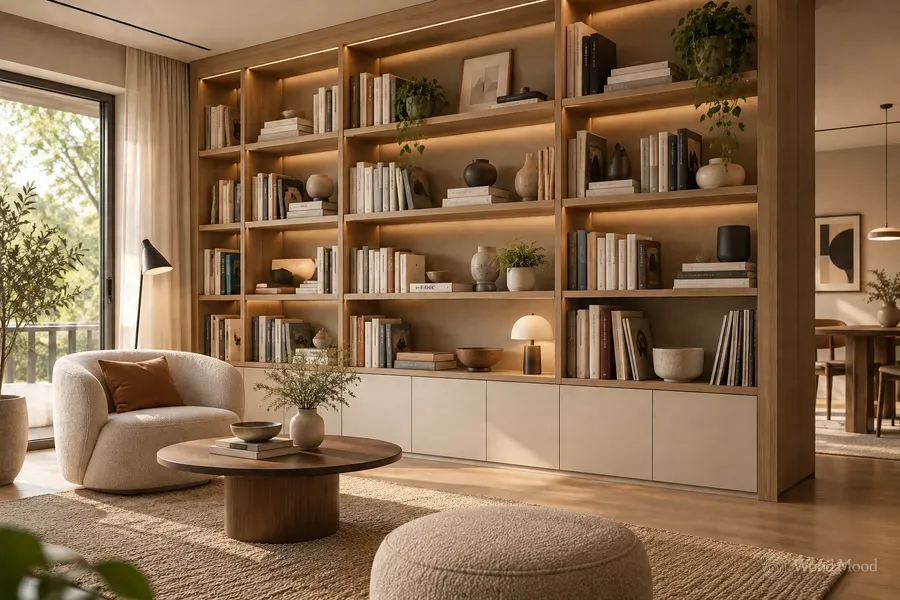
TV units, bookcases and decorative niches
In TV units and wall systems, LED lighting is usually used for decorative effect.
Thin lines of light under the shelves make the wood panels and the objects on display stand out.
Under-shelf lighting: Shows off objects on bookcases and open shelves with a soft light.
Niche lighting: Adds depth to decorative sections.
Back panel lighting: Light hidden between the panel and the wall creates indirect lighting.
Base unit lighting: Gives a gentle glow under units raised off the floor.
With these installations, it is important that the light does not shine directly into the eyes or reflect on the TV screen.
Sensor and control systems for LEDs
Furniture lighting can be controlled in different ways.
Door sensors switch the light on when a cabinet is opened and off when it is closed.
Motion sensors turn the lighting on automatically when someone enters the detection area.
Touch or hand-wave switches are practical in kitchens especially.
Dimming systems let you adjust the brightness to suit your needs.
The control system and the driver must be compatible with each other. The control method should therefore be decided together with the electrical and furniture planning.
What to consider when planning LED lighting
A few details matter if furniture-mounted LED lighting is to look neat and work safely.
- LED profiles and cable routes should be planned before manufacturing.
- Drivers should be placed in accessible areas where they can be serviced.
- Use suitable profiles for managing the heat of the LED strips.
- Use the same colour temperature for all lights in the same area.
- Do not position light sources so that they shine directly into the eyes.
- Around bathrooms and sinks, choose products with a protection rating suited to the conditions.
Electrical connections must be made by qualified specialists in line with the relevant safety rules.
Lighting that becomes part of the furniture design
Integrated LED lighting works best when the light looks like a natural part of the furniture.
Concealed channels prepared during manufacturing give a cleaner result than systems added later with exposed cables.
At Wood Mood Furniture, we consider LED profile positions, lighting inside cabinets and cable routes at the design stage of our furniture projects. We include the chosen lighting details in the 3D drawings and prepare the necessary channels and openings while the furniture is being made.
Well-planned LED lighting makes furniture easier to use and completes its design.