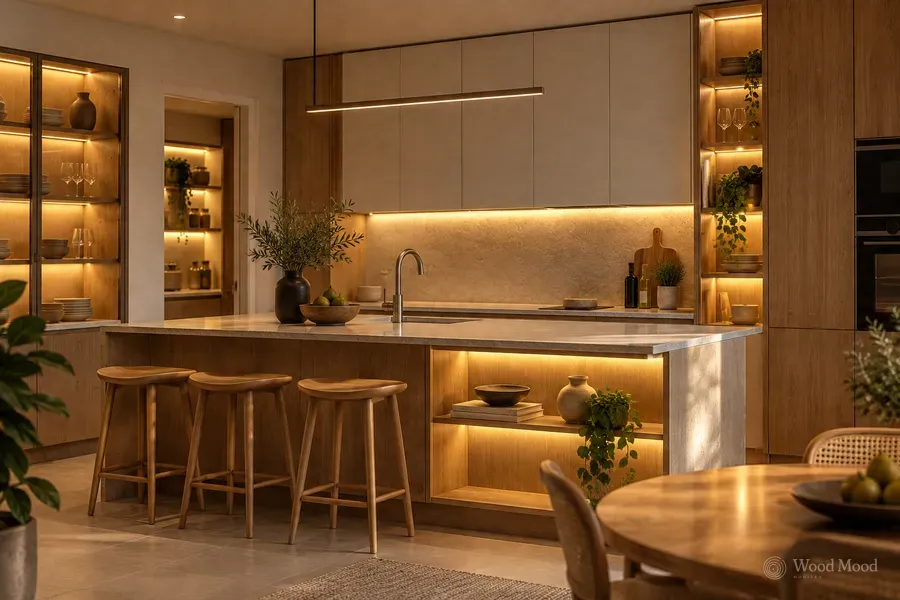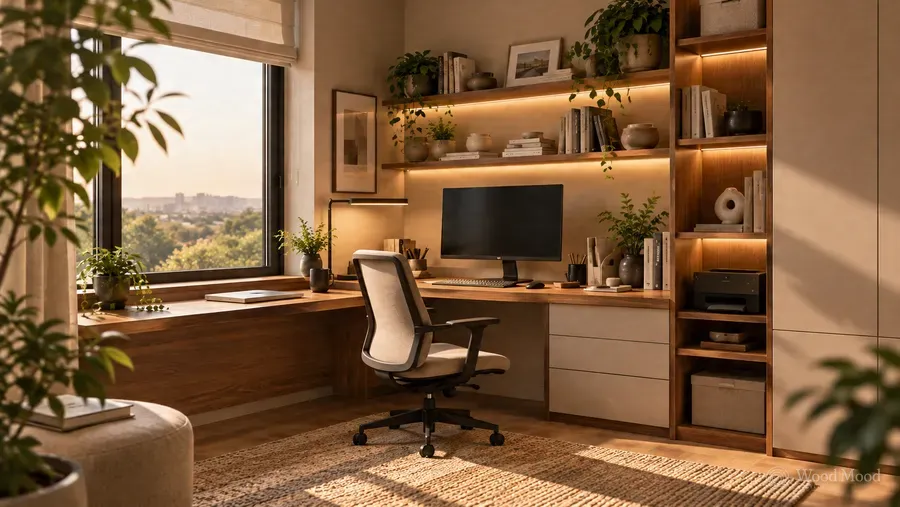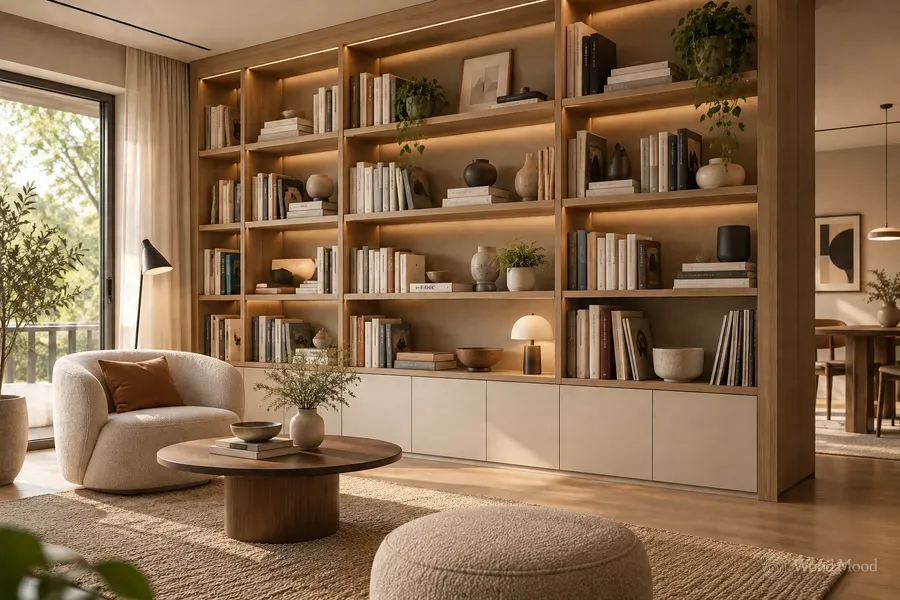
A bookcase is one of the most personal pieces of furniture in a home. It gives books, photographs and decorative objects an orderly place, and it completes the character of the living space.
A successful bookcase is about more than looks. The load capacity, depth and spacing of the shelves, and the fixing details, also matter for long-lasting use.
So which dimensions should you choose when designing a bookcase, and how do you stop the shelves bowing over time?
How to decide bookcase dimensions
Bookcase dimensions should be set according to the size of the books to be stored and how the bookcase will be used.
Shelf depth:
- 20–25 cm: for novels and small-format books.
- 30–35 cm: for standard books, files and decorative objects.
- 35 cm and over: for large-format books and special collections.
Shelf height:
- 25–30 cm: for most standard books.
- 35–40 cm: for large-format books and folders.
- Taller sections: for vases, plants and large decorative accessories.
These dimensions are general references. Adjustable shelves are a good choice, especially for collections with books of different sizes.
Bookcases that run up to the ceiling give more storage, while cupboards with doors in the lower sections help keep everyday items out of sight.
How to stop shelves bowing
One of the most important technical points in bookcase design is the weight the shelves will carry.
The bowing that develops over time in long shelves is called deflection. It depends on the type and thickness of the material, the span of the shelf and the load it carries.
On shelves holding heavy books in particular, the distance between two supports should not be longer than necessary.
A span of about 80 cm can be a planning reference for standard panel shelves, but the safe span should be calculated from the material thickness and the actual load.
For longer shelves, you could consider the following solutions:
- Adding vertical supports between the shelves
- Using thicker material of suitable strength
- Adding a timber reinforcement to the front edge of the shelf
- Using concealed metal support profiles
- Placing the heavy books on the lower shelves
In wide wall bookcases especially, it is important to settle these details before manufacturing.
Bookcase and open shelving styles
Different bookcase styles can suit the dimensions and design of the space.
Built-in bookcases
These are bookcases fitted along a wall or inside a recess.
When made to measure, they can use the gaps between columns, recesses and spaces that run up to the ceiling.
On wide walls, you can have a cohesive design made up of both open shelves and cupboards with doors.
Wall-mounted open shelves
Open shelves fixed to the wall surface are popular in small rooms and work areas in particular.
With concealed fixing systems, the shelves can look as if they emerge from the wall, giving a clean appearance.
The shelf’s load capacity must suit the wall construction and the fixings used, however.
Room-divider bookcases
Open bookcases used between a living room, dining area or study corner can create a visual separation without closing the two areas off completely.
In these systems, which can be used from both sides, the strength of the carcass and fixing against tipping are especially important.
Bookcases with base cupboards
Designs with open shelves above and cupboards with doors below combine display and storage.
As well as books, they give an orderly place for papers, games and other items.
Choosing wood and materials
The choice of material in bookcases affects both the look of the design and the strength of the shelves.
Solid wood stands out for its natural texture and characteristic look. With suitable construction and joints, it makes long-lasting bookcases.
MDF and other wood-based panels can be used in modern bookcase designs, with a range of colour and surface options. Shelf thickness and span should be set according to the weight to be carried.
Natural wood veneer is an option that reflects the character of real wood, especially on large bookcase surfaces.
Light oak tones give an airier look, while dark woods such as walnut and smoked oak can give bookcases a stronger character.
How to arrange bookcase shelves
Filling every shelf of a bookcase completely can look crowded.
A balanced mix of books and decorative objects gives a tidier look.
Styling suggestions:
- Place books upright in some sections and lying flat in others.
- Keep large, heavy books on the lower shelves.
- Group decorative objects at set points.
- Leave small gaps on the shelves to give the design room to breathe.
- Try not to expose books to direct, strong sunlight.
Concealed LED lighting on open shelves can also bring out the books and decorative objects. Planning the lighting channels and cable routes during manufacturing gives a cleaner look.
Safety when installing a bookcase
Tall, heavy bookcases in particular should be fixed securely against tipping.
The fixings should be chosen according to whether the wall is concrete, brick or plasterboard.
For wall-mounted shelves, consider the total load of the books and objects that will sit on it as well as the weight of the shelf itself.
Fixing tall bookcases securely to the wall is especially important in children’s rooms.
Six common mistakes in bookcase design
- Making shelf spans too long, which increases the risk of bowing
- Not designing the shelves to suit the size of the books
- Choosing material that is too thin for heavy loads
- Neglecting to fix the bookcase against tipping
- Planning all the sections at the same height
- Thinking about lighting and cable routes afterwards
Considering these details at the design stage gives you a sturdier, more practical bookcase.
Bookcase designs made for your living space
A good bookcase should suit your book collection, the dimensions of the wall it stands on and the overall design of your living space.
At Wood Mood Furniture, we design bookcases and open shelving systems around how they will be used. We review shelf dimensions, material options and storage layout in 3D drawings, then manufacture the approved furniture in our own factory and install it on site.
A well-designed bookcase keeps your books in order and becomes a lasting piece of furniture that completes the character of your living space.