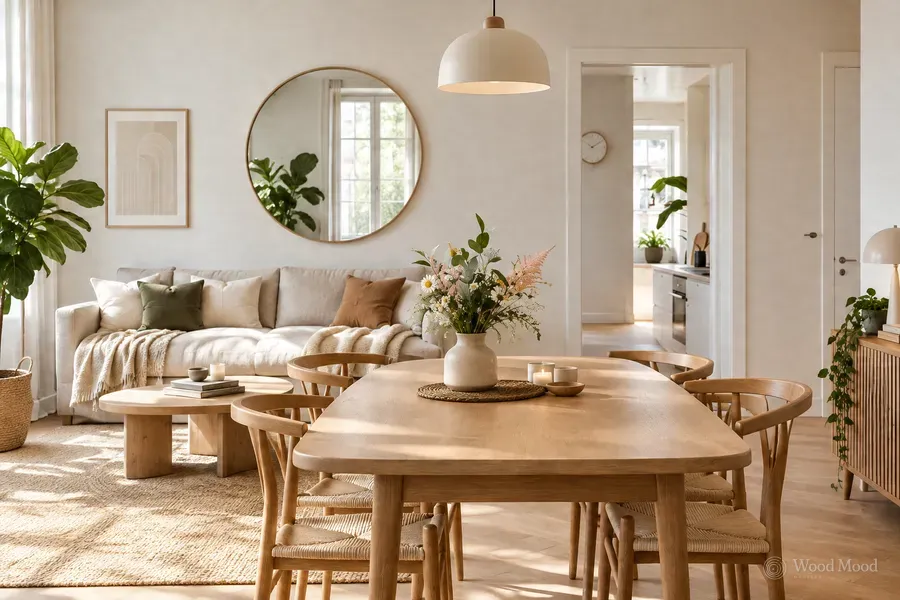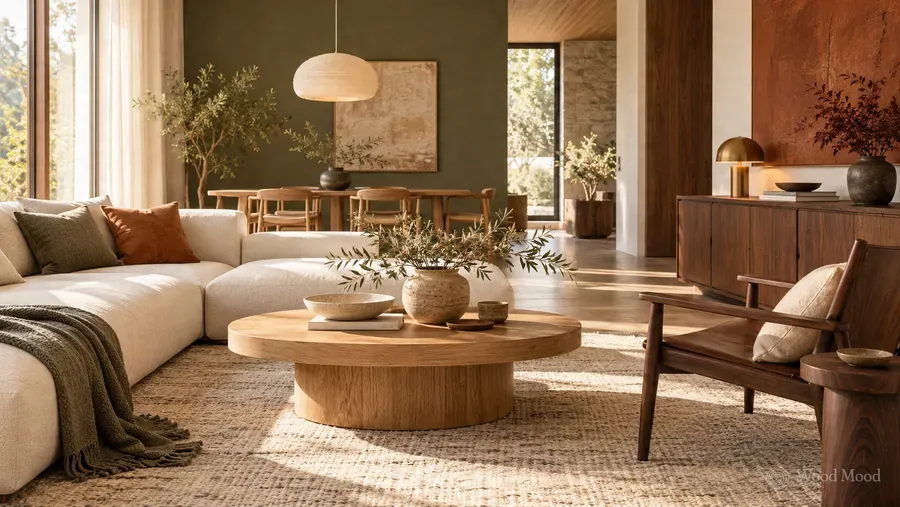
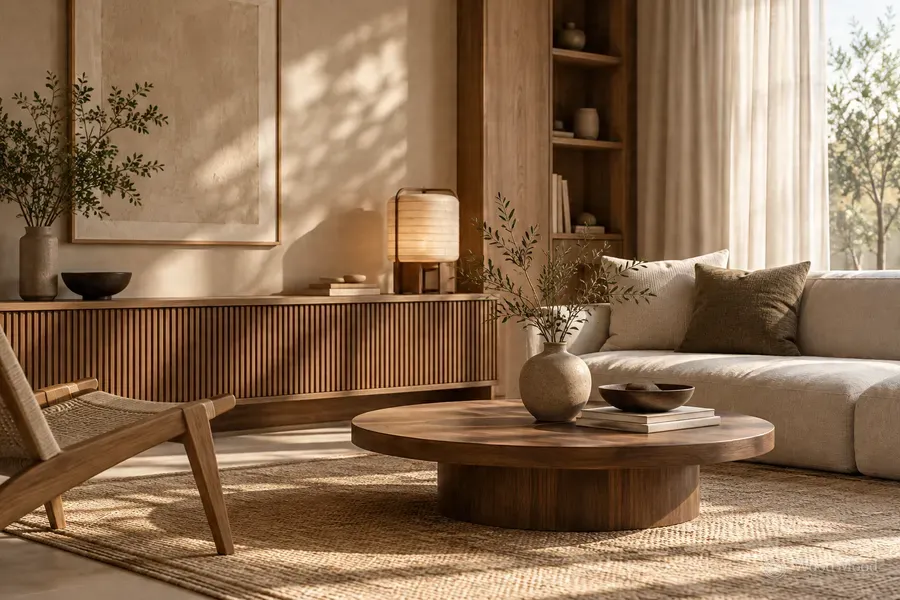
Japandi is an approach to interiors that combines the simplicity of Japanese design with the warmth and comfort of Scandinavian style.
Built on natural materials, clean lines and balanced colours, it gives you spaces that are free of needless detail yet inviting to live in.
The aim of Japandi is not to leave a room as empty as possible. It is to make sure that every piece of furniture and every decorative item has a reason to be there.
Key features of Japandi style
Simplicity, naturalness and function are at the centre of Japandi style.
Showy details and complicated forms are avoided in the furniture. The natural texture of the wood comes to the fore, balanced with stone, linen, ceramics and similar materials.
The main features of the style are:
- Natural wood and matt surfaces
- Simple, low furniture
- Off-white, beige and earth tones
- Handleless, flat cabinet doors
- Closed storage
- Soft, warm lighting
- A few carefully chosen accessories
Together, these elements create a calm and cohesive living space.
Choosing wood for Japandi style
Wood is one of the most distinctive materials in Japandi design.
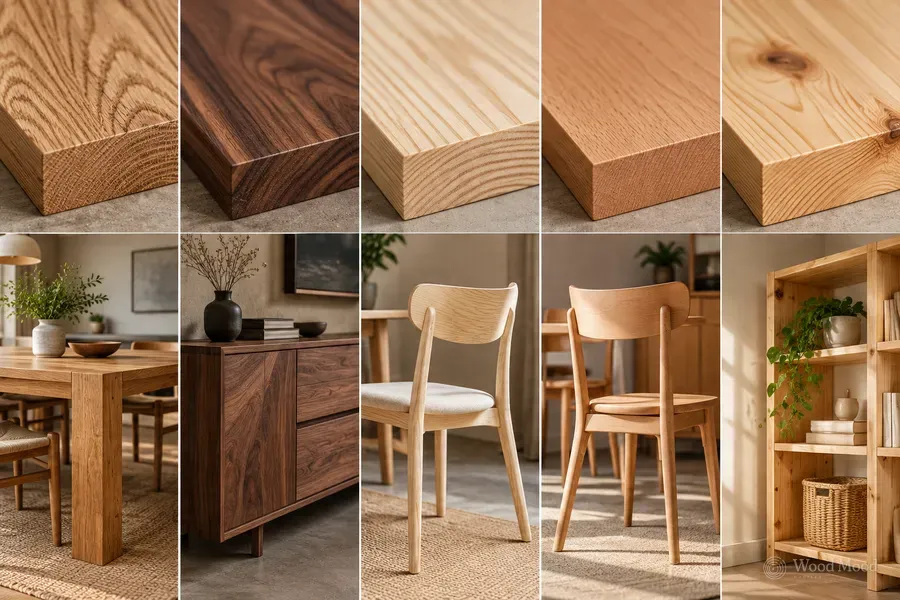
Light oak, ash and natural walnut tones can give furniture a warm, balanced look.
Light or mid-tone woods suit large cabinet surfaces, while darker colours can add contrast on smaller pieces.
On natural wood veneer surfaces in particular, continuous grain direction makes the furniture look simpler and more unified.
Matt or satin finishes usually work best, as they keep the grain and natural texture of the wood visible.
Colour palette and natural textures
In Japandi style, colours usually draw on nature.
Off-white, sand beige, stone grey, light brown and sage green are common choices.
Pairing these colours with wood surfaces gives a room both lightness and warmth.
An example of a Japandi colour scheme:
- Off-white walls
- Light oak furniture
- Beige or cream textiles
- A dark walnut coffee table
- Small matt black decorative details
Linen curtains, textured rugs, natural stone surfaces and handmade ceramics can complete the look.
What matters is to keep the textures in harmony without using too many different materials.
What Japandi furniture should look like
Japandi furniture is defined by straight lines, plain doors and balanced proportions.
Low TV units, natural wood dining tables, handleless cabinets and simple headboards all suit the style.
On large pieces in particular, cutting back on handles and decorative detail gives a calm look.
Wood slat panels can be used with restraint on headboards, TV walls or decorative partitions.
Storage matters in Japandi design too. Keeping everyday items in cupboards with doors keeps open areas tidy.
Japandi in your living spaces
Living room
A low TV unit, a natural wood coffee table and light-toned sofas make a good starting point for a Japandi living room.
Putting just a few ceramic objects or books on open shelves reduces visual clutter.
Bedroom
For the bedroom, you could choose a low bed, a wooden headboard and simple bedside tables.
Handleless wardrobes that run up to the ceiling add storage capacity and keep the room looking unified.
Kitchen and dining area
Matt cream doors, light oak details and stone-effect worktops all work in a Japandi kitchen.
Wooden dining tables and simple chairs complete the warm character of the design.
Bathroom
For the bathroom, you can use wood-look vanity units, matt ceramics and stone-textured surfaces. Choose materials and protective finishes that suit a damp environment.
Why lighting matters
In Japandi design, lighting strengthens the effect of the furniture and the natural textures.
Curtains that soften daylight, warm-toned indirect lighting and simple floor lamps all work well.
Concealed LED lighting inside cabinets or behind wood panels can also add depth to the room.
Avoiding bright, intense lighting helps keep the calm character of the style.
What to avoid in Japandi design
When applying Japandi style, some choices can weaken the look you want.
- Using too many different wood tones
- Filling shelves with decorative accessories
- Emphasising glossy or showy furniture surfaces
- Planning too little storage
- Giving up practicality for the sake of a simple look
Simplicity should never mean compromising on what the furniture does.
Natural, balanced living spaces
The success of Japandi style lies not only in choosing the right colours, but in planning the size, materials and placement of the furniture together.
Made-to-measure furniture can blend cabinets into the walls, hide storage and carry wood surfaces through in a consistent way.
At Wood Mood Furniture, we design the wood tones, door details and storage layouts of Japandi-style furniture projects around the character of each space. We review the chosen materials in 3D drawings and manufacture the approved designs in our own factory.
Japandi is less about owning few things than about bringing the right pieces together to create simple, comfortable living spaces.