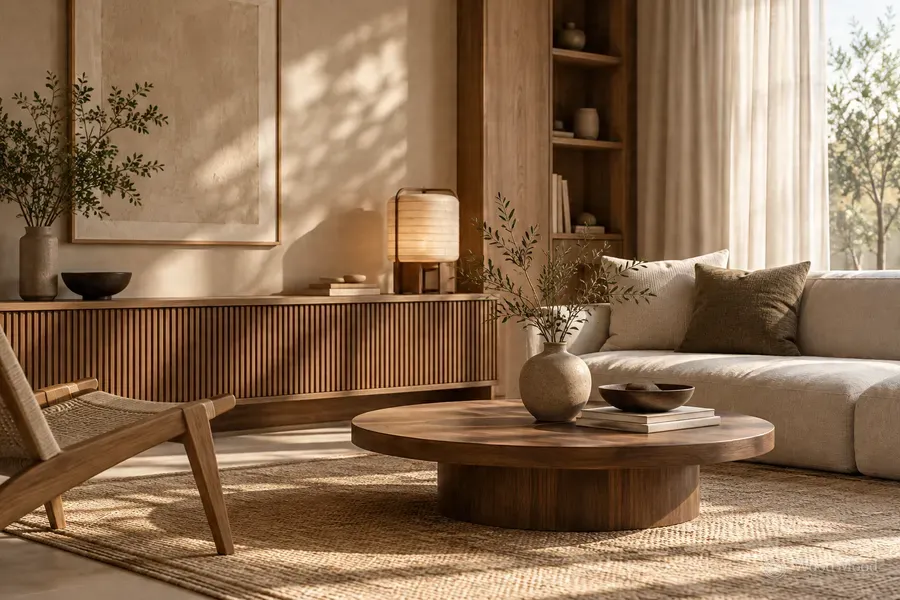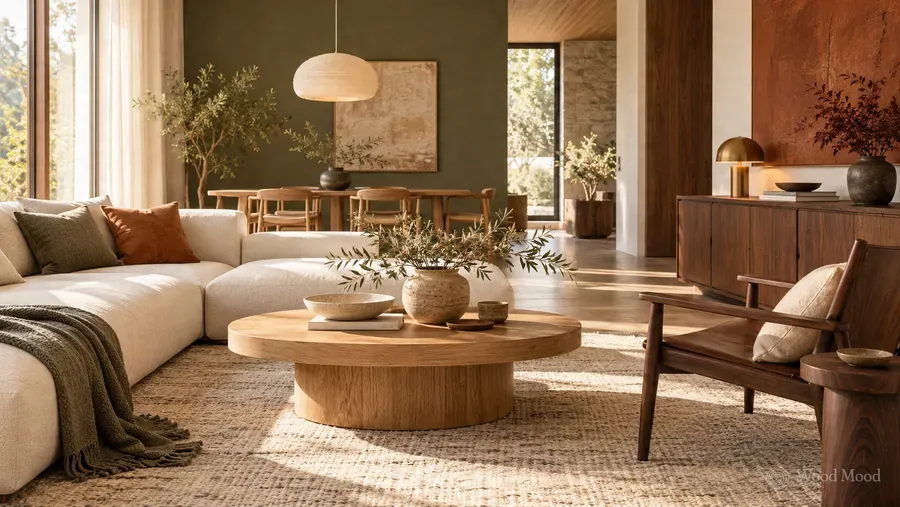
Scandinavian style is an approach to decorating that combines simple design with natural materials to create bright, comfortable living spaces.
Inspired by the long winters of northern Europe, it favours light-coloured woods, soft textures and natural light. Furniture without showy detail gives living spaces an airy look through its functional design.
So which woods, colours and furniture styles should you choose when bringing Scandinavian style into your home?
Key features of Scandinavian style
In Scandinavian design, furniture is judged not only on how it looks but on how easy it is to use every day.
The main features of the style are:
- Light-toned natural wood surfaces
- Simple, functional furniture
- Slim legs and softened corners
- White, cream and light grey colours
- Layouts that make the most of natural light
- Textured fabrics such as linen, cotton and wool
- A few carefully chosen accessories
The aim is not to own as little as possible, but to create an orderly, comfortable living space with furniture that meets your needs.
Choosing wood for Scandinavian style
Wood is one of the most characteristic materials in Scandinavian furniture.
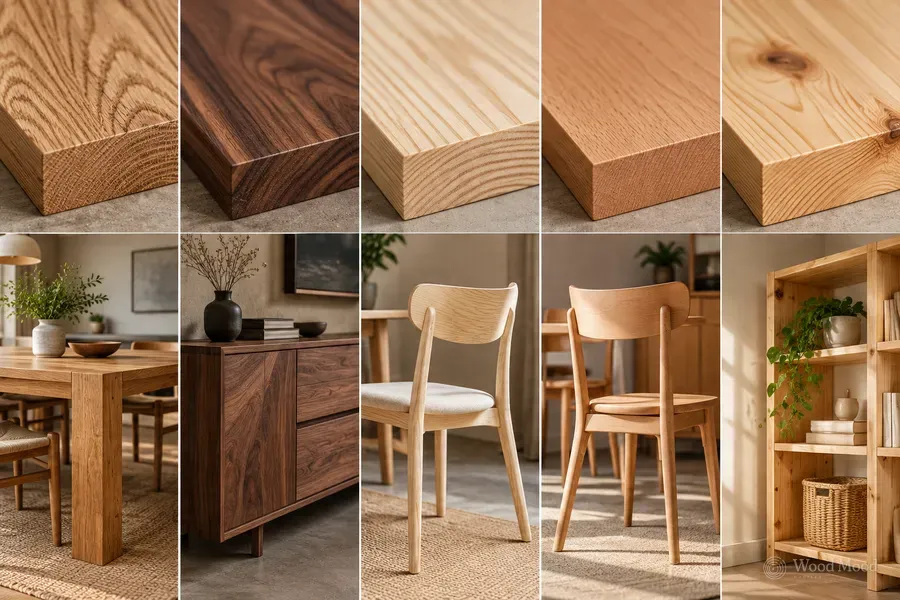
Light-coloured species are preferred, especially oak, ash, beech, birch and pine.
Paired with white and light-coloured walls, the natural tones of these woods add warmth to a room.
Besides solid wood dining tables and coffee tables, natural wood veneers can be used on large cabinet surfaces.
Matt or satin finishes that leave the grain visible help preserve the natural character of the style.
Choosing one or two tones that complement each other, rather than many different wood tones, gives a more balanced result.
Simple, soft lines in furniture design
Scandinavian furniture is known for its slim legs, plain carcasses and rounded corners.
Consoles, TV units and coffee tables raised off the floor give a lighter look, especially in small rooms.
For cabinet doors, you can choose flat surfaces, simple handles or handleless systems.
Designing furniture in the same wood tone with similar details gives visual unity between the different pieces.
With made-to-measure manufacturing, pieces such as bookcases, TV units and desks can be made to fit the dimensions of the room.
Colours and natural textures
Scandinavian decor is based on light colours. That does not mean every piece of furniture and every wall has to be white.
Off-white, light grey, beige and natural oak tones make a warm starting point.
These can be livened up with dusty blue, sage green, mustard yellow or pastel shades.
An example of a colour scheme:
- Off-white walls
- Light oak furniture
- A cream sofa
- A light grey or beige rug
- Sage green and dusty blue accessories
Linen curtains, knitted blankets and wool rugs add softness and texture to simple furniture.
Lighting in Scandinavian-style homes
Natural light is an essential part of Scandinavian style.
Keeping large furniture away from the windows and using light-filtering fabrics instead of heavy curtains helps a room look brighter.
In the evening, use several light sources instead of a single strong ceiling light.
Floor lamps, table lamps, pendant lights and indirect lighting bring out the natural tones of wooden furniture.
Warm white light can create a more welcoming, restful atmosphere in living spaces.
Scandinavian furniture in your living spaces
Living room
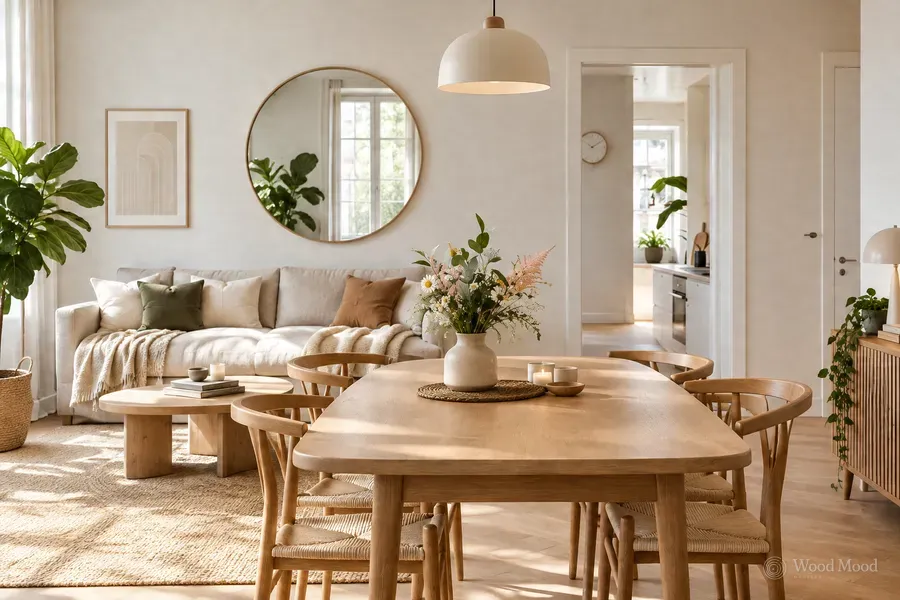
A light-coloured sofa, a wooden coffee table with slim legs and a simple TV unit are the basic pieces of a Scandinavian living room.
Wall shelves and bookcases can be used with a few decorative objects.
Dining room
A round or oval wooden table, chairs with soft lines and a simple pendant light make a warm dining area.
In small spaces especially, round tables can make it easier to move around.
Kitchen
In the kitchen, you could choose white or light oak doors, light worktops and simple handles.
Natural wood details stop the kitchen from looking too cold.
Bedroom
A wooden bed frame, simple bedside tables and light-coloured wardrobes make a restful bedroom.
Flat-fronted cabinets that run up to the ceiling increase storage capacity while keeping the room looking tidy.
Workspace
A light oak desk, a comfortable chair and simple shelves can be enough.
Placing the desk near a window lets you make better use of daylight.
The difference between Scandinavian and Japandi style
Both styles favour natural wood, simple furniture and functional design. There are some differences, however.
In Scandinavian style, light woods, furniture on slim legs and pastel colours are more prominent.
Japandi, on the other hand, features low furniture, dark wood accents, earth tones and a calmer colour palette.
Scandinavian style generally looks brighter and livelier, while Japandi looks more serene.
What to avoid in Scandinavian decor
When applying this style, some choices can upset the balance of a room:
- Making every surface white and neglecting natural textures
- Using wood tones that clash with each other
- Adding too many decorative accessories
- Choosing furniture that is too large for the room
- Not planning natural and artificial lighting well enough
Alongside the simple look, it is important to keep the furniture comfortable to use.
Lasting designs in natural wood
The most important quality of Scandinavian style is that it combines simplicity with a warm, practical design.
With the right wood tone, balanced furniture proportions and natural textures, the style works in any living space, small or large.
At Wood Mood Furniture, we plan the materials, colours and dimensions of Scandinavian-style furniture around the living space. We refine the designs in 3D drawings and manufacture the approved furniture in our own factory.
The basis of good Scandinavian design is to bring natural materials, simplicity and everyday comfort together.